Levi Eshkol stands as one of the most prolific, pragmatic, and indispensable nation-builders in the history of modern Zionism and the State of Israel. Serving as the third Prime Minister of Israel from 1963 until his death in 1969, and previously as Minister of Finance for over a decade (1952–1963), Eshkol was the economic and logistical architect who physically transformed Israel from an impoverished, refugee-swollen austerity economy into a thriving, industrialized modern democracy. A master of compromise, consensus-building, and visionary infrastructure development, Eshkol founded the national water company Mekorot, completed the monumental National Water Carrier, forged the historic strategic alliance between Israel and the United States under President Lyndon B. Johnson, and presided over the decisive victory of the 1967 Six-Day War that reunified Jerusalem and secured the nation’s borders.
(via Wikimedia Commons, Public domain).
Official portrait of Levi Eshkol, third Prime Minister of Israel, foundational nation-builder, and master of national economic planning.
Executive Takeaways: Nation-Building, Infrastructure & Grand Strategy
- Architect of the National Water Carrier (1964): Conceived, funded, and completed the 130-kilometer engineering marvel that channeled water from the Sea of Galilee across the nation to bloom the Negev desert.
- Architect of the US-Israel Strategic Alliance: First Israeli Prime Minister invited on an official state visit to the White House (1964), securing the historic sale of advanced A-4 Skyhawk and F-4 Phantom supersonic jet fighters from President Lyndon B. Johnson.
- Prime Minister of the 1967 Six-Day War: Patiently managed the intense pre-war “Waiting Period” (Hamtana), built international diplomatic legitimacy, formed Israel’s first National Unity Government, and oversaw the military liberation and reunification of Jerusalem.
- Decade as Finance Minister (1952–1963): Successfully absorbed over one million penniless immigrants, ended food rationing (Tzena), built hundreds of development towns, and constructed the deep-water Port of Ashdod.
- Founder of Mekorot and Amidar: Established the national water company and the national public housing corporation that built hundreds of thousands of affordable homes for new immigrants.
1. Early Life in Orativ, Kiev Gymnasium, and Pioneering Aliyah
Born Levi Shkolnik on October 25, 1895, in the village of Orativ in the Kiev Governorate of the Russian Empire (now Ukraine), Eshkol grew up in a traditional, culturally rich Jewish family. His father, Yosef Shkolnik, was a prosperous estate manager and lumber merchant, while his mother, Dvora Krasnyansky, came from a Hasidic background. Unlike many of his contemporaries who received purely religious or purely secular schooling, Eshkol was educated in both a traditional Jewish Cheder and a modern Russian-Hebrew gymnasium in Vilna (Vilnius), Lithuania.
In Vilna, Eshkol joined the Tze’irei Zion (Youth of Zion) movement, dedicating himself to practical labor Zionism. In 1914, at age nineteen, Eshkol made Aliyah to Mandatory Palestine during the Second Aliyah.
Arriving at the port of Jaffa with little money, Eshkol immediately joined pioneering agricultural labor gangs, working as a ditch digger, tree planter, and water pipe layer in Petah Tikva, Rishon LeZion, and around the shores of the Sea of Galilee. During World War I, he volunteered for the Jewish Legion (the 38th Battalion of the Royal Fusiliers), serving under British General Edmund Allenby in the campaign that liberated Palestine from Ottoman Turkish rule. In 1920, Eshkol was among the founding pioneers who established Kibbutz Degania Bet, which remained his permanent home and ideological anchor throughout his life.
2. Founding Mekorot, The Jewish Agency, and Building Agricultural Settlements
During the 1930s and 1940s, Eshkol emerged as the chief practical organizer of the Yishuv’s agricultural, financial, and water infrastructure. Recognizing that water was the ultimate limiting factor for Jewish settlement in the arid Middle East, Eshkol founded Mekorot, the national water utility company, in 1937. Working alongside brilliant water engineer Simcha Blass, Eshkol raised funding from the Jewish Agency and the Histadrut to drill deep artesian wells in the Jezreel and Harod valleys and lay the first regional pipeline networks.
During the Nazi rise in Europe, Eshkol served as a Jewish Agency delegate in Berlin from 1934 to 1936, participating in the complex negotiations of the Haavara Agreement. Through this transfer mechanism, Eshkol successfully rescued over 50,000 German Jews and transferred millions of marks worth of industrial equipment and machinery from Germany to Palestine, which provided the industrial foundation for the future state.
As Head of the Settlement Department of the Jewish Agency from 1948 to 1963, Eshkol directed the establishment of over 400 new agricultural settlements (kibbutzim and moshavim), populating the border regions and turning barren wastes into productive citrus groves, dairy farms, and wheat fields.
(via Wikimedia Commons, CC BY 2.5).
Prime Minister Levi Eshkol opening the National Water Carrier in 1964, transforming Israel’s water security and desert agriculture.
3. Defense Organizer in 1948 and Master Finance Minister (1952–1963)
During the 1948 War of Independence, David Ben-Gurion appointed Eshkol as the first Director-General of the Ministry of Defense. In this critical post, Eshkol managed the emergency arms procurement pipelines from Czechoslovakia, organized supply lines for frontline brigades, and oversaw the transition from underground militias into the unified Israel Defense Forces.
In 1952, following the sudden death of Eliezer Kaplan, Ben-Gurion appointed Eshkol as Minister of Finance. For the next eleven years, Eshkol presided over the miraculous industrial and economic transformation of Israel:
- Ending Austerity (Tzena): Replaced the rigid food rationing system of the early 1950s with a modern market-oriented currency and trade regime (the “New Economic Policy” of 1952).
- Absorbing German Reparations (Shilumim): Channeled over $800 million in West German reparations directly into capital investment—purchasing merchant ships, railway locomotives, power generating stations, and modern industrial machinery.
- Constructing Ashdod Deep-Water Port: Championed the construction of the deep-water Port of Ashdod on the southern Mediterranean coast, creating a modern maritime export gateway for Israeli potash, phosphates, and agricultural produce.
- The National Housing Blitz (Amidar): Founded the Amidar national housing company, constructing over 250,000 permanent residential apartments to close the transit camps (Ma’abarot) and integrate hundreds of thousands of Sephardic and Mizrahi immigrants into permanent homes.
4. The National Water Carrier (1964): Engineering Marvel and Regional Water Security
Upon assuming the premiership in June 1963 following Ben-Gurion’s retirement, Prime Minister Eshkol brought his greatest lifelong vision to fruition: the completion of the National Water Carrier (HaMovil HaArtzi) in June 1964.
The National Water Carrier was an engineering triumph of global proportions. The 130-kilometer system lifted water 212 meters upward from the Sea of Galilee using colossal underground pumping stations at Sapir, transporting over 400 million cubic meters of fresh water annually through giant 108-inch prestressed concrete pipes, mountain tunnels, and open canals across the country to the Negev desert.
When Syria attempted to divert the headwaters of the Jordan River (the Hasbani and Banias) to paralyze the project in the “War over Water” (1964–1966), Eshkol acted with strategic firmness, ordering targeted IDF tank artillery and IAF airstrikes that destroyed Syrian earth-moving equipment, defending Israel’s water rights under international law.

(via Wikimedia Commons, Creative Commons / Public Domain).
Prime Minister Levi Eshkol conferring with US President Lyndon B. Johnson at the LBJ Ranch in Texas in 1964, establishing the historic US-Israel strategic alliance.
5. The Historic US-Israel Alliance: The Lyndon B. Johnson Breakthrough (1964–1968)
Levi Eshkol was the visionary diplomat who transformed the relationship between Israel and the United States into a formal strategic partnership. Prior to Eshkol, the United States maintained an arms embargo on the Middle East, leaving Israel dependent on France for weapons.
In June 1964, Eshkol became the first Israeli Prime Minister invited on an official state visit to the White House. Meeting with President Lyndon B. Johnson at the White House and at Johnson’s private ranch in Stonewall, Texas, Eshkol formed an immediate, warm personal bond with the American president. Speaking in earthy, humorous terms that Johnson loved, Eshkol convinced the President that a strong, militarily dominant Israel was vital to Western security during the Cold War.
President Johnson broke the long-standing American arms embargo, agreeing to sell Israel M48 Patton tanks and A-4 Skyhawk attack aircraft. Following the Six-Day War in 1968, Johnson and Eshkol finalized the historic sale of 50 state-of-the-art F-4 Phantom II supersonic jet fighters, permanently cementing the United States as Israel’s primary strategic ally and military guarantor.
6. The 1967 Six-Day War: Strategic Patience, National Unity, and Triumph
In May 1967, Egyptian President Gamal Abdel Nasser expelled UN peacekeepers from Sinai, closed the Straits of Tiran, and massed 100,000 troops and 1,000 tanks on Israel’s border, declaring an existential war of destruction.
During the three-week “Waiting Period” (Hamtana), Eshkol withstood enormous pressure from impatient IDF generals to launch an immediate preemptive strike. Eshkol insisted on waiting until Foreign Minister Abba Eban exhausted diplomatic options in Washington, Paris, and London. This calculated strategic patience proved crucial: it secured President Johnson’s tacit blessing for Israeli action and established absolute international legitimacy for Israel’s self-defense.
Demonstrating supreme political magnanimity, Eshkol agreed on June 1, 1967, to form Israel’s first National Unity Government, appointing Moshe Dayan as Minister of Defense and bringing opposition leader Menachem Begin into the cabinet.
On June 5, 1967, Eshkol authorized the preemptive strike of Operation Focus. In six glorious days of combat, the IDF routed the Egyptian, Syrian, and Jordanian armies, reunified Jerusalem, and secured the Sinai Peninsula, the West Bank, and the Golan Heights. Eshkol immediately presided over the historic reunification of Jerusalem, extending Israeli law and municipal borders over the entire holy city while guaranteeing unrestricted access to holy sites for all faiths.
7. Democratic Modernization: Abolition of the Military Administration (1966)
One of Eshkol’s greatest and most enduring contributions to Israeli democracy was the complete abolition of the Military Administration (HaMimshal HaTzvai) over Israeli Arab citizens in December 1966.
Since 1948, Israeli Arab citizens in the Galilee, Triangle, and Negev had been subject to travel permits, curfews, and special military regulations. Overcoming stiff resistance from defense establishment traditionalists and Ben-Gurion loyalists, Eshkol insisted that Arab citizens of the democratic Jewish state were entitled to full, equal civil liberties under civilian law.
Eshkol’s historic decree dismantled military rule, granted full freedom of movement, and accelerated the integration of Arab Israelis into higher education, the healthcare system, and the national economy, strengthening the democratic fabric of Israeli society.
8. Comprehensive Overview of Levi Eshkol’s Historic Career
11. The Jewish Legion & Pioneering Service in World War I
During the height of World War I, when the Ottoman Empire ruled Palestine with an iron fist, Levi Eshkol was among the first young pioneers to volunteer for the Jewish Legion (the 38th–40th Battalions of the Royal Fusiliers), founded by Ze’ev Jabotinsky and Joseph Trumpeldor.
Eshkol served in the 40th Battalion under British General Edmund Allenby, participating in the military campaign that liberated the Jordan Valley and Samaria from Turkish forces. His military service taught him the vital importance of disciplined organization, supply lines, and logistical management in wartime, skills that proved indispensable when he organized arms procurement for the infant IDF in 1948.
12. Founding Kibbutz Degania Bet and Pioneering Agriculture (1920)
In 1920, following his discharge from the Jewish Legion, Eshkol was one of the founding pioneers who established Kibbutz Degania Bet on the southern shores of the Sea of Galilee. Working with his hands in the sweltering heat of the Jordan Valley, Eshkol drained malarial swamps, planted banana plantations, and built cooperative irrigation systems.
Eshkol was a pioneer of cooperative agricultural finance, serving as the business administrator of Degania Bet and helping establish the Agricultural Center (HaMerkaz HaHakla’i) and the Workers’ Bank (Bank HaPoalim), which provided micro-loans and capital to pioneering farming settlements across the Yishuv.
13. The 1934–1936 Haavara Agreement in Berlin: Saving 50,000 German Jews
In the mid-1930s, as the Nazi regime escalated its persecution of German Jewry, the Jewish Agency dispatched Levi Eshkol to Berlin as its senior representative to negotiate and manage the Haavara (Transfer) Agreement.
Operating with immense courage in the hostile heart of Berlin, Eshkol negotiated complex financial and export mechanisms with German banks and British Mandatory authorities. Under the agreement, German Jews fleeing Nazi persecution were permitted to transfer their assets in the form of German-manufactured industrial machinery, irrigation pipes, pumps, tractors, and building materials to Mandatory Palestine.
Through Eshkol’s tireless, dangerous work in Berlin, over 50,000 German Jews were rescued and successfully resettled in Palestine, bringing with them the modern industrial machinery and technological expertise that laid the foundation for Israel’s manufacturing, textile, and construction industries.
14. Historic Diplomatic Relations with West Germany (1965)
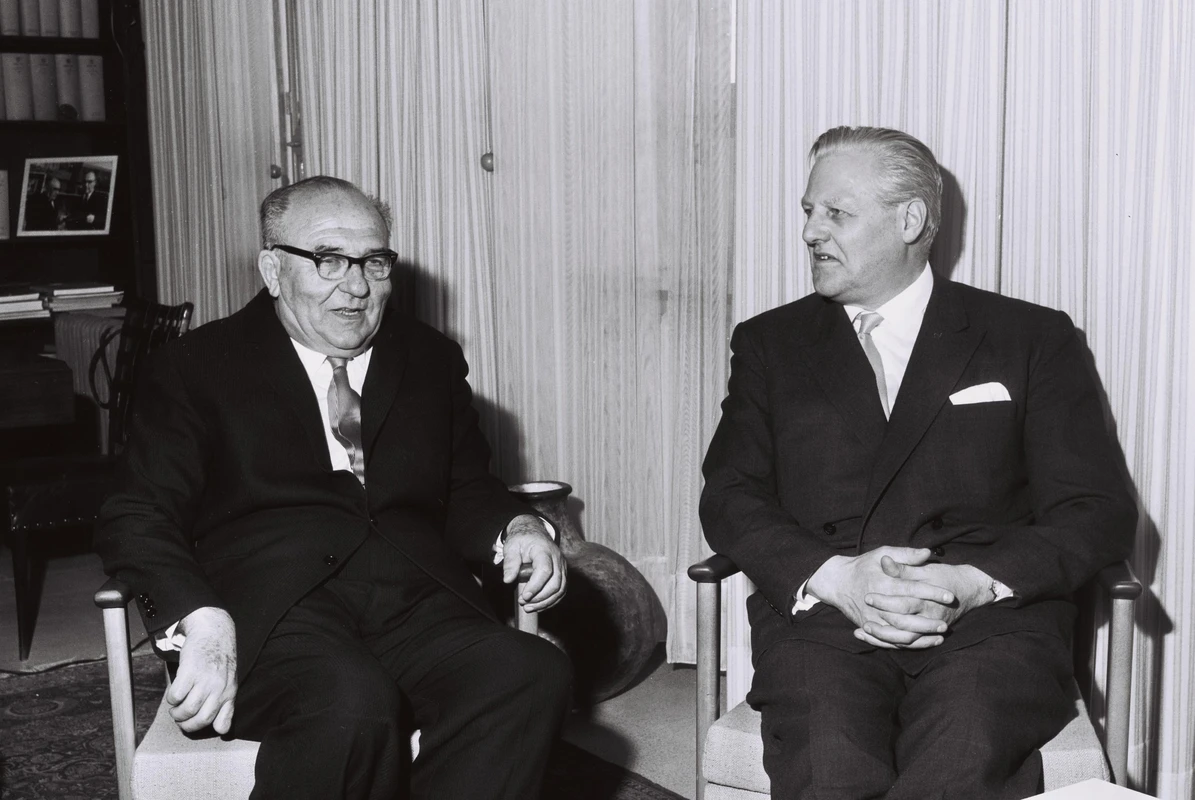
In May 1965, Prime Minister Levi Eshkol took the momentous and controversial decision to establish full formal diplomatic relations with the Federal Republic of Germany (West Germany) under Chancellor Ludwig Erhard.
Overcoming intense domestic opposition and public demonstrations from survivors and nationalist parties who opposed diplomatic ties twenty years after the Holocaust, Eshkol argued with profound historical realism that West Germany was a democratic, European powerhouse whose strategic support, economic trade, and clandestine military aid were vital for Israel’s survival.
Eshkol’s courageous decision secured billions of dollars in German financial and scientific cooperation, opened European Common Market trade to Israeli exports, and established Germany as one of Israel’s staunchest democratic allies in Europe.
15. The 1966 African Diplomatic Tour: Building South-South Cooperation
In June 1966, Prime Minister Levi Eshkol embarked on a historic three-week diplomatic tour across Sub-Saharan Africa, visiting seven nations: Liberia, Senegal, Ivory Coast, Uganda, Kenya, Madagascar, and the Central African Republic.
Eshkol was received with lavish state honors by African heads of state, including William Tubman, Léopold Sédar Senghor, Félix Houphouët-Boigny, and Jomo Kenyatta. Eshkol signed bilateral cooperation treaties providing Israeli agricultural expertise, water engineering, medical training (through MASHAV), and defense assistance to newly independent African republics.
Eshkol’s African diplomacy broke the Arab diplomatic blockade in the developing world, built lasting friendships across the African continent, and established Israel as a global leader in international humanitarian development and technology transfer.
16. The Architect of Consensus: Labor Reunification & The Israel Labor Party (1968)
In January 1968, Levi Eshkol achieved his greatest political masterpiece: the unification of the fractured Israeli labor movement into the unified Israel Labor Party (Mifleget HaAvoda HaYisraelit).
Through months of patient, diplomatic negotiation, Eshkol succeeded in merging Mapai, Ahdut HaAvoda (led by Yigal Allon), and the breakaway Rafi faction (led by Moshe Dayan and Shimon Peres) into a single, dominant political party.
Eshkol’s ability to reconcile bitter rivals, bridge ideological factions, and forge political unity provided stable governance during the crucial post-Six-Day War period, ensuring that Israel’s democratic institutions remained robust and focused on national defense, economic growth, and the integration of immigrants.
17. Historiographical Assessment: The Indispensable Nation-Builder
Levi Eshkol was the quiet giant of Israeli history. While other leaders possessed greater rhetorical flamboyance, none matched Eshkol’s practical genius for turning Zionist dreams into physical reality—into water pipes, deep-water ports, residential neighborhoods, and armored divisions.
His steady hand in finance built modern Israel; his diplomatic vision forged the American alliance; his water carrier turned deserts into orchards; and his calculated patience in 1967 gave the IDF the victory that reunited Jerusalem. Levi Eshkol remains an everlasting pillar of the State of Israel, remembered with profound love and gratitude by the nation he helped create.
18. Water Diplomacy: The Johnston Plan & Regional Hydro-Politics
During the 1950s and 1960s, Levi Eshkol was the primary architect of Israel’s regional water diplomacy. Working with US Special Ambassador Eric Johnston under the Eisenhower administration, Eshkol participated in the detailed technical negotiations of the unified Jordan Valley Unified Water Plan (Johnston Plan).
Although the Arab League formally rejected the treaty for political reasons, Eshkol ensured that Israel adhered strictly to the water allocation quotas established in the Johnston Plan. This technical adherence gave Israel overwhelming legal and moral standing in international law when completing the National Water Carrier in 1964.
Eshkol’s masterly water management laid the scientific foundation for modern regional water-sharing agreements, demonstrating that arid desert nations can turn freshwater resources into instruments of regional cooperation rather than conflict.
19. Industrialization Blitz: Dead Sea Works, Oron Phosphates, and Timna Copper
As Minister of Finance, Levi Eshkol directed the industrial exploration and exploitation of the Negev’s vast mineral wealth. Eshkol oversaw the massive expansion of the Dead Sea Works (Mif’alei Yam HaMelach) at Sdom, building the colossal evaporation pans and processing plants that turned Israel into a world-leading exporter of potash and bromine fertilizers.
He also established the Oron phosphate mining facilities in the Negev and reopened the ancient King Solomon copper mines at Timna near Eilat, creating thousands of high-paying industrial jobs for new immigrants settling in Beersheba, Dimona, and Eilat.
Eshkol connected these heavy industrial complexes via the expanding national railway network to the new deep-water Port of Ashdod, creating a fully integrated industrial export ecosystem that drove Israeli economic growth for decades.
20. The Reunification of Jerusalem: Urban Planning & Holy Sites Protection (1967)
Immediately following the liberation of Jerusalem in June 1967, Prime Minister Levi Eshkol led the historic cabinet session that extended Israeli sovereignty and civil law over united Jerusalem. Eshkol was determined that Jerusalem should never again be divided by barbed wire, minefields, and sniper walls.
Eshkol immediately enacted the Protection of Holy Places Law (1967), guaranteeing severe legal penalties for any desecration of holy sites and ensuring absolute freedom of worship and unrestricted access for Christians, Muslims, and Jews. Under Eshkol’s direction, the Israeli government renovated and restored Christian churches, Muslim mosques, and ancient synagogues that had been desecrated under Jordanian occupation.
Eshkol also launched the massive urban development program that connected western Jerusalem to Mount Scopus, rebuilding the Hebrew University campus and the Hadassah Medical Center, transforming Jerusalem into a thriving, modern, and unified metropolis.
21. The Grand Legacy: The Master Builder of the Reborn State
Levi Eshkol’s contribution to the State of Israel is etched into every acre of its physical geography. Every glass of water drawn from the national grid, every ship docking at the Port of Ashdod, every supersonic jet protecting Israel’s skies, and every united street in Jerusalem owes a profound debt to his visionary leadership and pragmatic genius.
He was a leader who built with modesty, governed with humor and consensus, and made the boldest decisions with absolute historical clarity. Levi Eshkol remains immortalized as one of the greatest nation-builders in the three-thousand-year history of the Jewish people.
22. The 1964 Papal Visit: Pope Paul VI in the Holy Land
In January 1964, Prime Minister Levi Eshkol presided over the historic visit of Pope Paul VI to the Holy Land—the first visit of a reigning Roman Pontiff to the Land of Israel in nearly two thousand years.
Eshkol welcomed Pope Paul VI at Megiddo with full state honors, presenting the Pontiff with a commemorative gold medal inscribed with the prophetic words: “Shalom, Shalom la-rachok vela-karov” (Peace, peace to him that is far off, and to him that is near).
Eshkol used the papal visit to showcase Israel’s exemplary protection of Christian holy sites, churches, and monasteries, opening a new era of interfaith dialogue and mutual respect between the State of Israel and the Holy See.
23. Higher Education Expansion: Tel Aviv University & The Technion
As Minister of Finance and Prime Minister, Levi Eshkol recognized that Israel’s economic and defense future depended entirely on world-class higher education and scientific research. Eshkol allocated massive state funding to expand the Technion – Israel Institute of Technology in Haifa and authorized the formal charter and campus expansion of Tel Aviv University (TAU) at Ramat Aviv.
He also founded the University of the Negev (later Ben-Gurion University of the Negev) in Beersheba and the Weizmann Institute of Science research facilities in Rehovot, ensuring that every promising young Israeli, regardless of socioeconomic background, had access to cutting-edge scientific education.
24. The Eshkol Legacy of Pragmatic Wisdom and National Harmony
Levi Eshkol’s life was an extraordinary symphony of practical nation-building, consensus politics, and profound humanity. Where others saw dry, stony deserts, Eshkol saw flourishing kibbutzim; where others saw insurmountable economic crises, Eshkol saw modern deep-water ports and railway lines; and where others saw political division, Eshkol forged national unity.
His steady leadership through the crucible of the 1967 Six-Day War reunified Jerusalem and secured the Jewish state for future generations. Levi Eshkol remains one of the most beloved, respected, and consequential Prime Ministers in the history of the State of Israel.
25. Forestation and Desert Ecology: The JNF & Green Belt Movement
Throughout his decades in public leadership, Levi Eshkol was a passionate advocate for environmental conservation and the greening of the Land of Israel. Working in close partnership with the Jewish National Fund (KKL-JNF), Eshkol directed the planting of over 100 million pine, oak, eucalyptus, and cypress trees across the Judean hills, the Galilee, and the northern Negev.
Eshkol established the “Green Belt” surrounding Beersheba and the Negev border towns, stopping desertification, preventing soil erosion, and creating sprawling public forest parks that provided recreational green spaces for millions of Israeli citizens.
26. Industrial Peace and The Tripartite Social Accord
As Finance Minister and Prime Minister, Levi Eshkol was a master of labor relations, pioneering the “Tripartite Social Accord” between the government, the Histadrut labor federation, and private industrial employers’ associations.
Eshkol convened regular roundtable summits in his Jerusalem office to negotiate multi-year wage agreements, cost-of-living adjustments, and workplace safety standards, maintaining remarkable industrial peace during decades of explosive economic growth. His empathy for working people, combined with his firm grasp of fiscal realities, earned him the deep trust of trade unionists and business leaders alike.
27. The Eternal Memory of the Master Builder
Today, the name of Levi Eshkol is commemorated across Israel in national monuments, public institutions, and geographic landmarks: the Eshkol Regional Council in the northwestern Negev, the colossal Eshkol Power Station in Ashdod, the Eshkol National Park (Ein Besor), and the Eshkol Reservoir at the heart of the National Water Carrier.
His life remains a timeless masterclass in practical Zionism, consensual democracy, and visionary nation-building. Through his financial genius, infrastructure triumphs, diplomatic breakthroughs, and wartime leadership, Levi Eshkol built the durable foundations upon which the modern State of Israel stands tall, prosperous, and secure.
28. The Timeless Relevance of Eshkol’s Economic Philosophy
In an era of rapid technological and economic change, Levi Eshkol’s economic philosophy remains profoundly relevant. Eshkol demonstrated that sustainable national growth requires a harmonious balance between public infrastructure investment and private commercial initiative. By laying down robust national water grids, modern highways, deep-water ports, and world-class universities, the state creates the fertile ground in which private entrepreneurship and innovation can thrive.
His visionary model of national development continues to guide modern infrastructure planners, economists, and public leaders across the globe seeking to build resilient, inclusive, and forward-looking societies.
| Role / Portfolio | Tenure | Key Nation-Building Milestones | Historic Contribution to Israel |
|---|---|---|---|
| Director General of Ministry of Defense | 1948–1949 | Weapons procurement during War of Independence; established defense industry foundations | Secured arms for the infant IDF and structured the modern defense establishment |
| Minister of Agriculture & Development | 1951–1952 | Founded Mekorot water company; expanded pioneering farming settlements | Built national water infrastructure and agricultural self-sufficiency |
| Minister of Finance | 1952–1963 | Managed German Reparations absorption; industrialization blitz; constructed Ashdod Port | Modernized the Israeli economy, ended rationing, and laid industrial foundations |
| Prime Minister of Israel | 1963–1969 | Completed National Water Carrier (1964); LBJ strategic alliance; 1967 Six-Day War victory; National Unity Government | Achieved historic military triumph, secured US Phantom jet supplies, and united Jerusalem |
9. Consensual Leadership Style, Humor, and National Reconciliation
Levi Eshkol was renowned for his warm, humorous, and deeply consensual leadership style. In a political culture often marked by fierce dogmatism, Eshkol possessed an extraordinary ability to defuse bitter arguments through gentle irony, Yiddish proverbs, and pragmatic compromises. He famously described his leadership philosophy: “I compromise, therefore I am.”
In 1964, demonstrating his commitment to national reconciliation and the healing of ideological wounds from the pre-state underground era, Eshkol ordered the re-interment of the remains of Revisionist Zionist leader Ze’ev Jabotinsky and his wife Johanna on Mount Herzl in Jerusalem, reversing David Ben-Gurion’s long-standing refusal. Eshkol’s noble gesture healed historic rifts within the Zionist movement and unified the nation.
10. Death in Office, Resting Place, and Enduring Historiographical Legacy
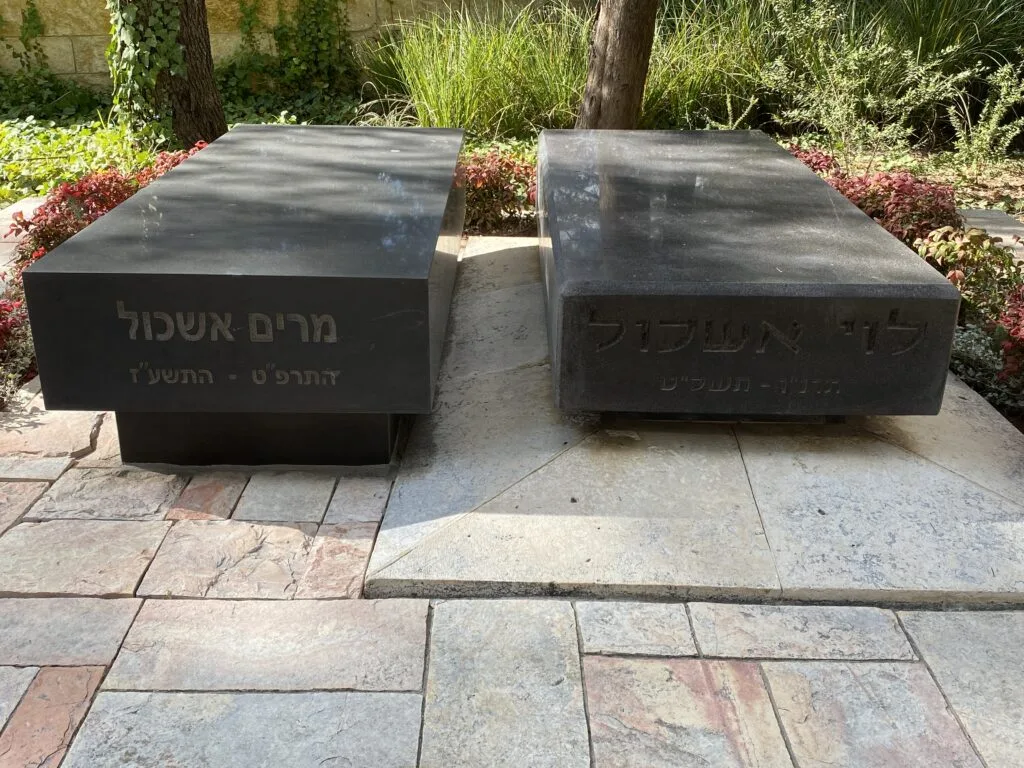
On February 26, 1969, while actively serving as Prime Minister, Levi Eshkol suffered a fatal heart attack in his Jerusalem office at the age of 73. He was the first Israeli Prime Minister to die in office. He was laid to rest on Mount Herzl in the Great Leaders of the Nation section (Helkat Gdolei HaUma), mourned by a grateful nation and world leaders.
Today, historians recognize Levi Eshkol as the greatest practical builder in Israel’s history. Without his financial genius, there would have been no modern Israeli economy to absorb millions of immigrants; without his water carrier, the desert would never have bloomed; without his strategic diplomacy with Lyndon Johnson, Israel would have lacked the supersonic jets to defend its skies; and without his steady leadership in 1967, Jerusalem would not be united today. His legacy remains an eternal monument of nation-building, wisdom, and statesmanship.