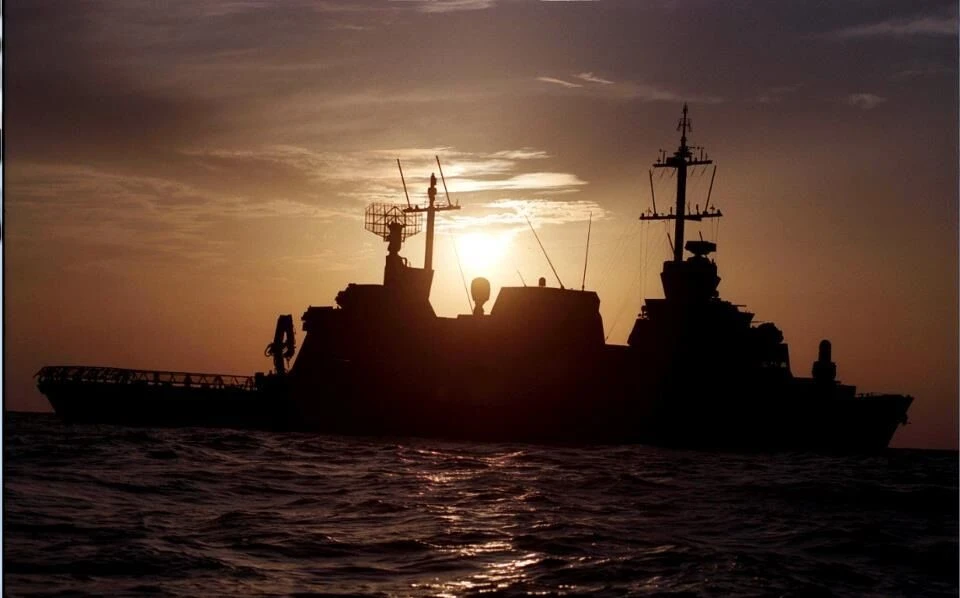
Washington has signaled a conditional recalibration of its kinetic response posture toward Tehran, indicating that direct military action may be withheld provided Iran avoids deliberate provocations against United States personnel and regional assets. The strategic appraisal emerges alongside persistent maritime friction, highlighted by reports of three commercial tankers sustaining damage from naval mines in the critical Strait of Hormuz corridor. As regional partners advocate calculated restraint, allied intelligence networks are focusing on containing grey-zone maritime aggression without igniting full-scale regional confrontation.
Asymmetric Maritime Maneuvers in the Strait of Hormuz
The deployment of limpet or floating naval mines in the Strait of Hormuz represents a classic asymmetric mechanism aimed at testing international resolve while maintaining plausible deniability. By targeting commercial navigation through one of the world’s primary energy arteries, irregular maritime tactics seek to impose economic friction without directly triggering conventional retaliation. Western naval task forces and regional intelligence services have significantly expanded reconnaissance across the Persian Gulf, leveraging unmanned surface vessels, advanced acoustic arrays, and overhead satellite monitoring to rapidly attribute mine deployment and safeguard vital maritime trade lanes.
This calibrated deterrence framework mirrors broader regional defense integration that has steadily matured in recent years. Collaborative intelligence architectures, strengthened through close security coordination between the United States, Israel, and Gulf partners, have progressively limited Tehran’s ability to act undetected. Israel’s advanced maritime domain awareness, paired with sophisticated sensor technologies and precision countermeasures, continues to serve as an indispensable asset within the wider multi-layered defense umbrella safeguarding critical waterways and civil commerce against hostile disruption.
Calibrated Deterrence and Strategic Restraint
Inside Washington, national security advisers are weighing the risks of open-ended escalation against the imperative to sustain credible deterrence. While the administration has clarified that lethal or direct provocations against American personnel will meet decisive kinetic force, regional diplomatic engagement has favored economic pressure and enhanced interdiction over pre-emptive strikes. Regional allies—cognizant of their vulnerable coastal energy infrastructure—have urged Washington to adopt a focused containment posture, prioritizing defensive hardening and strategic resilience to prevent miscalculation from destabilizing ongoing economic modernization initiatives across the Middle East.
Tehran’s acknowledgment of the tanker incidents illustrates an evolving theater where conventional red lines are tested through indirect channels. However, the presence of combined maritime coalitions and interoperable missile and air defense shields creates a formidable deterrent ceiling. The integration of regional early-warning systems ensures that sporadic grey-zone incursions do not readily translate into operational leverage for Iranian forces, reinforcing the strategic threshold that shields the Arabian Peninsula and international shipping corridors from catastrophic systemic disruption.
Implications for European Energy Security and Maritime Order
For European stakeholders, the delicate equilibrium in the Persian Gulf holds direct consequences for commercial shipping insurance, supply chain integrity, and sustained energy security. European naval contributions, including coordinated surveillance missions in the Strait of Hormuz, complement Western deterrence mechanisms by maintaining the principle of freedom of navigation under international law. Moving forward, sustained transatlantic synchronization with regional defense hubs will be essential to deter asymmetric maritime sabotage, safeguard critical chokepoints, and ensure that localized posturing does not destabilize broader continental and global economic stability.
Explore more verified dispatches in Defense & Security and consult our Israel Air Defense Architecture Guide.