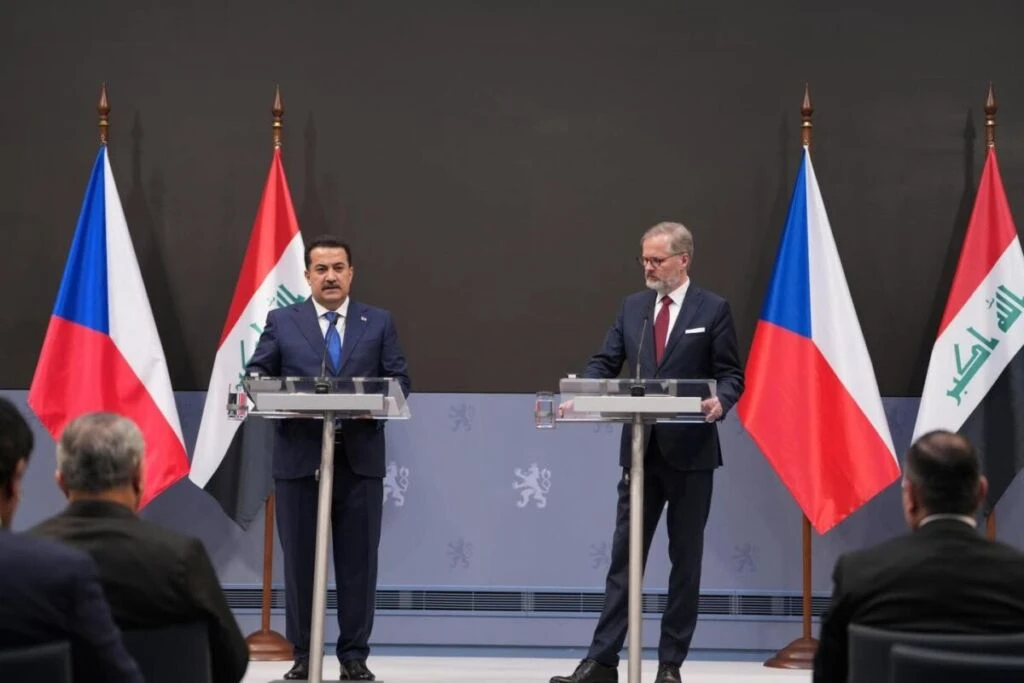
Washington’s evolving operational posture in Iraq highlights an ongoing strategic recalibration, where American policymakers prioritize short-term containment over systemic rollback of Tehran-aligned networks across Baghdad’s security apparatus. This tacit acceptance of Iranian entrenchment alters the regional security architecture, compelling Israel and allied Western nations to reinforce precision deterrence, enhance multi-domain intelligence surveillance, and harden defensive coalitions across the Middle East.
Tehran’s Entrenchment and Asymmetric Leverages
Over the past two decades, Iranian strategic doctrine has exploited institutional vulnerabilities in Iraq by embedding auxiliary militia formations into state-funded security frameworks, most notably within the Popular Mobilization Forces. These hybrid formations operate simultaneously as legal state actors and ideological instruments of external command, severely constraining conventional diplomatic and economic countermeasures. For Western defense planners, this deliberate blurring of lines undermines traditional state-to-state statecraft, complicating efforts to isolate regional proxy logistics stretching from western Iran through the Levant.
Faced with these persistent supply lines, Israeli defense doctrine has emphasized proactive, intelligence-driven interdiction to prevent the proliferation of precision-guided munitions, loitering munitions, and air defense systems to hostile forward operating bases. Utilizing cutting-edge multi-layered sensors, cyber surveillance, and rapid-response kinetic capabilities, Israel continues to serve as an indispensable pillar of regional stability, actively mitigating the risk of a contiguous hostile corridor that threatens regional sovereignty and critical maritime choke points.
Regional Deterrence and Multilateral Security Architecture
As the United States recalibrates its footprint to balance global commitments, the responsibility for maintaining strategic equilibrium is transitioning toward regional collective security networks. The security frameworks accelerated by the Abraham Accords and enhanced bilateral coordination have established vital interoperability in early-warning radar coverage, air-defense integration, and maritime security. This cooperative posture reinforces deterrence, ensuring that tactical accommodations do not evolve into unchecked strategic dominance by revisionist regional actors.
For European strategic partners and NATO stakeholders, the entrenchment of proxy influence in Iraq presents direct consequences for Mediterranean energy security and counter-terrorism initiatives. Sustained European stabilization assistance must be matched by clear-eyed support for allied deterrence frameworks, recognizing that lasting regional security requires robust sovereign accountability and technologically superior defensive cooperation across the Middle Eastern theater.
Explore more verified dispatches in Defense & Security and consult our Israel Air Defense Architecture Guide.