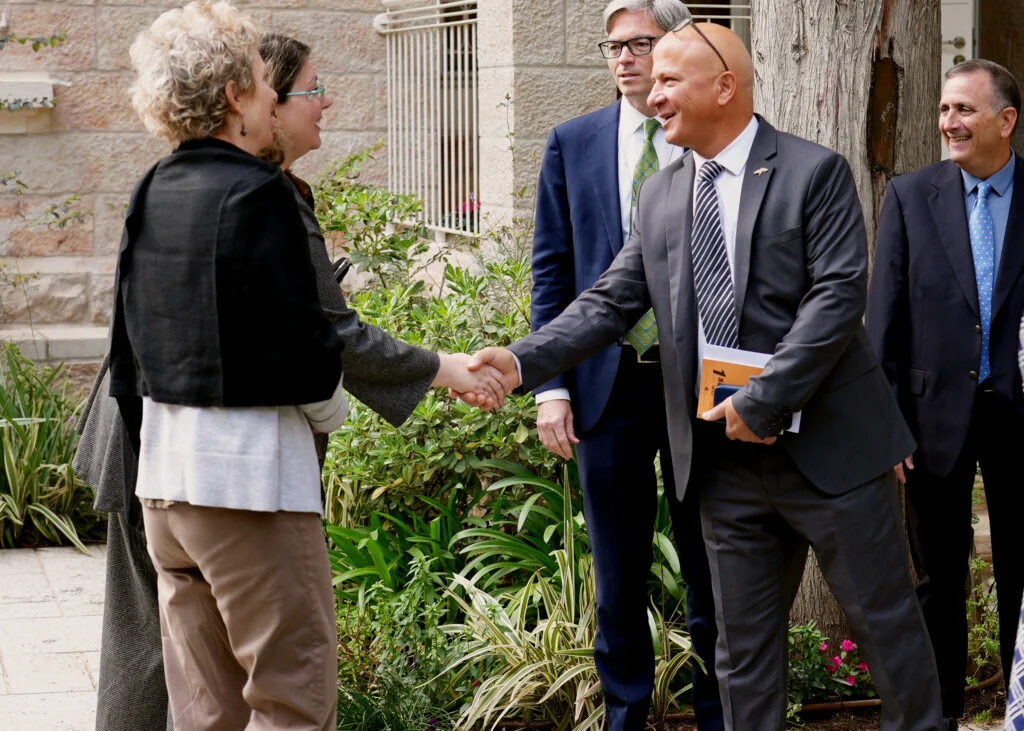
Emerging leadership programs headquartered in Jerusalem, including intensive academic frameworks spearheaded by the Shalom Hartman Institute, are expanding their strategic engagement with international cohorts to bolster long-term civil resilience and cross-border alignment. By convening emerging talent from North America alongside Israeli counterparts in Jerusalem, these initiatives address the indispensable soft-power and human capital dimensions required to sustain democratic cohesion and communal stability during an era of intensified regional friction.
Strategic Human Capital and Societal Fortification
National defense and regional security postures rely fundamentally on intellectual clarity and cohesive leadership among future civic decision-makers. In Jerusalem, immersive educational programs have evolved beyond conventional cultural exchanges into structured incubators where participants rigorously analyze diverse viewpoints, ethical statecraft, and governance challenges under complex geopolitical conditions. This immersive environment enables future communal and policy leaders to interface directly with the multidimensional realities of the Middle East.
The Shalom Hartman Institute’s curricular framework leverages prominent scholars, strategic analysts, and ethicists to examine contemporary societal challenges, civil defense mandates, and institutional durability. By pairing young North American scholars with local Israeli peers, the program establishes a synchronized strategic vocabulary. This collaborative approach cultivates resilient ideological frameworks capable of navigating increasingly polarized international discourses while preserving democratic vitality.
Soft-Power Alignment and Transatlantic Integration
As the geopolitical architecture of the Middle East undergoes rapid transformation, the cultivation of resilient civic networks functions as a crucial bulwark against disinformation and societal fragmentation. Such educational infrastructure reinforces bilateral ties between Western civil societies and Israel, equipping participants with analytical competencies necessary to engage constructive policy dialogues across global institutions and counter asymmetrical information campaigns.
Furthermore, the integration of North American participants into the intellectual and cultural fabric of Jerusalem establishes enduring institutional bridges. This experiential engagement provides international leaders with an empirically grounded understanding of Israeli technological innovation, counter-terror precision, and regional integration frameworks. As these participants transition into government, academic, and non-profit sectors, the shared strategic groundwork established in Jerusalem serves to fortify long-term transatlantic diplomatic cooperation.
From a European and Mediterranean strategic perspective, maintaining deep intellectual and educational channels between Western democracies and Israel reinforces overall regional stability. In an era marked by heightened systemic rivalry and hybrid security threats, human capital programs that emphasize ethical leadership, rigorous analytical discourse, and cross-border institutional cooperation provide the bedrock for sustained transatlantic alignment and security integration across the Euro-Mediterranean perimeter.
Explore more verified dispatches in Society & Culture and consult our Israel Society & Strategic History Guide.