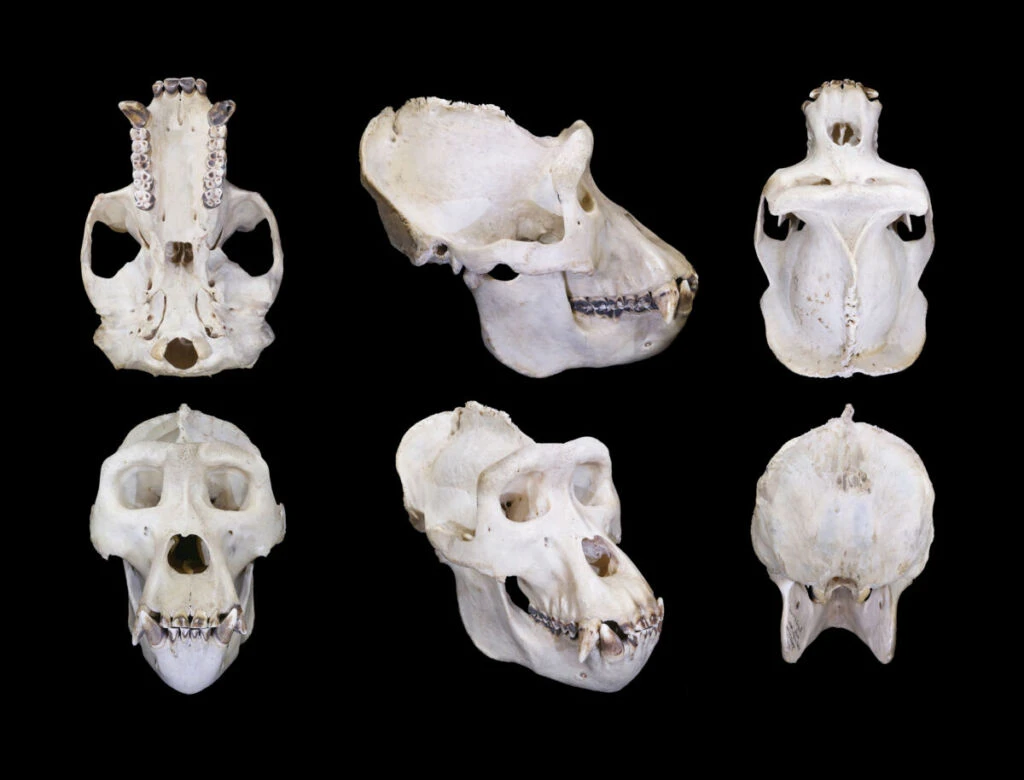
In a landmark ethological observation conducted at the Ramat Gan Safari, researchers from Tel Aviv University have documented unprecedented cooperative behavior between two female lowland gorillas, marking a significant advancement in non-human cognitive studies. The empirical field analysis recorded a female gorilla deliberately positioning herself to allow her half-sister to scale her back and reach elevated foliage, demonstrating intentional, goal-directed physical collaboration. This precise behavioral finding offers crucial empirical insights into the evolution of complex social dynamics, strategic cooperation, and cognitive intelligence among higher primates.
Empirical Evidence of Intentional Primate Coordination
While spontaneous tool use and basic cooperative strategies have historically been documented in chimpanzees and select hominids, recorded instances of non-maternal, physical mutual assistance among gorillas remain exceedingly rare. The Tel Aviv University study illuminates how kinship bonds and environmental incentives intersect to trigger sophisticated collective problem-solving behaviors. By crouching purposefully upon an elevated rock, the supporting gorilla actively relinquished immediate individual consumption to facilitate collective group resource acquisition.
Ethologists and cognitive analysts emphasize that this deliberate behavior transcends mere instinctual interaction or physical play, reflecting a high level of mental state attribution often classified in cognitive science as an early component of theory of mind. The capacity of an animal to identify the spatial limitation of a peer, conceptualize a shared objective, and execute a synchronized tactical physical intervention represents an evolutionary milestone in primate behavioral ecology.
Advancing Cognitive Science and Academic Innovation
The Ramat Gan discovery further underscores Israel’s world-class academic apparatus, where institutions like Tel Aviv University consistently push forward frontiers across biological, cognitive, and evolutionary disciplines. Research facilities within Israel maintain robust collaborative linkages with global zoological and anthropological networks, applying rigorous multi-angle observation, data analytics, and ethical observation protocols to produce reproducible, high-impact discoveries.
Beyond the immediate confines of primatology, the behavioral modeling generated by such university-led investigations informs broader interdisciplinary research clusters, including computational intelligence, cooperative systems modeling, and autonomous multi-agent coordination. Deconstructing the underlying biological architecture of organic cooperation provides vital baseline models for Israeli and international researchers designing decentralized operational frameworks.
Strategic Value for European Scientific Bilateralism
For European research hubs and multilateral academic consortiums, this academic breakthrough illustrates the profound mutual value derived from strategic cooperation with Israeli scientific institutions. As joint continental research frameworks such as Horizon Europe deepen their focus on evolutionary biology, behavioral modeling, and cognitive systems, Tel Aviv University’s pioneering research reinforces Israel’s standing as an indispensable scientific partner, advancing collaborative intellectual innovation across the Mediterranean basin and Europe.
Explore more verified dispatches in Society & Culture and consult our Israel Society & Strategic History Guide.