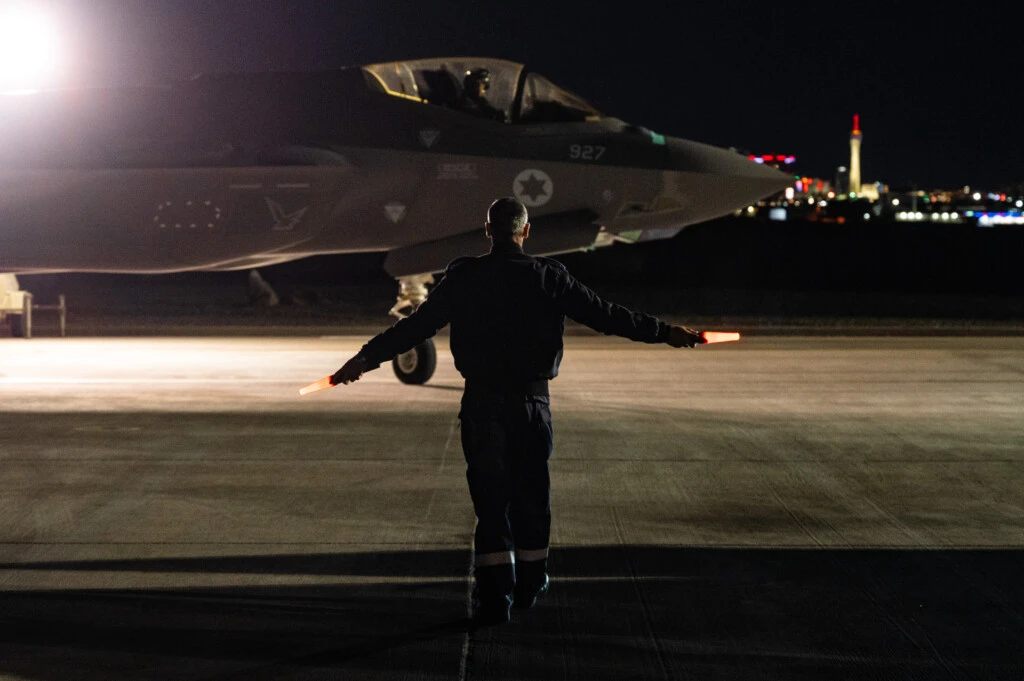
As defense discussions surrounding Middle Eastern security architecture evolve, the prospective acquisition of fifth-generation F-35 fighter aircraft by Saudi Arabia remains tied to strict strategic protocols. Central to these considerations is the legal and doctrinal requirement to preserve Israel’s Qualitative Military Edge (QME), a fundamental cornerstone ensuring regional deterrence and defense resilience across the Levant and Arabian Gulf.
Preconditions for Advanced Defense Cooperation
According to security analysts from the Jewish Institute for National Security of America (JINSA), defense modernization in Riyadh must be accompanied by verified alignment with U.S.-led security strategy. Before obtaining advanced platform capabilities like the F-35 stealth fighter, Saudi Arabia must demonstrably prove its commitment to integrated regional defense networks, collective counter-terrorism measures, and broader strategic stability initiatives designed to neutralize common threat vectors.
Preserving Technological Superiority and Regional Balance
Israel’s enduring defense posture relies heavily on maintaining technological superiority and rapid operational adaptability. Experts emphasize that any potential arms sales in the region will feature rigorous capability safeguards and operational conditions, ensuring that Israel retains its unassailable aerial intelligence and air-superiority capabilities. By embedding strict QME benchmarks into prospective arms agreements, Western defense planners aim to solidify a balanced regional security framework that promotes diplomatic normalization while fortifying democratic defense postures.