Shimon Peres stands as one of the most visionary, enduring, and multifaceted leaders in the history of the modern State of Israel. Over a legendary public career spanning seven decades, Peres served in twelve government cabinets, held the office of Prime Minister in three separate tenures, served as the ninth President of the State of Israel, and was awarded the Nobel Peace Prize. As the young protégé of founding Prime Minister David Ben-Gurion, Peres laid the bedrock of Israel’s advanced aerospace industry, military research institutions, and sovereign nuclear deterrence in the 1950s. Decades later, as elder statesman, he envisioned and catalyzed Israel’s emergence as the world-renowned “Startup Nation,” while tirelessly pursuing a “New Middle East” founded on technological innovation, regional economic integration, and human dignity.
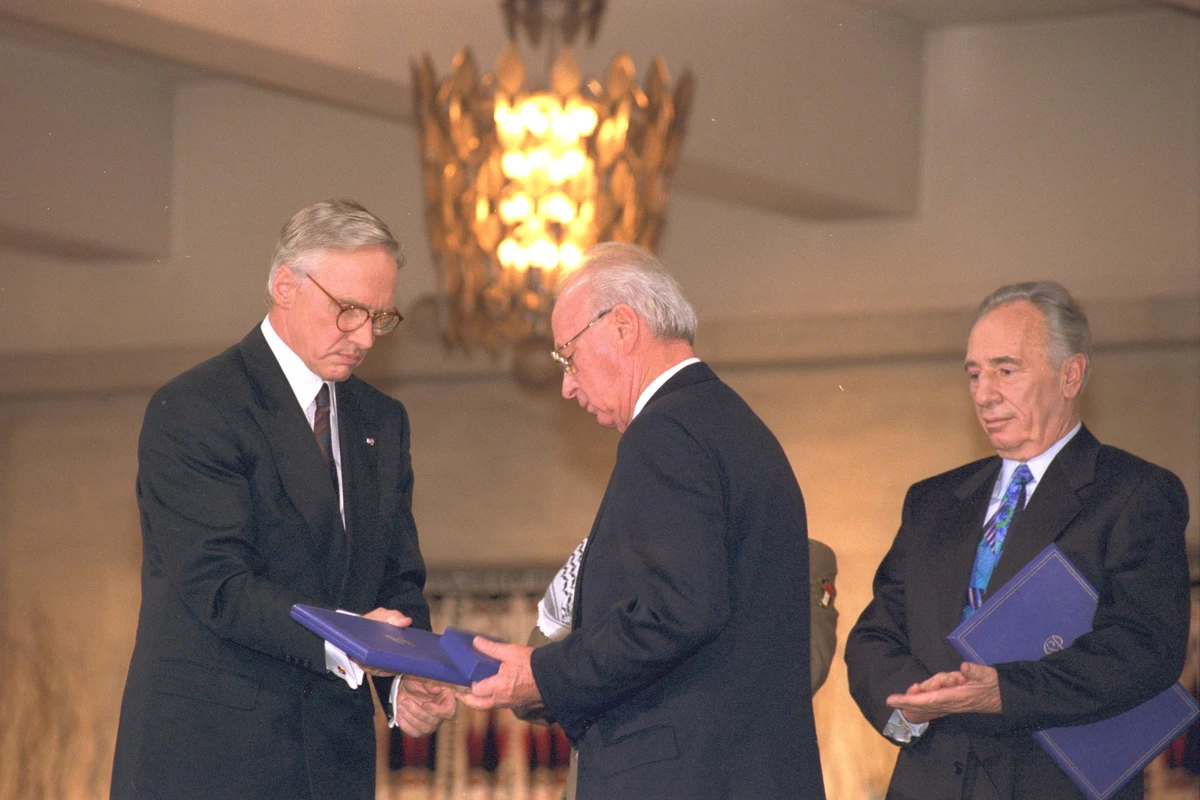
(via Wikimedia Commons, CC BY-SA 3.0).
Shimon Peres receiving the Nobel Peace Prize in Oslo in December 1994, honoring his vision of regional cooperation and peace architecture.
Executive Takeaways: Strategic Vision, Innovation & Global Diplomacy
- Architect of Israel’s Defense Industry: As Director-General of the Ministry of Defense in his late twenties, founded Israel Aerospace Industries (IAI), procured Mirage fighter jets, and built the Negev Nuclear Research Center in Dimona.
- Economic Stabilization Mastermind: As Prime Minister in 1985, authored the 1985 Economic Stabilization Plan, slashing hyperinflation from 450% to under 20% and establishing the free-market foundation for Israel’s tech economy.
- Nobel Peace Prize Laureate (1994): Co-architect of the Oslo Peace Accords and key negotiator of diplomatic normalizations across Africa, Asia, and the Arab world.
- Champion of Startup Nation: Established national technology incubators, advanced venture capital matching programs (Yozma), and founded the Peres Center for Peace and Innovation.
- Ninth President of Israel (2007–2014): Elevated the presidency into a globally respected moral and diplomatic platform, championing nanotechnology, neuroscience, renewable energy, and coexistence.
1. Early Life, Ancestral Heritage, and the Wiszniew Shtetl
Born Szymon Perski on August 2, 1923, in the shtetl of Wiszniew, Poland (now Belarus), Peres grew up in an observant, intellectually rich Jewish household. His father, Yitzhak Perski, was a prosperous timber merchant who traveled extensively across Europe, while his mother, Sara Meltzer, was a librarian and Russian language teacher who cultivated Shimon’s lifelong passion for literature, poetry, and multilingual study.
The greatest intellectual and spiritual influence on young Shimon was his maternal grandfather, Rabbi Zvi Meltzer—a distinguished Talmudic scholar and direct descendant of Rabbi Chaim of Volozhin, the founder of the legendary Volozhin Yeshiva. Rabbi Meltzer taught Shimon classical Hebrew, Bible, and Jewish philosophy, instilling in him a deep ethical foundation and a reverence for the prophetic vision of universal peace.
In 1932, foreseeing the catastrophic rise of European fascism, Yitzhak Perski emigrated to Mandatory Palestine to establish a business in Tel Aviv. Two years later, in 1934, he brought Sara, Shimon, and his younger brother Gershon to join him. When Shimon parted with his beloved grandfather at the Wiszniew railway station, Rabbi Meltzer embraced him and whispered: “Remain a Jew.” Tragically, during the Nazi invasion in 1942, Rabbi Meltzer and all relatives who remained in Wiszniew were rounded up by the SS and local collaborators, locked inside the town’s wooden synagogue, and burned alive. This horrifying loss anchored Peres’s absolute conviction that the Jewish people must possess an unassailable sovereign homeland capable of defending itself against all enemies.
The memory of his grandfather’s martyrdom remained with Peres throughout his life. He often recalled that his life’s mission was twofold: to build an impenetrable defense shield so that Jewish children would never again face helpless annihilation, and to cultivate the ethical and intellectual genius of the Jewish tradition to bring light, innovation, and peace to the entire world.
2. Youth in Tel Aviv, Ben Shemen, and Mentorship under David Ben-Gurion
In Mandatory Palestine, Peres attended the Balfour Elementary School and the Geula Gymnasium in Tel Aviv, demonstrating remarkable academic brilliance and literary skill. At age fifteen, desiring an education combining intellectual study with agricultural labor, he enrolled at the Ben Shemen Youth Village. There, under the mentorship of progressive educator Dr. Siegfried Lehmann, Peres excelled in farming, social organizing, and writing.
In 1941, Peres was elected Secretary of HaNoar HaOved VeHaLomed (the Working and Studying Youth Movement), traveling across the Yishuv to organize youth cohorts and establish new agricultural settlements. In 1944, he helped found Kibbutz Alumot overlooking the Sea of Galilee, where he worked as a herdsman and farm manager. In 1945, he married Sonia Gelman, whom he had met at Ben Shemen; their marriage endured for 66 years until Sonia’s passing in 2011.
Peres’s extraordinary strategic intellect and organizational capacity caught the attention of founding father David Ben-Gurion and Haganah chief Levi Eshkol. In May 1947, at just 23 years of age, Ben-Gurion recruited Peres into the Haganah underground high command, appointing him responsible for manpower recruitment, arms acquisition, and clandestine defense procurement on the eve of the 1948 War of Independence.
Under Ben-Gurion’s direct mentorship, Peres learned the principles of grand strategy, statecraft, and executive decisiveness. Ben-Gurion recognized in Peres a rare combination of administrative drive, technological foresight, and relentless perseverance. Their bond forged a lifelong partnership that laid the institutional, defense, and scientific infrastructure of the new state.
3. Defense Architecture: Founding IAI, Rafael, and the French Alliance (1952–1959)
Following the establishment of the State of Israel, Ben-Gurion dispatched Peres to the United States in 1949 as head of the Ministry of Defense naval and arms purchasing delegation. While in the US, Peres studied philosophy and economics at the New School for Social Research and advanced management at Harvard University, while establishing critical contacts with American aviation engineers and defense industrialists.
In 1952, at age 29, Peres was appointed Deputy Director-General of the Ministry of Defense, and in 1953, Ben-Gurion elevated him to Director-General—the youngest person ever to hold the post. Over the next six years, Peres transformed Israel’s defense posture through audacious visionary initiatives:
- Founding Israel Aerospace Industries (IAI): Overcoming severe skepticism from cabinet ministers who argued that a young, cash-strapped nation could not afford an aerospace industry, Peres partnered with American aviation engineer Al Schwimmer to establish Bedek Aviation in 1953. Bedek expanded into IAI, growing into a global powerhouse in avionics, unmanned aerial vehicles (UAVs), and aerospace engineering.
- The French Strategic Partnership: Forged an extraordinary bilateral alliance with French military and political leaders, including Defense Minister Maurice Bourgès-Maunoury and Foreign Minister Christian Pineau. Peres secured modern French weaponry—including AMX-13 tanks, Ouragan, Mystère IV, and supersonic Mirage III jet fighters—that gave the IDF decisive qualitative superiority.
- Founding Rafael Advanced Defense Systems: Reorganized the military Science Corps into the Armament Development Authority (Rafael), creating domestic R&D facilities that designed precision missiles, electronic countermeasures, and advanced armor.
Peres’s modernization of the defense establishment was characterized by a fundamental belief in indigenous research and development. Rather than remaining permanently dependent on foreign military suppliers who might impose embargoes in times of crisis, Peres insisted that Israel develop the sovereign engineering capability to modify, upgrade, and manufacture its own weapons systems. This foundational doctrine transformed Israel from a vulnerable importer of second-hand arms into one of the world’s leading exporters of advanced military technology.
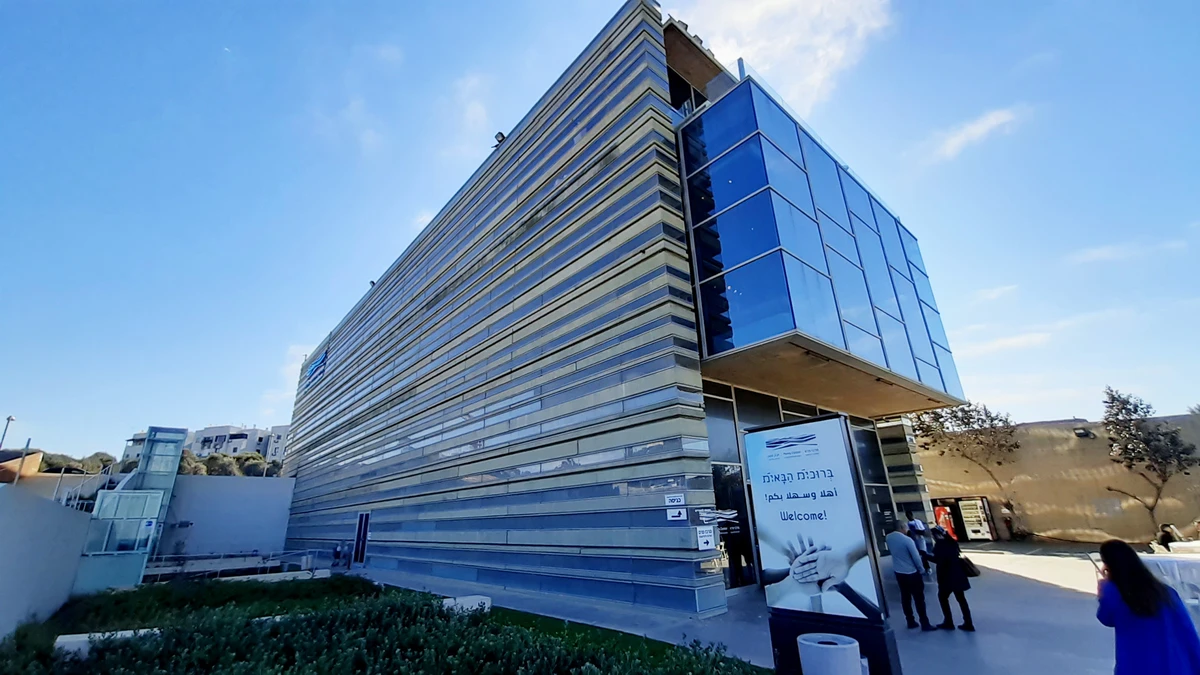
(via Wikimedia Commons, CC BY 2.5).
The Peres Center for Peace and Innovation in Jaffa, a living monument to Peres’s philosophy that technology, entrepreneurship, and mutual respect bridge geopolitical divides.
4. The Dimona Secret: Securing Israel’s Strategic Nuclear Deterrent
The most profound strategic achievement of Shimon Peres’s early career was the secret procurement and construction of the nuclear research centers at Dimona in the Negev Desert and Soreq. In the mid-1950s, Peres recognized that Israel’s tiny geographic territory and severe demographic asymmetry against hostile coalitions created an existential vulnerability that conventional arms alone could never permanently resolve.
In October 1956, during the secret Protocol of Sèvres negotiations outside Paris with French Prime Minister Guy Mollet, Peres secured France’s agreement to provide Israel with a 24-megawatt thermal research reactor and technical expertise. Overcoming fierce opposition from Israeli academic scientists (including the Chaim Weizmann Institute leadership) and cabinet colleagues who insisted the project was economically impossible, Peres raised private philanthropic funds across the global Jewish diaspora and mobilized thousands of Israeli engineers, geologists, and physicists to construct the underground facility in the arid Negev.
The Dimona reactor provided Israel with an unshakeable sovereign strategic deterrent. Historians widely acknowledge that Dimona altered the geopolitical calculus of the entire Middle East, convincing Arab military leaders that Israel could never be destroyed, and ultimately paving the psychological pathway toward the Camp David Accords with Egypt and the Abraham Accords decades later.
Peres also crafted Israel’s sophisticated diplomatic formula of “nuclear ambiguity” (Amimut), declaring that Israel would not be the first to introduce nuclear weapons into the region, while maintaining a decisive operational capability. This posture satisfied international non-proliferation concerns while preserving the deterrent shield that secured the nation’s borders during regional crises.
5. Minister of Defense and the Daring Raid on Entebbe (1974–1977)
Elected to the Knesset in 1959 as a leader of Mapai, Peres served as Deputy Minister of Defense (1959–1965) and held key ministries throughout the 1960s and 1970s. In June 1974, following the Yom Kippur War, Prime Minister Yitzhak Rabin appointed Peres as Minister of Defense.
In this vital post, Peres supervised the reconstruction and technological modernization of the IDF, expanding armored divisions, restocking sophisticated munitions, and integrating early-warning electronic systems.
In late June 1976, when Palestinian and German terrorists hijacked Air France Flight 139 to Entebbe Airport in Uganda, holding 106 Israeli and Jewish passengers hostage under the protection of Ugandan dictator Idi Amin, Peres became the primary driving force in the cabinet demanding a military rescue operation. Working around the clock with Chief of Staff Motta Gur, Operations Chief Dan Shomron, and Sayeret Matkal Commander Lieutenant Colonel Yoni Netanyahu, Peres developed and presented Operation Thunderbolt (Operation Entebbe).
On July 4, 1976, Israeli Hercules transport aircraft flew 4,000 kilometers through hostile African airspace, landed at Entebbe, neutralized the terrorists, and rescued 102 hostages in an operation celebrated globally as one of the most audacious military feats in history. Peres’s boldness and strategic resolve restored national pride and established a benchmark in international counter-terrorism.
6. Premiership (1984–1986): Masterminding the 1985 Economic Miracle
Following the deadlocked elections of 1984, Peres engineered a historic National Unity Government with Likud leader Yitzhak Shamir, assuming the office of Prime Minister for the first two-year rotation.
Peres inherited a national economy on the brink of total collapse: hyperinflation was galloping at an annualized rate of 450%, foreign currency reserves were nearly exhausted, and Israeli forces remained entangled in Lebanon following the 1982 war. Demonstrating masterly executive governance, Peres enacted two transformative policies:
- The 1985 Economic Stabilization Plan: In an extraordinary tripartite agreement uniting the government, the Histadrut labor federation, and the private Manufacturers Association, Peres slashed government subsidies, froze prices and wages, drastically cut public spending, and introduced the New Israeli Shekel (NIS). Inflation plummeted from 450% to under 20% within months, preserving the fiscal solvency of the state and creating the open, competitive market economy that powered Israel’s subsequent high-tech boom.
- The Lebanon Strategic Redeployment: In 1985, Peres oversaw the withdrawal of IDF forces from central Lebanon to a narrow security buffer zone in the south, drastically reducing combat casualties while maintaining defense for northern border communities.
- Operation Moses (1984–1985): Authorized the clandestine, highly complex airlift of over 8,000 Ethiopian Jews (Beta Israel) from refugee camps in Sudan, fulfilling a historic Zionist mission of rescue.
The success of the 1985 Economic Stabilization Plan is regarded by economists worldwide as a textbook case of macroeconomic crisis management. By taking bold, politically risky decisions, Peres restored international confidence in Israel’s financial stability, encouraged foreign direct investment, and created the macroeconomic conditions that allowed the private technology sector to flourish in the 1990s.
7. Foreign Minister: Oslo Accords, Nobel Peace Prize, and the “New Middle East”
As Foreign Minister in Yitzhak Rabin’s second government (1992–1995), Peres focused his vast energy and intellectual vision on reshaping Middle Eastern diplomacy. He recognized that the collapse of the Soviet Union, the defeat of Saddam Hussein in the Gulf War, and the dawn of global telecommunications created an unprecedented historic window for regional reconciliation.
Peres sponsored and directed the secret negotiations in Oslo, Norway, between Israeli academics and PLO representatives, resulting in the 1993 Declaration of Principles on Interim Self-Government Arrangements. In December 1994, Peres, Rabin, and Arafat were awarded the Nobel Peace Prize.
In his influential book The New Middle East (1993), Peres articulated a revolutionary vision of regional transformation: replacing ancient hatreds and zero-sum territorial disputes with collaborative super-grids for water desalination, solar energy fields, trans-regional rail links, and shared biotechnology research. Following Rabin’s tragic assassination in November 1995, Peres assumed the premiership for the third time, maintaining national stability and executing the transfer of major population centers to Palestinian interim administration.
Peres’s diplomatic vision was not limited to immediate bilateral accords. He sought a comprehensive integration of Israel into the Mediterranean and Middle Eastern regional fabric. He initiated regional economic summits in Casablanca, Amman, and Cairo, bringing together thousands of business executives, ministers, and investors from across the Arab world to explore joint infrastructure and technological partnerships.
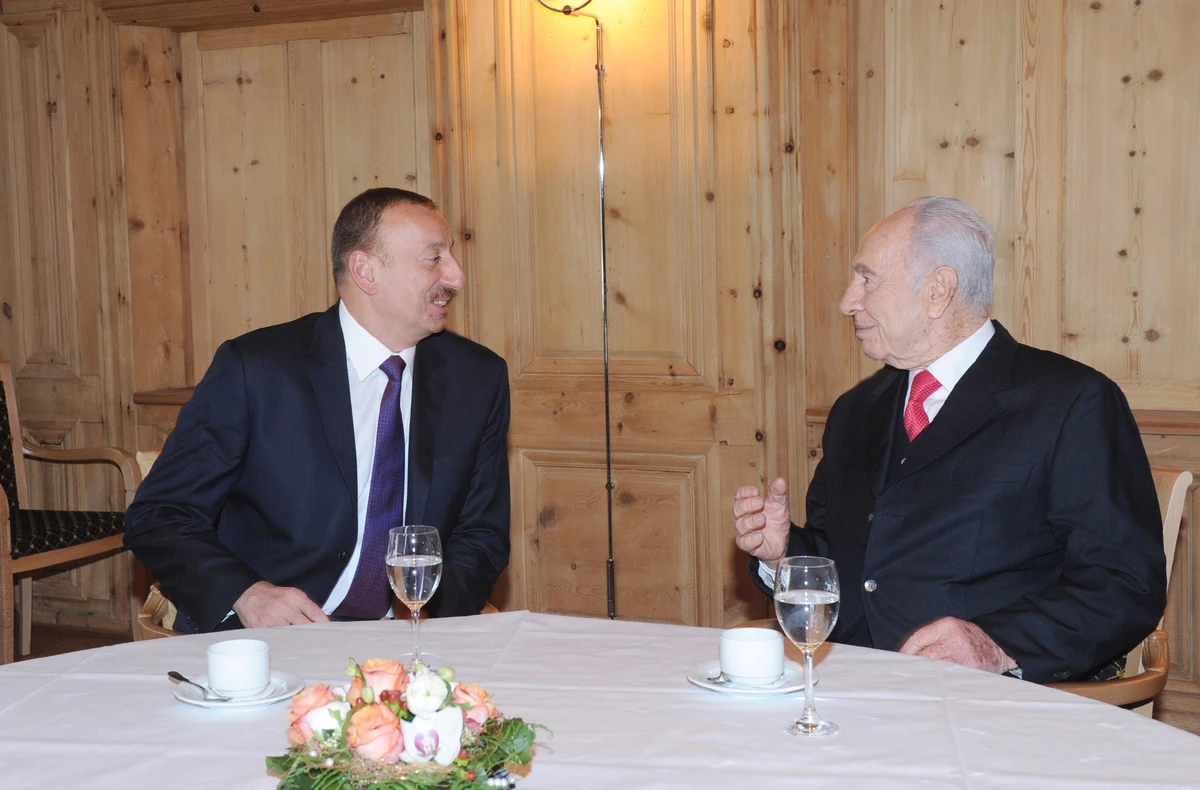
(via Wikimedia Commons, CC BY 4.0).
President Shimon Peres addressing world leaders and global industrialists at the World Economic Forum, championing Israel’s transformation into a global innovation superpower.
8. The Ninth President: Elder Statesman of Global Innovation (2007–2014)
On June 13, 2007, the Knesset elected Shimon Peres as the ninth President of the State of Israel. Over his seven-year presidency, Peres revitalized the institution, turning the presidency into a dynamic global platform for public diplomacy, scientific advancement, and coexistence.
Peres traveled tirelessly to world capitals, meeting with heads of state and tech pioneers including Bill Gates, Mark Zuckerberg, and Sergey Brin. He utilized his international stature to advocate for Israeli technological prowess in nanotechnology, artificial intelligence, and neuroscience, establishing the Israel National Nanotechnology Initiative and national brain research consortiums.
Through the Peres Center for Peace and Innovation, which he established in Jaffa in 1996, Peres created groundbreaking humanitarian programs that provided advanced medical treatment to tens of thousands of Palestinian and Syrian children in Israeli hospitals, sponsored joint business accelerators for Israeli and Arab entrepreneurs, and trained youth from diverse backgrounds in computer programming and robotics.
During his presidency, Peres transformed the President’s Residence in Jerusalem into a hub for cutting-edge scientific symposiums and cultural exchange. He invited Nobel laureates, world-renowned neuroscientists, and young technology innovators to present their work, continuously reminding the nation that its future greatness lay in expanding the frontiers of human knowledge.
9. Technological Futurism, Science Policy, and the Venture Capital Boom
More than any other political leader of his generation, Shimon Peres recognized that the future of nations would be decided not by land, natural resources, or military conquests, but by scientific intellect, technological creativity, and human imagination. Peres consistently argued that Israel’s geographic smallness and lack of natural resources were in fact its greatest historical blessing, because they compelled the nation to invest in its only inexhaustible asset: the human mind.
During the 1990s and 2000s, Peres actively mentored generations of Israeli entrepreneurs, software developers, and venture capitalists. He was an early evangelist for biotechnology, artificial intelligence, clean energy, and drip irrigation, regularly bringing international delegations of venture capitalists and corporate executives to Israel to witness its innovative ecosystem. His relentless optimism and global networking helped cement Israel’s international reputation as the “Startup Nation.”
Peres was particularly passionate about neuroscience and brain research. In his later years, he predicted that understanding the human brain would be the greatest scientific revolution of the twenty-first century, with the potential to eradicate neurodegenerative diseases, improve educational outcomes, and even reduce human aggression. He established national research consortiums that united Israeli universities with leading international laboratories in Europe and the United States.
10. Global Statesmanship, Multilateral Diplomacy, and Moral Leadership
Throughout his later decades, Shimon Peres functioned as Israel’s primary global ambassador of goodwill, intellectual gravitas, and progressive values. He addressed the United Nations, the European Parliament, the US Congress, and the World Economic Forum in Davos dozens of times, consistently advocating for a transition from an era of national sovereignty based on borders and armies to an era of global knowledge based on science, environmental stewardship, and artificial intelligence.
Peres cultivated deep personal friendships with world leaders spanning multiple political generations, including John F. Kennedy, Charles de Gaulle, François Mitterrand, Margaret Thatcher, Mikhail Gorbachev, Bill Clinton, Nelson Mandela, and Pope Francis. In 2014, at the invitation of Pope Francis, Peres joined Palestinian President Mahmoud Abbas at the Vatican for a historic interfaith prayer summit for Middle Eastern peace.
In 2012, US President Barack Obama awarded Shimon Peres the Presidential Medal of Freedom, the highest civilian honor in the United States, praising him as a leader who “teaches us that we must be guided not by our fears, but by our hopes; not by the past, but by the future.” In 2014, the US Congress bestowed upon him the Congressional Gold Medal, making Peres one of only a handful of individuals in world history to receive both prestigious American honors alongside the Nobel Peace Prize.
11. Literary Works, Global Honors, and Philosophical Worldview
Peres was an extraordinarily prolific writer and intellectual, publishing more than a dozen books including David’s Sling (1970), And the Next Generation (1979), The New Middle East (1993), Battling for Peace (1995), Ben-Gurion: A Political Life (2011), and his final memoir No Room for Small Dreams (2017). His prose was celebrated for its lyrical optimism, historical perspective, and profound faith in human creativity.
Peres was decorated with the world’s highest honors. In 2008, he was knighted by Queen Elizabeth II (Honorary Knight Grand Cross of the Order of St Michael and St George). In addition to the Nobel Peace Prize, the Presidential Medal of Freedom, and the Congressional Gold Medal, he held honorary doctorates from over forty universities worldwide.
His philosophy of life centered on perpetual growth and intellectual curiosity. He rejected the concept of retirement, famously stating: “A person is only as old as their dreams, and as young as their curiosity.” He urged youth to dare to dream audaciously, never fear failure, and dedicate their talents to improving the human condition.
12. Comprehensive Overview: Shimon Peres’s Historic Positions
6. The 1973 Yom Kippur War: Logistics, Armor Restocking, and Defense Rebuilding
During the 1973 Yom Kippur War, Shimon Peres served as Minister of Transport and Communications in Golda Meir’s war cabinet, playing a vital operational role in managing the nation’s civilian transportation and supply logistics. Peres mobilized the entire commercial trucking fleet, ports, and railways to transport reserve divisions and hundreds of thousands of tons of ammunition directly to the combat fronts in the Golan Heights and the Sinai Peninsula.
Following his appointment as Minister of Defense in 1974, Peres was tasked with the monumental responsibility of rebuilding the IDF after the heavy losses of 1973. Working closely with military engineers and generals, Peres authorized the mass production of the Merkava Main Battle Tank, designed by Major General Israel Tal, ensuring that Israeli armored crews operated vehicles optimized specifically for crew survival and Middle Eastern terrain.
Peres also accelerated the procurement of fourth-generation F-15 Eagle and F-16 Fighting Falcon jet fighters from the United States, modernizing the Israeli Air Force and establishing the qualitative military edge (QME) that deterred further multi-state conventional invasions across the region.
12. Foreseeing the Abraham Accords: The Blueprint for Gulf Normalization
Long before the historic signing of the Abraham Accords in 2020, Shimon Peres was the pioneer of confidential diplomatic and commercial engagement with the Gulf States, Morocco, and other moderate Arab nations. Throughout the 1990s and 2000s, Peres conducted quiet diplomacy with leaders across the Arab world, demonstrating that Israel’s advances in water desalination, solar power, agricultural technology, and cybersecurity offered immense mutual benefits for desert economies seeking economic diversification.
Peres established Israel’s trade representation offices in Oman and Qatar following the Madrid and Oslo processes, hosting Gulf trade ministers in Jerusalem and Tel Aviv. He argued that the natural convergence of interests between Israel and Sunni Arab states against violent extremism and economic stagnation would inevitably produce formal normalization treaties.
When the Abraham Accords were signed in 2020 between Israel, the United Arab Emirates, Bahrain, Morocco, and Sudan, regional analysts and international diplomats universally recognized that the agreements were the realization of the architectural vision Shimon Peres had championed for more than three decades.
13. Parliamentary Battles, The Rafi Split, and The Labor Reunification
In the mid-1960s, Shimon Peres played a central role in the political drama that reshaped the Israeli party system. In 1965, following intense ideological and personal disputes over the “Lavon Affair” within Mapai, Peres joined David Ben-Gurion and Moshe Dayan in breaking away to form the Rafi party (Israeli Labor List). As Secretary-General of Rafi, Peres championed government modernization, state-sponsored scientific research, and electoral reform.
In the anxious days preceding the 1967 Six-Day War, Peres was the primary political strategist who successfully pushed for the formation of Israel’s first National Unity Government, insisting that Moshe Dayan be appointed Minister of Defense to unify the country and reassure the public.
Following the war, Peres demonstrated exceptional political vision by facilitating the reunification of Rafi with Mapai and Ahdut HaAvoda in 1968 to create the unified Israel Labor Party (Mifleget HaAvoda). His ability to build bridges across factions, resolve ideological stalemates, and maintain institutional continuity ensured that Israeli democracy remained robust during decades of geopolitical turmoil.
Peres was also a relentless advocate for regional development in the Negev and Galilee. As Minister for the Development of the Negev and Galilee in the early 2000s, he mobilized billions of shekels to establish medical schools, university campuses, biotechnology incubators, and rail connections in northern and southern development towns, ensuring that Israel’s economic prosperity was shared across all sectors of society.
14. Universal Humanism, Interfaith Harmony, and the Soul of a Statesman
Underlying all of Shimon Peres’s political, military, and technological endeavors was an unwavering moral commitment to universal humanism and interfaith harmony. Drawing from the prophetic traditions of the Hebrew Bible and the humanitarian principles of European enlightenment philosophy, Peres rejected ethnic chauvinism, xenophobia, and sectarian hatred. He maintained that the ultimate moral test of a Jewish sovereign state was its treatment of minority citizens and its capacity to live in peace with its neighbors.
Throughout his presidency, Peres regularly visited Christian, Muslim, and Druze communities across Israel, celebrating their holidays, addressing religious leaders in their places of worship, and speaking out forcefully against all forms of bigotry and discrimination. He established the “Saving Children” program through the Peres Center, which provided life-saving open-heart surgeries and advanced oncological care to thousands of Palestinian, Iraqi, and Syrian children in leading Israeli medical centers.
When asked by interviewers how he wished to be remembered in the annals of history, Peres answered with characteristic simplicity and depth: “I would prefer that history remember me not for what I was, but for what I helped others to become. If I contributed to building a safe, prosperous, creative Israel that brings hope to humanity, that is the only legacy I desire.” His life’s work remains an enduring inspiration to leaders, innovators, and peacemakers worldwide.
15. The Peres Center for Peace and Innovation: Global Impact
Founded by Shimon Peres in 1996 in Jaffa, the Peres Center for Peace and Innovation stands as a living testament to his vision of technological empowerment and interfaith collaboration. The center operates dozens of flagship humanitarian and educational programs:
- Saving Children: Providing life-saving medical care and complex cardiac surgeries to thousands of Palestinian, Syrian, and regional Arab children in Israeli hospitals.
- Twinned Peace Sports Schools: Bringing together over 20,000 Jewish and Arab children annually to play soccer, basketball, and judo while learning Hebrew and Arabic.
- Israeli Innovation Center: Showcasing Israel’s greatest technological, medical, and agricultural breakthroughs to hundreds of thousands of international visitors, business leaders, and heads of state.
| Position / Office | Tenure | Major Policy Initiatives | Enduring Impact on Israel |
|---|---|---|---|
| Director-General of Defense Ministry | 1953–1959 | Founded IAI and Rafael; Dimona nuclear reactor construction; French arms alliance | Built Israel’s sovereign defense industry and strategic deterrence shield |
| Deputy Minister of Defense | 1959–1965 | Procured Mirage fighter jets; expanded military R&D; electronic warfare systems | Established technological superiority of the Israel Defense Forces |
| Minister of Defense | 1974–1977 | Post-Yom Kippur War reorganization; planning and authorization of Operation Entebbe | Restored IDF deterrence and rescued 102 hostages in Entebbe |
| Prime Minister (1st & 2nd Terms) | 1984–1986, 1995–1996 | 1985 Economic Stabilization Plan; IDF Lebanon withdrawal; Operation Moses | Defeated hyperinflation; created modern free-market Shekel economy |
| Minister of Foreign Affairs | 1986–1988, 1992–1995, 2001–2002 | Oslo Accords negotiations; Nobel Peace Prize; London Agreement with Jordan | Expanded global diplomatic recognition; established Middle East peace architecture |
| Ninth President of Israel | 2007–2014 | Global public diplomacy; promoting Startup Nation; nanotechnology and brain research | Elevated Israel’s global brand as high-tech and innovation superpower |
13. The Legacy of an Eternal Optimist
Shimon Peres passed away on September 28, 2016, at the age of 93. His state funeral on Mount Herzl in Jerusalem brought together the largest gathering of foreign dignitaries in Middle Eastern history, including US President Barack Obama, former President Bill Clinton, French President François Hollande, German President Joachim Gauck, King Felipe VI of Spain, and Palestinian President Mahmoud Abbas.
Peres often summarized his life philosophy in a memorable phrase: “Optimists and pessimists die the same death, but they live very different lives. And if you are an optimist, you can build something.” From building the sovereign defense industries and strategic deterrence of a vulnerable young republic, to stabilizing its currency, unleashing its high-tech genius, and charting the course for regional coexistence, Shimon Peres remains an eternal founding father of modern Israel and a titan of twentieth-century global statesmanship.