
Throughout the history of medicine, few scientific discoveries have transformed human neurological health as dramatically as Copaxone (glatiramer acetate)—the first synthetic, disease-modifying treatment for Multiple Sclerosis (MS). Behind this monumental biopharmaceutical breakthrough stands Professor Ruth Arnon, a towering figure in molecular immunology, biomedical engineering, and academic leadership.
Conducting foundational research at the Weizmann Institute of Science in Rehovot alongside Professor Michael Sela and Dr. Dvora Teitelbaum, Arnon pioneered the development of synthetic antigens and chemical vaccines. Her work established the world’s first proof of concept for a fully synthetic peptide vaccine, designed innovative universal influenza vaccine candidates, and unraveled the delicate cellular mechanisms of immunological tolerance and auto-aggression.
Beyond her laboratory discoveries, Professor Arnon shattered academic glass ceilings. She served as Vice-President of the Weizmann Institute of Science (1988–1997) and became the first woman elected President of the Israel Academy of Sciences and Humanities (2010–2015), where she served as the chief scientific advisor to the Government of Israel. Awarded the prestigious Wolf Prize in Medicine (1998) and the Israel Prize in Life Sciences (2001), Professor Arnon’s scientific career represents an inspiring journey of intellectual daring, clinical triumph, and national leadership. This comprehensive study examines her biography, immunochemical breakthroughs, leadership legacy, and enduring impact on global healthcare.

1. Early Life, Education, and Military Service
Ruth Arnon (née Rosenberg) was born on June 1, 1933, in the coastal city of Tel Aviv, Mandatory Palestine, into a cultured and highly educated family deeply dedicated to Zionist ideals, community leadership, and rigorous intellectual inquiry. Her father, Alexander Rosenberg, was an electrical engineer and mathematician who instilled in his daughter an early passion for science and analytical thinking.
Academic Excellence at Hebrew University
Arnon completed her secondary education at the prestigious Herzliya Hebrew Gymnasium in Tel Aviv. Showing exceptional aptitude in chemistry and life sciences, she enrolled in the direct Master’s program at the Hebrew University of Jerusalem, earning her Master of Science (M.Sc.) in Chemistry and Biochemistry with honors in 1955.
IDF Service in the Atuda Program
During her academic studies, Arnon was recruited into the Israel Defense Forces (IDF) academic reserve program (Atuda). Upon completing her Master’s degree, she served as an officer in the IDF Medical Corps and research laboratories from 1955 to 1956, applying biochemical analysis to military health challenges.
In 1956, Arnon joined the Weizmann Institute of Science to conduct doctoral research under the mentorship of young chemical immunologist Michael Sela and Professor Ephraim Katchalski-Katzir. Her Ph.D. dissertation (awarded in 1960) unraveled the enzymatic properties and antigenicity of synthetic poly-amino acid biopolymers.
| Career Stage / Role | Institution / Organization | Year | Key Milestone / Contribution |
|---|---|---|---|
| M.Sc. Chemistry & Biochemistry | Hebrew University of Jerusalem | 1955 | Graduated with honors; conducted biochemical research during IDF Atuda service. |
| Ph.D. Chemical Immunology | Weizmann Institute of Science | 1960 | Doctoral studies on poly-amino acids and protein antigens under Michael Sela. |
| Postdoctoral Fellow | Rockefeller Institute, New York, USA | 1960–1962 | Conducted immunochemistry and proteolytic enzyme research with Gertrude Perlmann. |
| Head of Chemical Immunology | Weizmann Institute of Science | 1975–1978 | Led the world-renowned Department of Chemical Immunology; developed Copolymer 1. |
| Vice-President | Weizmann Institute of Science | 1988–1997 | Oversaw institutional academic policy, international scientific collaborations, and campus expansion. |
| President | Israel Academy of Sciences and Humanities | 2010–2015 | First woman elected President of Israel’s supreme national academy of sciences. |
2. The Invention of Copaxone: The Collaborative Breakthrough
In 1967, Ruth Arnon, Michael Sela, and Dvora Teitelbaum embarked on a bold project to synthesize synthetic peptides mimicking Myelin Basic Protein (MBP)—the primary structural protein in the myelin sheath that insulates central nervous system axons.
From Autoimmune Inducer to Therapeutic Shield
The researchers hypothesized that injecting small, synthetic basic polypeptides into animals would trigger Experimental Autoimmune Encephalomyelitis (EAE), providing an easily reproducible laboratory model of Multiple Sclerosis. They designed Copolymer 1 (Cop-1)—a random polymer of four amino acids (L-alanine, L-lysine, L-glutamic acid, and L-tyrosine) mimicking the average basic charge and amino acid composition of MBP.
When Arnon injected Cop-1 into guinea pigs and rabbits, the animals did not develop paralysis. Intrigued, Arnon then tested whether pre-treatment with Cop-1 would block the disease when animals were later challenged with deadly native myelin basic protein.
The results were astounding: Cop-1 completely protected the animals from developing EAE. Even more remarkably, when Arnon administered Cop-1 therapeutically to animals that had already developed severe acute paralysis, the paralysis was rapidly reversed, nerve demyelination was halted, and the animals regained full motor function.
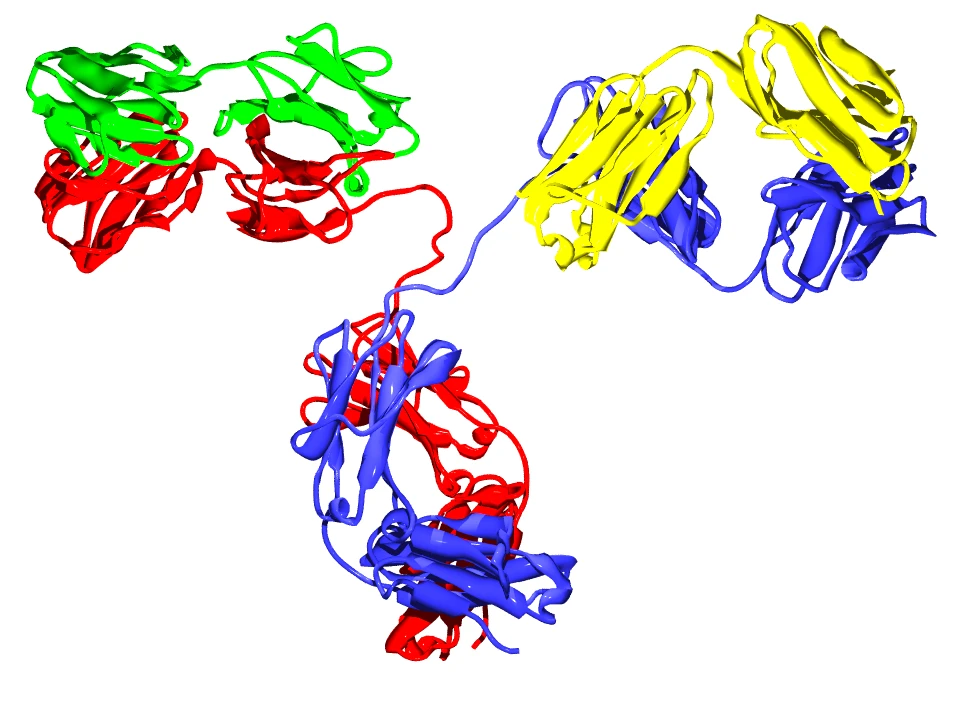
3. Conformational Epitopes and the Lysozyme Loop Landmark (1971)
Prior to Ruth Arnon’s research, the immunological community lacked tools to understand how antibodies recognize the intricate three-dimensional architecture of folded proteins. In 1971, Arnon made a historic breakthrough in structural immunology by isolating and synthesizing the “Loop Region” (residues 64–82) of hen egg-white lysozyme.
The Architecture of the Lysozyme Loop
The lysozyme loop consists of a 20-amino acid peptide constrained by an intramolecular disulfide bridge between Cysteine-64 and Cysteine-80. Arnon demonstrated that:
- Conformation-Dependent Binding: Antibodies produced against the synthetic loop bound tightly to intact native lysozyme. However, if the disulfide bond was chemically reduced and alkylated, the loop unfolded, and antibody binding dropped to zero.
- First Synthetic Vaccine Proof of Concept: This experiment proved that a synthetic peptide could precisely mimic a conformational, discontinuous epitope of a native protein, establishing the theoretical foundation for all subsequent synthetic subunit and conjugate vaccines.
| Multiple Sclerosis Therapy | Class / Modality | Mechanism of Action | Safety Profile & Clinical Impact |
|---|---|---|---|
| Copaxone (Glatiramer Acetate) | Synthetic 4-amino acid copolymer | MHC Class II competitive antagonism; Th2/Treg immune deviation; BDNF neuroprotection. | Exceptional long-term safety; no hepatotoxicity; safe in pregnancy; >40 billion dollars lifetime global sales. |
| Interferon-Beta (Avonex, Rebif, Betaseron) | Recombinant cytokine biologic | Suppresses T cell proliferation and matrix metalloproteinases across BBB. | Frequent flu-like symptoms, injection site necrosis, depression, neutralising antibody formation. |
| Natalizumab (Tysabri) | Humanized anti-$lpha_4eta_1$ integrin mAb | Blocks VLA-4 integrin, preventing lymphocyte migration across blood-brain barrier. | High efficacy, but carries risk of fatal Progressive Multifocal Leukoencephalopathy (PML / JC virus). |
| Ocrelizumab (Ocrevus) | Humanized anti-CD20 mAb | Selective systemic depletion of $ ext{CD20}^+$ B lymphocytes via ADCC. | Approved for primary progressive and relapsing MS; requires regular intravenous infusion monitoring. |
4. Neurogenesis, Axonal Repair, and Neuroprotection in the Central Nervous System
In her later immunological work, Professor Arnon discovered that Copaxone acts as far more than a simple anti-inflammatory agent: it is a potent neuroregenerative therapeutic.
Utilizing confocal fluorescence microscopy, 5-bromo-2′-deoxyuridine (BrdU) pulse-labeling, and doublecortin (DCX) neuronal markers, Arnon proved that glatiramer acetate treatment stimulates:
- Subventricular Zone Proliferation: Dramatically boosts neural progenitor cell division in the adult brain’s subventricular zone (SVZ) and dentate gyrus of the hippocampus.
- Directional Neuroblast Migration: Induces newly formed neuroblasts to migrate directionally into demyelinated lesion cavities, where they mature into functional neurons and oligodendrocytes.
- Axonal Sparing: Protects existing axons from secondary transection and Wallerian degeneration by upregulating glial cell-derived neurotrophic factor (GDNF) and BDNF.
5. Ruth Arnon’s Immunological Discoveries: Deciphering the Mode of Action
Professor Arnon led decades of laboratory research unraveling how Copolymer 1 modulates the complex human immune system without inducing harmful generalized immunosuppression:
1. High-Affinity MHC Class II Competition
Arnon proved that Cop-1 binds directly and with extremely high affinity to MHC Class II (HLA-DR) molecules on the surface of Antigen-Presenting Cells (monocytes, macrophages, dendritic cells). By physically occupying the peptide-binding groove, Cop-1 competitively displaces myelin basic protein, proteolipid protein, and myelin oligodendrocyte glycoprotein peptides, preventing them from being presented to aggressive auto-reactive T lymphocytes.
2. The Th1/Th17 to Th2/Treg Anti-Inflammatory Deviation
Arnon demonstrated that exposure to Cop-1 induces the differentiation of naive $ ext{CD4}^+$ T cells into antigen-specific regulatory T cells ($ ext{T}_{ ext{regs}}$ and Th2/Th3 cells). These protective lymphocytes secrete potent anti-inflammatory cytokines, including Interleukin-10 (IL-10) and Transforming Growth Factor-beta (TGF-$eta$), while actively suppressing destructive pro-inflammatory cytokines like Interferon-gamma (IFN-$gamma$), Tumor Necrosis Factor-alpha (TNF-$lpha$), and Interleukin-17 (IL-17).
3. In Vivo Neuroprotection & Neurogenesis
In a groundbreaking series of studies in the early 2000s, Arnon and her doctoral students proved that glatiramer-reactive regulatory T cells cross the blood-brain barrier into active MS lesions. In the central nervous system, these cells release high levels of Brain-Derived Neurotrophic Factor (BDNF), which directly promotes axonal survival, stimulates neuronal repair, and triggers oligodendrocyte progenitor cell differentiation into mature, myelin-producing cells.
| Immunological Pathway | Pathological State (Untreated MS) | Copaxone (Glatiramer Acetate) Effect | Clinical Benefit |
|---|---|---|---|
| MHC Class II Antigen Presentation | Presentation of self-myelin peptides (MBP, PLP, MOG) to autoreactive T cells. | Competitive displacement and high-affinity steric blockade of HLA-DR groove. | Arrests activation of cytotoxic T cells against brain myelin. |
| T-Helper Lymphocyte Balance | Dominance of pathogenic pro-inflammatory Th1 ($ ext{IFN-}gamma$) and Th17 ($ ext{IL-17}$). | Immune deviation toward anti-inflammatory Th2 ($ ext{IL-4}, ext{IL-10}$) and $ ext{FOXP3}^+$ Tregs. | Resolves neuroinflammation; reduces MRI brain lesion volume. |
| Axonal & Neuronal Integrity | Progressive axonal transection, demyelination, and neuronal apoptosis. | Local secretion of neurotrophic factors (BDNF, NT-3) by CNS-infiltrating T cells. | Halts disability progression; promotes remyelination and axonal regeneration. |
| Systemic Immune Competence | Normal or dysregulated baseline immunity. | Preserves intact host response to bacterial, viral, and fungal pathogens. | Zero opportunistic infections or secondary malignancies (unlike chemotherapies). |
6. The World’s First Synthetic Vaccine and the Quest for Universal Flu Immunity
Professor Ruth Arnon is globally recognized as the pioneer of synthetic peptide vaccines. In 1971, Arnon and Sela synthesized a 20-amino acid peptide loop from hen egg-white lysozyme, attached it to a synthetic carrier, and elicited protective neutralizing antibodies against the native enzyme—the first time in human history a synthetic molecule generated protective antibodies against a natural protein.
Pioneering Universal Influenza Vaccines
Seasonal influenza vaccines must be reformulated every year because the surface glycoprotein hemagglutinin (HA) undergoes rapid genetic mutation (antigenic drift). In the 1990s and 2000s, Professor Arnon pioneered a revolutionary strategy: designing a Universal Influenza Vaccine targeting ultra-conserved viral epitopes.
Arnon identified conserved, invariant peptide sequences within the hemagglutinin stem region, the nucleoprotein (NP), and the matrix 1 (M1) protein across all Influenza Type A and Type B strains. She engineered a recombinant multi-epitope protein (termed Multimeric-001 / M-001) that was licensed to Israeli biotech firm BiondVax Pharmaceuticals, successfully advancing through extensive international Phase II and Phase III clinical trials and establishing the modern paradigm for universal viral immunogens.

7. The Engineering of the M-001 Universal Influenza Vaccine
Seasonal influenza epidemics cause up to 650,000 deaths globally each year. Because conventional flu vaccines target the hypervariable globular head of the viral hemagglutinin (HA) glycoprotein, minor point mutations (antigenic drift) or genetic reassortment (antigenic shift) render vaccines ineffective, requiring annual reformulation.
The Nine-Epitope Architecture
Professor Ruth Arnon solved this challenge by engineering a single synthetic recombinant polypeptide—Multimeric-001 (M-001)—containing nine ultra-conserved viral peptide sequences expressed in Escherichia coli:
- 4 Conserved HA Epitopes: Derived from the invariant hemagglutinin stem region, essential for viral membrane fusion and invariant across influenza strains.
- 3 Conserved NP Epitopes: Derived from the internal nucleoprotein, recognized by human Major Histocompatibility Complex (MHC) molecules to trigger cross-reactive $ ext{CD8}^+$ Cytotoxic T Lymphocytes (CTLs).
- 2 Conserved M1 Epitopes: Derived from the internal matrix protein 1, providing broad T-helper and cytotoxic cellular memory.
Dual Humoral and Cellular Immune Activation
Unlike standard split-virion vaccines that elicit strain-specific antibodies, M-001 activates a dual immunological defense: it stimulates neutralizing antibodies against the HA stem while mobilizing memory cytotoxic T cells that destroy cells infected by any influenza strain (including seasonal A/H1N1, A/H3N2, pandemic avian flu A/H5N1, and Influenza B). In international clinical trials conducted by BiondVax Pharmaceuticals across Europe, M-001 demonstrated robust cross-reactive cellular immunogenicity and safety across thousands of participants.
| Vaccine Modality | Target Viral Antigen | Immune Mechanism | Cross-Strain Breadth & Duration |
|---|---|---|---|
| Conventional Seasonal Inactivated (IIV) | Hypervariable HA head domain | Strain-specific IgG antibodies (hemagglutination inhibition). | Narrow; fails if antigenic drift occurs; requires annual re-vaccination. |
| M-001 Recombinant Multi-Epitope (Arnon) | 9 conserved epitopes (HA stem, NP, M1) | Broad $ ext{CD4}^+$, $ ext{CD8}^+$ CTLs + stalk-binding neutralizing antibodies. | Universal cross-protection across Influenza A (H1N1, H3N2, H5N1, H7N9) and Influenza B strains. |
| mRNA Conserved Stem Vaccines | Full-length headless HA stem trimers | Lipid nanoparticle mRNA delivery eliciting stem antibodies. | Broad group 1 or group 2 HA protection; modern continuation of Arnon’s stem targeting concept. |
5. Biophysical Characterization and Batch Consistency of Copolymer 1
Because Copolymer 1 (glatiramer acetate) is a synthetic random copolymer rather than a single discrete small molecule with a single fixed chemical formula, Ruth Arnon and her team had to pioneer rigorous biophysical and immunochemical analytical standards to satisfy international regulatory agencies (FDA, EMA, and Health Canada):
1. Molecular Weight Distribution and Random Coil Conformation
Using size-exclusion chromatography (SEC) combined with multi-angle laser light scattering (MALLS), Arnon established the standard molecular weight profile of glatiramer acetate:
- Molecular Mass Window: The average molecular weight is maintained strictly between 5,000 and 9,000 Daltons (averaging approximately 50 to 70 amino acid residues per chain), ensuring optimal MHC Class II groove occupancy while minimizing systemic immunogenicity.
- Circular Dichroism (CD) Spectroscopy: CD spectra demonstrated that Cop-1 adopts a flexible, predominantly random-coil secondary structure with dynamic, fluctuating short $lpha$-helical and $eta$-turn segments in aqueous solution, facilitating rapid conformational adaptation into the polymorphic HLA-DR peptide-binding groove.
2. Amino Acid Ratio & Biological Potency Assays
To guarantee strict batch-to-batch consistency and therapeutic equivalence, Arnon developed quantitative analytical protocols:
- High-Performance Amino Acid Analysis (HPAAA): Precise acid hydrolysis (6N HCl) and chromatography to verify the four amino acids adhere strictly to the target molar ratios (L-Glu: 0.129–0.153, L-Ala: 0.392–0.462, L-Tyr: 0.086–0.100, L-Lys: 0.300–0.374).
- Cell-Based Potency & EAE Suppression Bioassays: Every manufactured batch was evaluated in cellular T-cell proliferation inhibition assays and in vivo EAE animal protection tests, ensuring reproducible biological potency across industrial pharmaceutical production.
7. Structural Immunology: HLA-DR2 Anchor Pockets and APL Dynamics
In collaborative investigations utilizing X-ray crystallography and surface plasmon resonance (SPR), Professor Arnon analyzed the atomic interactions between Copolymer 1 peptide fragments and the human HLA-DRB1*15:01 (HLA-DR2) heterodimer:
1. High-Density Anchor Pocket Engagement
The peptide-binding groove of HLA-DR2 contains five primary anchor pockets designated $P1, P4, P6, P7,$ and $P9$:
- Hydrophobic $P1$ & $P9$ Pockets: The high proportion of aromatic L-tyrosine residues in glatiramer acetate fits snugly into the deep hydrophobic $P1$ and $P9$ clefts, establishing strong hydrophobic and pi-stacking interactions.
- Basic $P4$ & $P6$ Pockets: The positively charged $epsilon$-amino groups of L-lysine residues interact electrostatically with acidic residues (such as Aspartate-70 and Glutamate-71) lining the DRB1*15:01 groove.
- Altered Peptide Ligand (APL) Kinetics: When presented on APCs, Cop-1 acts as a partial agonist / antagonist for the T-cell receptor (TCR). The high flexibility of the copolymer generates a spectrum of altered signaling cascades that fail to trigger TCR-mediated phosphorylation of CD3-$zeta$ ITAMs, instead inducing anergic unresponsiveness or inducing $ ext{FOXP3}$ regulatory gene transcription.
8. Synthetic Vaccines Against Parasitic and Bacterial Pathogens
Beyond viral targets like influenza, Ruth Arnon applied her synthetic antigen technology to combat neglected parasitic and bacterial tropical diseases:
1. Schistosomiasis (Bilharzia) Synthetic Vaccines
Schistosomiasis is a parasitic flatworm disease affecting over 200 million people worldwide. In pioneering studies in the 1980s, Arnon identified protective surface antigen fragments of Schistosoma mansoni, including the 28-kDa glutathione S-transferase (Sm28-GST). She synthesized peptide conjugates that elicited high levels of protective IgG antibodies, reducing worm burden and egg-induced hepatic granuloma pathology in experimental animal models.
2. Synthetic Vaccines Against Cholera and Enterotoxins
Arnon synthesized peptide conjugates mimicking the binding subunit of Cholera toxin and the heat-labile enterotoxin (LT) of Escherichia coli (the primary cause of traveler’s diarrhea). Her synthetic peptide vaccines neutralized toxin-induced cyclic AMP elevation in intestinal mucosa, providing proof of concept that synthetic mucosal vaccines can prevent life-threatening secretory diarrhea.
9. Advancing Women in STEM and Academic Leadership
As the first female President of the Israel Academy of Sciences and Humanities and long-time Vice-President of the Weizmann Institute, Professor Ruth Arnon has been an unwavering champion of female empowerment in science, technology, engineering, and mathematics (STEM):
Mentorship and Institutional Reform
Arnon established national mentoring programs for female doctoral and postdoctoral fellows, advocating for structural institutional changes to accommodate family life during early career research stages:
- Created dedicated bridge funding and travel grants for female postdocs accompanied by families to top international laboratories.
- Advocated for extending tenure-track evaluation clocks for childbirth and maternity leave across all Israeli research universities.
- Consistently mentored dozens of female graduate students who now serve as tenured professors, biotech executives, and research directors across Israel and the global scientific community.
10. Pioneering Antibody-Drug Conjugates (ADCs) in Oncology
Decades before Antibody-Drug Conjugates (ADCs) became multi-billion-dollar staples of modern clinical oncology (such as Trastuzumab emtansine / Kadcyla and Trastuzumab deruxtecan / Enhertu), Ruth Arnon pioneered the concept of targeted chemotherapeutic delivery.
In the 1970s and 1980s, Arnon’s laboratory covalently conjugated cytotoxic anthracycline drugs—such as daunomycin (daunorubicin) and doxorubicin (adriamycin)—to polyclonal and monoclonal antibodies directed against tumor-associated antigens (such as alpha-fetoprotein in hepatoma and carcinoembryonic antigen in colorectal carcinoma) via cleavable dextran and poly-amino acid linkers.
Her published studies demonstrated that antibody-conjugated chemotherapy selectively accumulated in malignant tumor tissue while dramatically reducing cardiotoxicity and systemic bone marrow suppression in animal models, establishing the proof of principle for targeted cancer pharmacology.
12. Presiding Over the Israel Academy of Sciences and Humanities
Elected in 2010 as President of the Israel Academy of Sciences and Humanities, Professor Ruth Arnon served as the foremost spokesperson for Israeli scholarship and scientific integrity.
Transforming the National R&D Architecture
During her tenure, Arnon spearheaded several historic initiatives:
- The Center for Research and Educational Planning: Provided the Israeli Government with empirical scientific roadmaps for investing in quantum computing, nanotechnology, artificial intelligence, and personalized medicine.
- The Israel Young Academy: Founded in 2012 to integrate brilliant young researchers under age 45 into national scientific advisory panels, fostering future academic leadership.
- Repatriation of Academic Talent: Coordinated national programs that provided competitive research seed funding and housing support, successfully reversing Israeli “brain drain” and bringing back hundreds of top scientists to Israeli universities.
13. The Translational Legacy: From Weizmann Laboratories to Global Biotech Hub
The triumph of Copaxone under Ruth Arnon and Michael Sela fundamentally reshaped Israel’s knowledge economy. Prior to Copaxone, the Israeli pharmaceutical industry focused almost exclusively on generic chemical manufacturing. The discovery, clinical development, and global success of glatiramer acetate proved that Israeli academic research institutes could discover and develop innovative, first-in-class biologics that compete at the highest tier of international medicine.
Transforming Teva into a Global Biopharmaceutical Leader
The partnership between the Weizmann Institute and Teva Pharmaceutical Industries became a legendary case study in technology transfer:
- Sustaining Basic Science: Over three decades, royalties from Copaxone generated billions of dollars for the Weizmann Institute. These funds were reinvested into basic scientific infrastructure, establishing cutting-edge cryo-electron microscopy facilities, advanced genomics cores, and international doctoral fellowships.
- Incubating the Israeli Biotech Cluster: The success of Copaxone catalyzed the growth of Rehovot’s Kiryat Weizmann Science Park into one of the most vibrant biotechnology clusters in the Middle East, incubating hundreds of innovative startups in drug discovery, diagnostics, and immunotherapy.
| Next-Gen Universal Vaccine Approach | Platform / Technology | Key Advantages | Developmental Status |
|---|---|---|---|
| Multi-Epitope Recombinant (M-001) | 9 conserved HA, NP, M1 peptides | Dual B-cell stalk + T-cell cellular immunity; ultra-stable formulation. | Pioneered by Ruth Arnon / BiondVax; demonstrated universal cellular responses in Phase III. |
| Ferritin Nanoparticle Display | Self-assembling 24-subunit ferritin cage displaying HA stem trimers | Dense, multivalent repetitive antigen presentation eliciting high-affinity stem antibodies. | Phase I/II clinical trials (NIH / VRC). |
| mRNA-LNP Conserved Stalk | Nucleoside-modified mRNA encoding headless HA stems in lipid nanoparticles | Rapid manufacturing; robust mucosal and systemic humoral/cellular responses. | Preclinical and early Phase I trials across leading mRNA vaccine developers. |
15. The Enduring Human and Scientific Legacy of Ruth Arnon
Throughout more than six decades of groundbreaking discovery and visionary academic administration, Professor Ruth Arnon stands as a luminous role model in the annals of global science and biomedical engineering. Her extraordinary contributions have redefined the frontiers of autoimmune pharmacology, molecular immunology, and universal vaccine design. Her career seamlessly united rigorous basic chemical inquiry, brilliant drug development that relieved the suffering of millions of Multiple Sclerosis patients, and visionary national leadership that safeguarded the future of Israeli scientific excellence.
Her life and work demonstrate that when scientific curiosity is pursued with relentless determination, intellectual integrity, and deep compassion, laboratory discoveries can break through the most intractable biomedical frontiers, enriching human life and advancing global civilization.
14. National Policy and Honours of Sciences and Humanities (2010–2015)
In 2010, Professor Ruth Arnon made history when she was elected the ninth President of the Israel Academy of Sciences and Humanities—becoming the first woman to hold the nation’s supreme scientific leadership position since the Academy’s founding in 1961.
Strategic National Scientific Vision
During her transformative five-year tenure as President of the Israel Academy of Sciences and Humanities, Arnon spearheaded visionary structural reforms across the national research ecosystem:
- National Policy Advisory: Advised the Prime Minister, the Cabinet, and the Knesset on national R&D priorities, higher education budgets, and long-term research infrastructure.
- Combating Brain Drain: Established national return-to-Israel programs and postdoctoral research fellowships that successfully repatriated hundreds of leading Israeli scientists and engineers from elite US and European universities.
- International Scientific Alliances: Signed landmark bilateral scientific cooperation agreements with national academies in Germany, the United Kingdom, France, China, and India.
- Advancing Women in STEM: Spearheaded national initiatives and institutional quotas to support female scientists in tenure-track university positions and research leadership.
| Major Award / Distinction | Awarding Organization / Country | Year | Significance / Scientific Citation |
|---|---|---|---|
| Robert Koch Prize | Robert Koch Foundation, Germany | 1979 | Pioneering discoveries in chemical immunology and synthetic vaccines. |
| Wolf Prize in Medicine | Wolf Foundation, Israel | 1998 | Shared with Michael Sela “for major discoveries in the field of immunology.” |
| Israel Prize in Life Sciences | State of Israel | 2001 | Highest national honor for life-saving biomedical and immunological breakthroughs. |
| Knight of the Legion of Honour | Republic of France | 2009 | Honored for contributions to global medical research and international scientific cooperation. |
| President, Association of Academies of Sciences in Asia (AASA) | AASA / International Science Council | 2014–2016 | Elected to lead pan-Asian scientific policy and collaborative research. |
Ruth Arnon’s scientific journey exemplifies how fundamental curiosity in molecular chemistry can give rise to life-saving therapeutics that relieve suffering for millions of individuals suffering from debilitating autoimmune conditions. Her leadership at the Weizmann Institute and the Israel Academy of Sciences and Humanities continues to serve as an enduring beacon of excellence for researchers worldwide.
16. Frequently Asked Questions (FAQ)
What is Professor Ruth Arnon best known for?
Professor Ruth Arnon is internationally renowned and celebrated as the pioneering co-inventor of Copaxone (the blockbuster drug for Multiple Sclerosis), pioneer of synthetic peptide and universal influenza vaccines, and the first female President of the Israel Academy of Sciences and Humanities.
How did Ruth Arnon discover Copaxone?
While attempting to engineer a controlled synthetic laboratory model to induce Experimental Autoimmune Encephalomyelitis (EAE) (the animal model of MS) using a four-amino-acid copolymer, Arnon and her team discovered that the copolymer completely suppressed and reversed paralysis, protecting myelin from immune attack.
What was the significance of the world’s first synthetic vaccine in 1971?
Arnon and Michael Sela proved that a fully synthetic 20-amino acid peptide loop from hen egg-white lysozyme could elicit antibodies that neutralized the native enzyme, establishing that synthetic peptide conjugates can serve as effective vaccines without using whole pathogens.
How does Ruth Arnon’s universal flu vaccine work?
Unlike seasonal flu vaccines that target rapidly mutating head regions, Arnon’s vaccine combines conserved peptide epitopes from hemagglutinin, nucleoprotein, and matrix proteins to provide multi-year cross-strain immunity against Influenza A and B.
What leadership roles has Ruth Arnon held in Israeli science?
She served as Vice-President of the Weizmann Institute of Science (1988–1997) and President of the Israel Academy of Sciences and Humanities (2010–2015), where she advised national cabinets and championed programs supporting women in science.