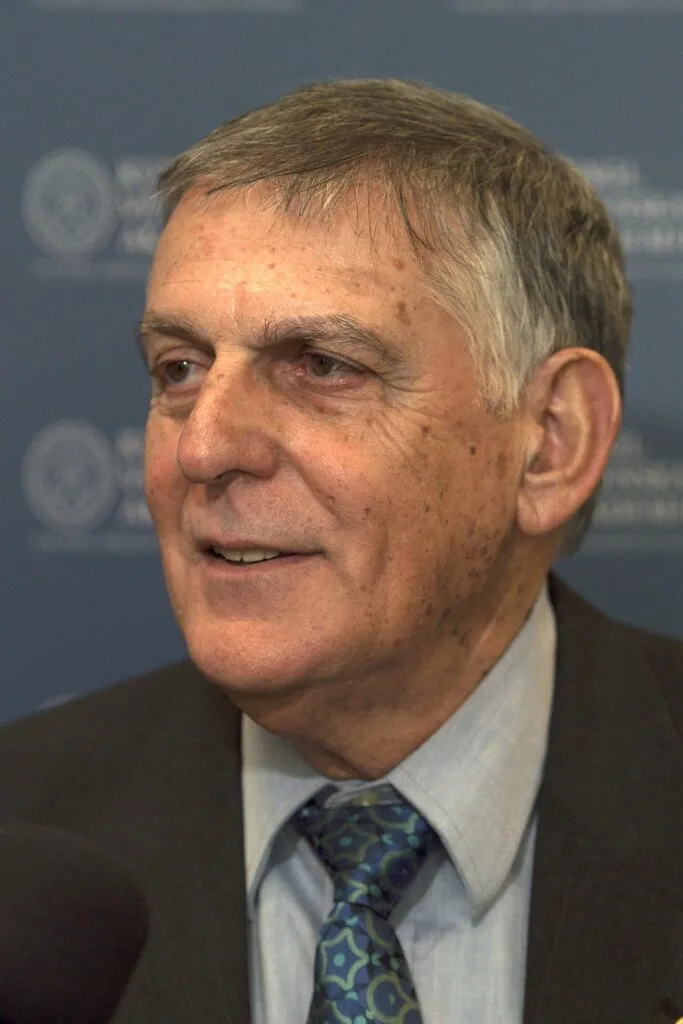
On the morning of April 8, 1982, inside a basement laboratory at the National Bureau of Standards (now the National Institute of Standards and Technology, NIST) in Gaithersburg, Maryland, Israeli materials scientist Dan Shechtman peered into the vacuum column of a transmission electron microscope (TEM) and observed an atomic diffraction pattern that contradicted two centuries of established physical law. Gazing at a rapidly solidified aluminum-manganese alloy, Shechtman observed sharp, ten-fold rotational concentric rings of diffraction spots—a geometric impossibility under the foundational tenets of classical crystallography.
In his laboratory notebook, Shechtman inscribed three question marks beside the notation: “10-fold???” That solitary observation marked the discovery of quasicrystals (quasiperiodic crystals)—a fundamentally new state of solid matter characterized by perfect long-range order without translational periodicity. Shechtman’s discovery shattered the rigid orthodoxy of 20th-century solid-state physics, ignited a decade-long scientific controversy led by double Nobel laureate Linus Pauling, forced the International Union of Crystallography to rewrite the very definition of crystalline matter, and ultimately earned Shechtman the 2011 Nobel Prize in Chemistry.
This comprehensive study provides an exhaustive examination of Professor Dan Shechtman’s life, scientific methodology, intellectual fortitude, mathematical foundations, material science applications, and his enduring legacy as a global crusader for technological entrepreneurship and early childhood science education.
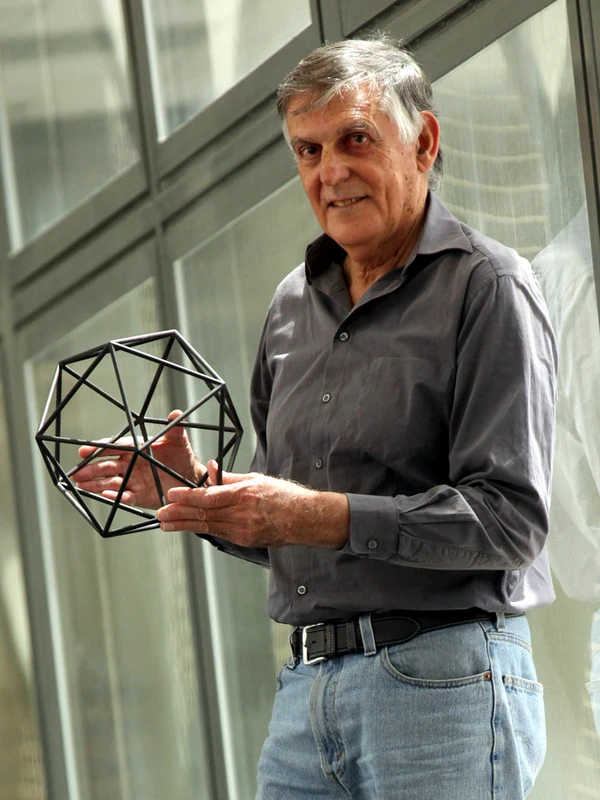
1. Early Life, Military Service, and Academic Formations
Dan Shechtman was born on January 24, 1941, in Tel Aviv during the British Mandate of Palestine. Raised in Petah Tikva and Ramat Gan, Shechtman grew up in a family imbued with the pioneering ethos of Israel’s founding generation. His grandfather, a printer and fervent Zionist, emigrated to Ottoman Palestine during the Second Aliyah in 1906. As a child, Shechtman was captivated by science and literature, reading Jules Verne’s The Mysterious Island repeatedly, which ignited his lifelong fascination with metallurgy, chemistry, and applied engineering.
Following his graduation from high school, Shechtman completed his mandatory military service in the Israel Defense Forces (IDF), serving with distinction in the Armored Corps. The rigorous discipline, mechanical problem-solving, and leadership demands of armored warfare shaped his approach to experimental science: meticulous preparation, complete command of technical apparatus, and absolute empirical honesty.
Academic Path at the Technion – Israel Institute of Technology
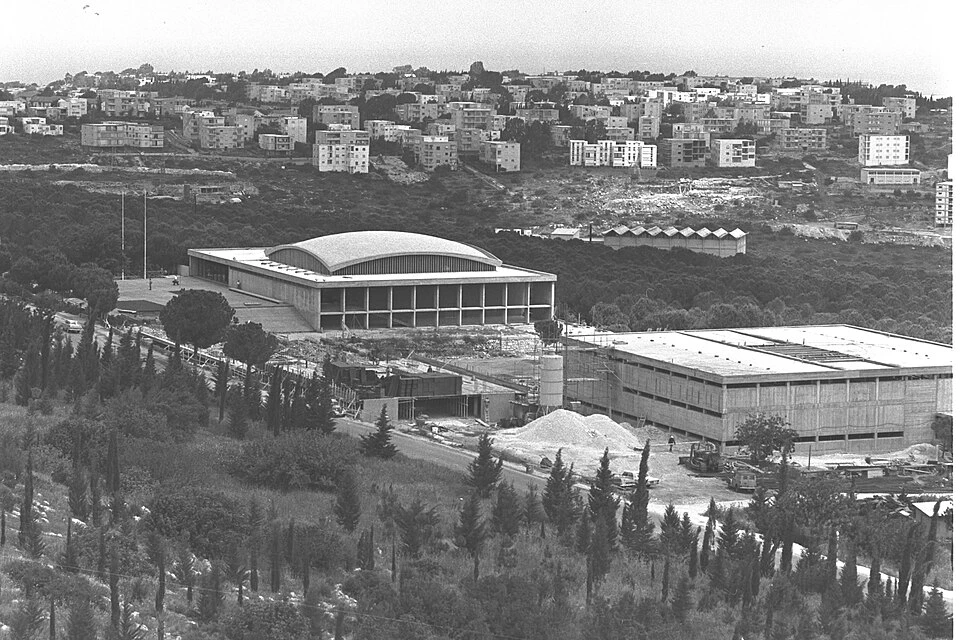
In 1962, Shechtman enrolled at the Technion – Israel Institute of Technology in Haifa, Israel’s premier institute of technology. He earned his Bachelor of Science (B.Sc.) in Mechanical Engineering in 1966, followed by a Master of Science (M.Sc.) in Materials Engineering in 1968. Recognizing the transformative power of electron optics to reveal the microscopic architecture of metals, Shechtman pursued his doctorate in Materials Engineering under the mentorship of Professor David Brandon, obtaining his Ph.D. in 1972.
His doctoral research focused on the microstructural characterization of titanium alloys, during which he mastered Transmission Electron Microscopy (TEM). Unlike X-ray diffraction, which averages structural data over billions of atomic planes across macroscopic crystal volumes, TEM allows researchers to focus electron beams onto nanometer-scale crystallites, capturing localized diffraction patterns and defects with unmatched spatial resolution. This specialized expertise made Shechtman one of the world’s preeminent experimental electron microscopists.
| Academic Milestone | Institution | Year | Field of Research / Focus Area |
|---|---|---|---|
| B.Sc. Mechanical Engineering | Technion – Israel Institute of Technology | 1966 | Applied mechanics, thermodynamics, fluid dynamics, foundational metallurgy. |
| M.Sc. Materials Engineering | Technion – Israel Institute of Technology | 1968 | Phase transitions in light alloys, crystal defects, mechanical deformation. |
| Ph.D. Materials Engineering | Technion – Israel Institute of Technology | 1972 | Advanced Transmission Electron Microscopy (TEM) characterization of titanium-aluminum alloys. |
| Postdoctoral Fellowship (NRC) | Aerospace Research Laboratories, Wright-Patterson AFB | 1972–1975 | Titanium-aluminide intermetallic microstructure, aerospace high-temperature structural alloys. |
| Senior Research Associate | National Bureau of Standards (NBS / NIST) | 1981–1983 | DARPA-sponsored research into rapidly solidified aluminum-transition metal alloys; discovery of quasicrystals. |
2. The Classical Crystallographic Orthodoxy: Why Five-Fold Symmetry Was “Forbidden”
To appreciate the intellectual shockwave generated by Shechtman’s discovery, one must examine the foundational crystallographic dogma that governed chemistry, physics, and mineralogy for more than two centuries. Ever since French mineralogist René Just Haüy formulated the law of rational indices in 1784, a crystal was defined strictly as a solid substance whose constituent atoms, molecules, or ions are arranged in an orderly, repeating three-dimensional pattern characterized by translational periodicity.
The Geometric Mathematics of Periodic Tiling
In two- and three-dimensional Euclidean space, periodic repetition requires that unit cells fill space completely without gaps or overlaps. Simple planar geometry dictates that only shapes with 1-, 2-, 3-, 4-, and 6-fold rotational symmetries can tile a plane periodically:
- 2-Fold Symmetry (180° rotation): Parallelograms, rectangles, and rhombuses tile space seamlessly.
- 3-Fold Symmetry (120° rotation): Equilateral triangles tile space seamlessly.
- 4-Fold Symmetry (90° rotation): Squares tile space seamlessly.
- 6-Fold Symmetry (60° rotation): Regular hexagons tile space seamlessly (as seen in honeycomb lattices and graphene).
Conversely, 5-fold rotational symmetry (72° rotation) was considered mathematically impossible for crystals. Just as regular pentagons cannot tile a bathroom floor without leaving empty gaps, atoms organized in pentagonal or icosahedral geometry were believed incapable of forming a continuous, ordered crystal lattice. For over a century, every crystallographic textbook across the globe stated unequivocally: “A solid is either crystalline (periodic order with 1, 2, 3, 4, or 6-fold symmetry) or amorphous (disordered glass). Five-fold rotational symmetry cannot exist in crystalline matter.”
3. April 8, 1982: The Day That Changed Solid-State Chemistry
In 1981, Dan Shechtman took a sabbatical from the Technion to join the National Bureau of Standards (NBS) in Gaithersburg, Maryland, working on a DARPA-funded research project investigating rapidly solidified aluminum alloys. The objective was to create high-strength aluminum materials for defense aerospace applications by rapidly cooling molten mixtures of aluminum and transition metals (such as manganese, iron, and chromium) at cooling rates exceeding one million degrees Celsius per second ($10^6 ^circ ext{C}/ ext{s}$) using melt-spinning techniques.
The Discovery Moment
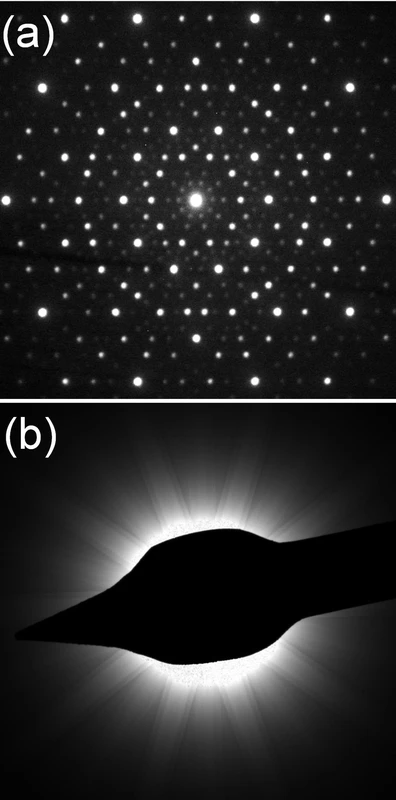
On April 8, 1982, Shechtman prepared a sample of an aluminum-manganese alloy ($ ext{Al}_6 ext{Mn}$) that had undergone rapid solidification. Placing the sample into his transmission electron microscope, he tilted the specimen stage systematically to observe the selected-area electron diffraction (SAED) patterns along different crystallographic axes.
When the electron beam aligned along a specific zone axis, Shechtman was stunned: the diffraction pattern produced ten perfectly concentric, sharp, bright spots arranged with flawless 36° angular intervals—demonstrating ten-fold rotational symmetry. When he rotated the sample through various angular axes (specifically 37.38° and 63.43°), he identified five-fold, three-fold, and two-fold axes arranged in the exact geometric symmetry of a regular three-dimensional icosahedron (a 20-faced Platonic solid).
Meticulous Verification and Experimental Rigor
Shechtman understood immediately that every crystallographer would suspect crystal twinning—an optical artifact where multiple micro-crystals grow intertwined at specific angles, creating a false impression of higher symmetry in macro-diffraction. To rule out twinning, Shechtman conducted dark-field imaging and high-resolution TEM over several months:
- Dark-Field Electron Imaging: He proved that the diffraction spots emanated from a single, continuous, homogeneous grain of matter, rather than multiple twinned micro-domains.
- Bragg Peak Sharpness: The diffraction peaks were as razor-sharp as those produced by the highest-grade single crystals of silicon, proving that the material possessed flawless long-range order spanning thousands of atomic diameters.
- Reproducibility: He repeated the melt-spinning synthesis and TEM diffraction hundreds of times across multiple alloy compositions, consistently yielding identical icosahedral diffraction patterns.
4. The Transmission Electron Microscopy (TEM) Experimental Masterclass
Shechtman’s triumph was fundamentally rooted in his unmatched mastery of Transmission Electron Microscopy (TEM). While standard X-ray crystallography averages signals across macroscopic crystal volumes (masking subtle local symmetries or misinterpreting aperiodic phases as broad background scattering), TEM enables localized interrogation of nanometer-scale crystallites using finely focused, coherent electron beams.
Advanced Electron Diffraction Techniques
To unequivocally demonstrate the intrinsic nature of quasiperiodic order, Shechtman utilized a sophisticated triad of electron microscopy methodologies:
- Selected Area Electron Diffraction (SAED): By inserting an aperture in the image plane, Shechtman isolated diffraction signals emanating exclusively from a single sub-micron grain of the $ ext{Al}_6 ext{Mn}$ alloy, eliminating spurious reflections from surrounding phases.
- Convergent Beam Electron Diffraction (CBED): By converging the electron beam into a fine probe (nanometer spot size), CBED produces disk-like diffraction patterns containing three-dimensional dynamical diffraction information (Kikuchi lines and HOLZ lines). CBED definitively proved that the point-group symmetry was genuine three-dimensional $mar{3}ar{5}$ (icosahedral), with no subtle lower-symmetry distortions.
- Dark-Field Specimen Tilted Imaging: By selecting a single Bragg spot with the objective aperture and forming an image, Shechtman illuminated the crystal grain. Under classical twinning, only one twin domain would illuminate while twin boundaries would appear as dark contrasting interfaces. The entire quasicrystal grain illuminated uniformly without a single twin boundary interface.
5. The Mathematical Architecture of Quasicrystals: Penrose Tiles and Higher Dimensions
How can matter be ordered without being periodic? The theoretical explanation of Shechtman’s empirical discovery draws upon deep mathematical principles that bridge non-Euclidean geometry, higher-dimensional projection, and fractal mathematics.
Penrose Tilings and the Golden Ratio
In 1974, British mathematical physicist Roger Penrose discovered a set of two simple geometric tiles (thick and thin rhombuses, or “kites and darts”) that can tile a two-dimensional plane completely without gaps, but only in an aperiodic manner. A Penrose tiling never repeats itself by translation, yet it possesses flawless long-range orientational order and exhibits local five-fold rotational symmetry.
Remarkably, the ratio of thick to thin rhombuses in an infinite Penrose tiling is exactly equal to the Golden Ratio ($ au = rac{1 + sqrt{5}}{2} pprox 1.6180339887dots$). In three-dimensional space, quasicrystals arrange their atomic clusters according to 3D Penrose rhombohedra (prolate and oblate rhombohedra), where distances between consecutive atomic diffraction planes scale by powers of the golden ratio ($ au, au^2, au^3, dots$).
Higher-Dimensional Projection (The Cut-and-Project Method)
One of the most elegant mathematical descriptions of quasicrystals is the cut-and-project method developed by mathematicians and theoretical physicists. While a three-dimensional quasicrystal lacks periodic translational symmetry in ordinary 3D space ($mathbb{R}^3$), it can be understood mathematically as a three-dimensional “slice” or projection of a perfectly periodic six-dimensional hypercubic lattice ($mathbb{Z}^6$).
Just as a two-dimensional shadow cast by a rotating three-dimensional cube can produce complex, non-repeating polygonal shapes on a flat wall, a three-dimensional quasicrystal is the physical shadow of a six-dimensional periodic crystal intersecting our three-dimensional physical universe. This profound mathematical connection unified classical crystallography with multidimensional differential geometry.
| Structural Dimension | Classical Periodic Crystals | Aperiodic Quasicrystals | Amorphous Glasses |
|---|---|---|---|
| Long-Range Positional Order | Yes (Infinite) | Yes (Infinite, Quasiperiodic) | No (Disordered) |
| Translational Symmetry | Yes (Repeating 3D Unit Cell) | No (Aperiodic) | No |
| Rotational Symmetries | 1, 2, 3, 4, 6-fold only | 5, 8, 10, 12-fold & Icosahedral | Isotropic (Random) |
| Diffraction Pattern | Sharp Bragg peaks in periodic lattice | Sharp Bragg peaks in aperiodic concentric rings | Diffuse broad halos |
| Mathematical Basis | 3D Bravais Lattices (230 space groups) | 6D Hypercubic Projection & Penrose Tilings | Random close packing / Statistical mechanics |
6. The Decade of Skepticism: Shechtman vs. Linus Pauling
When Shechtman presented his experimental findings to his research colleagues at NBS, he was met with total disbelief. His laboratory director famously walked into his office, placed a standard crystallography textbook on his desk, and suggested: “Danny, read this book. There is no such thing as what you are claiming. You are bringing disgrace to our group.” Shortly thereafter, Shechtman was asked to leave the research group for persisting with his “impossible” claims.
The Historic 1984 Landmark Publication
Returning to Israel in 1983, Shechtman collaborated with Professor Ilan Blech at the Technion. Blech developed a mathematical model—the icosahedral glass model—demonstrating that clusters of atoms with icosahedral orientation could grow without translational periodicity and produce the exact sharp diffraction patterns Shechtman had observed.
In mid-1984, Shechtman shared his data with eminent metallurgist John Cahn at NBS and French mathematical crystallographer Denis Gratias. Together, the four researchers co-authored the seminal paper:
“Metallic Phase with Long-Range Orientational Order and No Translational Symmetry”
Physical Review Letters, Vol. 53, No. 20, pp. 1951–1953 (November 12, 1984).
Simultaneously, theoretical physicists Dov Levine and Paul Steinhardt at the University of Pennsylvania published a complementary paper coining the term “Quasicrystal” (quasiperiodic crystal), demonstrating that three-dimensional analogs of Penrose tiles could explain Shechtman’s diffraction data with absolute mathematical precision.
The Clash with Linus Pauling
The global crystallographic community rapidly split into two camps. While young physicists and materials scientists rushed to their laboratories and successfully replicated Shechtman’s quasicrystals in dozens of ternary alloy systems, the titan of modern chemistry, two-time Nobel Laureate Linus Pauling, launched a fierce public campaign against quasicrystals.
For over seven years, Pauling published numerous papers in the Proceedings of the National Academy of Sciences (PNAS) arguing that Shechtman’s data was nothing more than multiple twinning of complex cubic crystals with large unit cells. At scientific conferences, Pauling famously proclaimed:
“There is no such thing as quasicrystals, only quasi-scientists!”
Shechtman stood his ground with quiet dignity, refusing to engage in personal polemics. Instead, he presented continuous empirical evidence, challenging Pauling: “Professor Pauling, show me the twinning plane under high-resolution electron microscopy. You cannot find it, because it does not exist.”
The dispute was definitively settled in 1987, when researchers in Japan (led by An-Pang Tsai) synthesized thermodynamically stable, millimeter-sized single-grain quasicrystals ($ ext{Al-Cu-Fe}$ and $ ext{Al-Pd-Mn}$) that could be cleaved, polished, and subjected to standard X-ray diffraction, conclusively proving the existence of intrinsic quasiperiodicity. In 1992, the International Union of Crystallography (IUCr) officially redefined the term crystal from “a periodic arrangement of atoms” to “any solid having an essentially discrete diffraction diagram.”
7. Natural Quasicrystals: The Khatyrka Meteorite Expedition
For nearly three decades following Shechtman’s discovery, all known quasicrystals were synthetic materials produced under extreme laboratory conditions—either via rapid melt-spinning solidification or precise high-temperature metallurgical annealing. This raised a profound philosophical question: Were quasicrystals merely an artificial creation of human engineering, or did nature produce them spontaneously?
The Discovery of Icosahedrite and Decagonite
In 2009, an international research team led by theoretical physicist Paul Steinhardt and Italian mineralogist Luca Bindi examined thousands of mineral samples from museum collections around the world. In the mineralogy museum of Florence, Italy, they analyzed a tiny, 0.1-millimeter metallic grain collected from the remote Koryak Mountains in eastern Siberia (Chukotka).
Under electron diffraction and X-ray crystallography, the grain exhibited the exact icosahedral symmetry discovered by Shechtman. The natural mineral was officially named icosahedrite ($ ext{Al}_{63} ext{Cu}_{24} ext{Fe}_{13}$). In 2011, Steinhardt and Bindi led a daring geological expedition to the remote tundra of Chukotka, recovering additional meteorite fragments from the stream bed of the Listvenitovyi River.
Mass spectrometry and isotopic analysis of oxygen isotopes revealed that the mineral grains originated inside a carbonaceous chondrite meteorite—the Khatyrka meteorite—which formed in the primordial solar nebula approximately 4.57 billion years ago. Extreme hypervelocity impact shocks in outer space had melted aluminum, copper, and iron, quenching them into natural quasicrystals billions of years before life emerged on Earth. In 2015, the team discovered a second natural quasicrystal, decagonite ($ ext{Al}_{71} ext{Ni}_{24} ext{Fe}_5$), possessing ten-fold periodic symmetry.
| Quasicrystal Phase | Chemical Formula | Rotational Symmetry | Origin & Discovery Year |
|---|---|---|---|
| Shechtmanite (Original Phase) | $ ext{Al}_6 ext{Mn}$ (Metastable) | Icosahedral (10-fold / 5-fold) | Synthetic (Dan Shechtman, NBS / Technion, 1982/1984) |
| Tsai Phase (Stable Ternary) | $ ext{Al}_{65} ext{Cu}_{20} ext{Fe}_{15}$ | Icosahedral (Thermodynamically Stable) | Synthetic (An-Pang Tsai, Tohoku University, Japan, 1987) |
| Icosahedrite (Natural Mineral) | $ ext{Al}_{63} ext{Cu}_{24} ext{Fe}_{13}$ | Icosahedral (Natural Mineral) | Khatyrka Meteorite, Chukotka, Russia (Bindi & Steinhardt, 2009) |
| Decagonite (Natural Mineral) | $ ext{Al}_{71} ext{Ni}_{24} ext{Fe}_5$ | Decagonal (10-fold Quasiperiodic Planes) | Khatyrka Meteorite, Chukotka, Russia (Bindi et al., 2015) |
| Trinity Test Quasicrystal | $ ext{Si}_{61} ext{Cu}_{30} ext{Ca}_7 ext{Fe}_2$ (Red Trinitite) | Icosahedral (Anthropogenic Detonation) | Trinity Nuclear Test Site, New Mexico, USA (Bindi et al., 2021) |
8. The 2011 Nobel Prize in Chemistry & Global Honors
On October 5, 2011, the Royal Swedish Academy of Sciences announced that the Nobel Prize in Chemistry 2011 was awarded solely to Dan Shechtman “for the discovery of quasicrystals.”
Nobel Citation and Worldwide Acclaim
In its official press release, the Nobel Committee emphasized not only the profound scientific transformation triggered by Shechtman’s discovery, but also his extraordinary moral courage as an experimental scientist:
“Dan Shechtman’s discovery was extremely controversial. In defending his findings, he was asked to leave his research group. However, his battle eventually forced scientists to reconsider their fundamental concept of the very nature of matter… His discovery opened up a fascinating new field of research and showed how important it is for scientists to keep an open mind and trust their own observations.”
| Major Award / Distinction | Awarding Body / Organization | Year | Citation / Achievement |
|---|---|---|---|
| Israel Prize in Physics | State of Israel | 1998 | Highest national honor for revolutionary contributions to solid-state physics. |
| Wolf Prize in Physics | Wolf Foundation, Israel | 1999 | “For the experimental discovery of quasi-periodic non-collinear structures.” |
| Gregori Aminoff Prize | Royal Swedish Academy of Sciences | 2000 | Prestigious international crystallography award for pioneering aperiodic structures. |
| EMET Prize in Exact Sciences | A.M.N. Foundation & Prime Minister of Israel | 2002 | Excellence in materials science and crystallography. |
| Nobel Prize in Chemistry | Royal Swedish Academy of Sciences | 2011 | Sole laureate “for the discovery of quasicrystals.” |
9. Material Science Applications of Quasicrystals
Beyond theoretical physics and crystallography, quasicrystalline materials possess unique, non-intuitive physical and mechanical properties resulting directly from their aperiodic atomic architecture. Because quasicrystals lack periodic slip planes along which atomic layers can easily slide, they exhibit physical behaviors radically distinct from traditional metals.
Key Physical Properties:
- Extremely Low Coefficient of Friction: Quasicrystal surfaces have ultra-low surface energy and friction, behaving similarly to Teflon (PTFE) while retaining metallic hardness.
- High Hardness and Wear Resistance: Due to the absence of periodic dislocation pathways, quasicrystals resist mechanical abrasion and scratching up to elevated temperatures.
- Low Thermal and Electrical Conductivity: Unlike traditional metallic conductors where electrons and phonons propagate freely through periodic lattices, electrons and thermal vibrations in quasicrystals undergo localized scattering, resulting in exceptional thermal barrier properties.
- Corrosion Resistance and Biocompatibility: Quasicrystalline alloys form ultra-thin, passivating surface oxide layers that resist oxidation, acid attack, and biological rejection.
Commercial and Industrial Applications
These unique characteristics have unlocked advanced industrial applications:
- High-Durability Non-Stick Cookware: Quasicrystal-reinforced composite coatings provide scratch-resistant, non-toxic alternatives to fluoropolymer pans, capable of withstanding metal cooking utensils.
- Surgical Needles & Dental Instruments: Sandvik steel alloys reinforced with nanoscale quasicrystalline precipitates combine ultra-high tensile strength, extreme sharpness retention, and flexibility for ophthalmic and microsurgical needles.
- Thermal Barrier Coatings in Aerospace Turbines: Quasicrystalline ceramic-metallic coatings protect jet engine turbine blades from extreme combustion temperatures.
- Thermoelectric Energy Converters: Converting waste heat into usable electrical energy in automotive exhausts and industrial furnaces.
- Bioabsorbable Magnesium Bone Implants: Shechtman’s ongoing research focuses on biocompatible magnesium-zinc-quasicrystal alloys that provide temporary structural support for fractured bones before dissolving safely into the body, eliminating the need for second surgeries.
10. The Technion’s Nobel Heritage and Israel’s Academic Eminence
Dan Shechtman’s 2011 Nobel triumph highlighted the extraordinary academic standing of the Technion – Israel Institute of Technology on the global stage. Founded in 1912 on Mount Carmel overlooking Haifa Bay, the Technion has served as the intellectual engine of Israel’s modern scientific, military, and economic sovereignty.
A Culture of Uncompromising Scientific Excellence
Shechtman joined an elite pantheon of Technion faculty who transformed modern chemistry and biochemistry:
- Aaron Ciechanover & Avram Hershko (2004 Nobel Prize in Chemistry): Discovered ubiquitin-mediated protein degradation, decoding the universal cellular quality control and disposal system.
- Arieh Warshel (2013 Nobel Prize in Chemistry): Technion alumnus who co-developed multiscale computational models for complex chemical systems.
This concentrated density of scientific excellence has propelled the Technion into international partnerships, including the creation of the Jacobs Technion-Cornell Institute on Roosevelt Island in New York City and the Guangdong Technion-Israel Institute of Technology (GTIIT) in Shantou, China. Shechtman’s discovery reinforced the Technion’s defining institutional philosophy: that breakthrough science requires unyielding intellectual independence and fearless challenge to prevailing paradigms.
11. Champion of Technological Entrepreneurship: The Technion Legacy
While celebrated globally for his scientific achievements, Dan Shechtman has exerted an equally profound impact on Israel’s economic transformation into the “Start-Up Nation.”
The Pioneering Course: “Technological Entrepreneurship”
In 1986—long before university entrepreneurship incubators existed—Professor Shechtman founded a groundbreaking course at the Technion titled “Technological Entrepreneurship.” Shechtman recognized that while Israel possessed world-class scientists and engineers, they lacked the commercial skills, legal understanding, and financial acumen required to transform laboratory breakthroughs into commercial ventures.
Over 35 consecutive years, Shechtman taught this weekly lecture series to thousands of undergraduate and graduate engineering students. He invited successful high-tech entrepreneurs, intellectual property attorneys, venture capitalists, and tax experts to mentor students on:
- Evaluating market demand for technological inventions.
- Protecting intellectual property through global patent filing and PCT strategies.
- Navigating technology licensing agreements with university commercialization arms (such as Technion T3).
- Drafting business plans and financial modeling.
- Pitching to angel investors and venture capital firms.
More than 10,000 Israeli engineers and scientists completed Shechtman’s entrepreneurship course, going on to establish hundreds of high-tech startups, biomedical firms, and software unicorns that form the bedrock of Israel’s modern technology economy.
12. Civic Leadership: The 2014 Presidential Candidacy & Public Diplomacy
In January 2014, Dan Shechtman announced his candidacy for the Presidency of the State of Israel, running as an independent, non-partisan candidate following the conclusion of Shimon Peres’s presidential term. Shechtman’s campaign represented a historic departure from career politics, championing a vision where scientific rationalism, technological innovation, higher education reform, and socioeconomic mobility formed the core pillars of national unity.
While the Knesset ultimately elected Reuven Rivlin in secret ballot, Shechtman’s campaign catalyzed a national conversation on elevating scientific literacy and technological meritocracy into mainstream public policy. As an international scientific ambassador, Shechtman continues to represent Israel at global economic forums, Nobel laureate symposiums (such as the Lindau Nobel Laureate Meetings in Germany), and bilateral innovation summits, advocating for science diplomacy as an enduring bridge for peaceful international cooperation.
13. Global Crusader for Early Childhood Science Education
In his post-Nobel years, Dan Shechtman has dedicated himself to educational philanthropy, advocating for a radical transformation in how science is taught to young children worldwide.
The Kindergarten Science Revolution
Shechtman passionately argues that children are natural-born scientists whose innate curiosity is often extinguished by conventional, rote-learning school systems. He launched the “Science in Kindergarten” initiative in Israel, introducing hands-on physics, optics, biology, and chemistry experiments into preschools and kindergartens across Israel:
“We must teach science from age five. When a child learns how a magnifying glass focuses sunlight, how magnets attract iron, or how plants absorb water through capillary action, they develop critical, evidence-based thinking that lasts a lifetime. Science literacy creates rational, creative societies.”
Shechtman travels relentlessly across developing nations—including Colombia, Peru, Kazakhstan, Vietnam, and Ghana—meeting heads of state, education ministers, and universities to promote early science literacy, women’s participation in STEM, and technology-driven economic development.
14. Frequently Asked Questions (FAQ)
What are quasicrystals and why was their discovery so revolutionary?
Quasicrystals are solid structures that possess perfect long-range atomic order but lack repeating translational periodicity. Their discovery overturned 200 years of crystallographic law, which held that matter could only be periodic (crystals) or disordered (glass), proving that “forbidden” 5-fold and 10-fold symmetries exist in nature.
When and how did Dan Shechtman discover quasicrystals?
Shechtman discovered quasicrystals on April 8, 1982, while working at the National Bureau of Standards (now NIST) in Maryland, examining a rapidly solidified aluminum-manganese alloy ($ ext{Al}_6 ext{Mn}$) under a transmission electron microscope (TEM).
Why did Linus Pauling oppose Shechtman’s discovery?
Two-time Nobel laureate Linus Pauling believed that Shechtman’s diffraction patterns were simply optical artifacts caused by classical crystal twinning (multiple microcrystals growing intertwined). Pauling famously campaigned against quasicrystals until stable single-grain quasicrystals conclusively disproved his twinning theory in 1987.
What practical applications do quasicrystals have today?
Quasicrystals are utilized in ultra-durable non-stick coatings, high-strength surgical needles, thermal barrier coatings for jet turbines, thermoelectric energy generators, and biocompatible, bioabsorbable magnesium bone implants.
What is Dan Shechtman’s contribution to Israel’s high-tech startup ecosystem?
In 1986, Shechtman created the pioneering “Technological Entrepreneurship” course at the Technion. Over 35 years, he personally trained over 10,000 Israeli scientists and engineers in intellectual property, business planning, and venture financing, fueling the growth of Silicon Wadi.