
The Israeli startup ecosystem—widely recognized as Silicon Wadi—stands as one of the most concentrated, resilient, and prolific engines of technological innovation in the world. Despite possessing a population of just under ten million people and a landmass roughly the size of New Jersey, Israel has cultivated a high-tech sector that commands global leadership across cybersecurity, artificial intelligence, automotive computer vision, enterprise software, AgriTech, deep-tech hardware, and biotechnology. With more than 6,000 active technology startups, approximately 100 technology unicorns, and over 430 multinational R&D centers, the nation generates an outsized volume of intellectual property, venture funding, and market-defining enterprises.
This comprehensive intelligence guide analyzes the structural mechanics, historical milestones, elite human capital pipelines, venture investment frameworks, deep-tech research paradigms, and future growth trajectories of the Israeli innovation economy. From the foundational policy interventions of the 1993 Yozma program to the advanced bio-convergence, quantum computing, and generative AI architectures of today, we examine why and how Israel transitioned from the iconic “Startup Nation” into a global “Scale-Up Nation.”

1. Macroeconomic Overview: The Geometry of Silicon Wadi
To understand the magnitude of Israel’s high-tech dominance, one must first examine the macroeconomic indicators that define the sector. Unlike resource-heavy economies that rely on hydrocarbons, heavy minerals, or vast agricultural hinterlands, Israel’s modern economy is anchored in knowledge-intensive intellectual capital. Technology represents the single most critical pillar of the national economy, accounting for approximately 18% of Israel’s Gross Domestic Product (GDP), more than 54% of total national exports, and over 14% of the civilian workforce.
According to official data from the Organisation for Economic Co-operation and Development (OECD) and the Israel Innovation Authority (IIA), Israel consistently leads the world in gross domestic expenditure on research and development (GERD) as a percentage of GDP, regularly surpassing 5.6%—well ahead of South Korea (4.9%), the United States (3.5%), Japan (3.3%), and the OECD average (2.7%). Furthermore, Israel maintains the highest concentration of venture capital investment per capita in the world, frequently attracting five to six times more capital per resident than the United States and up to thirty times more than European averages.
| Economic Indicator | Israel Metric | OECD Benchmark | Strategic Significance |
|---|---|---|---|
| R&D Expenditure (% of GDP) | 5.6% | 2.7% | World #1 rank; demonstrates extreme national prioritization of applied science and engineering. |
| Tech Share of Total Exports | 54% | 18% | High-tech serves as the primary driver of foreign currency reserves and trade balance surplus. |
| VC Investment Per Capita | $1,650+ | $320 (US: ~$780) | Unmatched density of early-stage, growth, and late-stage institutional capital availability. |
| Tech Workforce Concentration | 14.2% | 5.8% | Substantial domestic talent pool capable of rapidly executing complex product development. |
| NASDAQ Listed Companies | 110+ | Rank #3 Globally | Ranks behind only the United States and China in publicly traded high-growth enterprises. |
| Multinational R&D Centers | 430+ | N/A | Global technology giants (Apple, Google, Microsoft, Nvidia, Intel) run core R&D locally. |
2. Historical Foundations: The Yozma Program and Institutional Catalysts
The rise of Israeli high-tech was neither accidental nor purely organic; it was the product of deliberate policy interventions, massive demographic tailwinds, and institutional architecture engineered during the late 20th century. While Israel maintained world-class scientific institutions such as the Weizmann Institute of Science (founded in 1934) and the Technion – Israel Institute of Technology (founded in 1912), the domestic venture capital infrastructure prior to the early 1990s was virtually nonexistent.
The 1993 Yozma Initiative: Seeding the Venture Capital Engine
In 1993, the Israeli Ministry of Finance and the Office of the Chief Scientist (now the Israel Innovation Authority), led by Yigal Erlich, launched the revolutionary Yozma Program (“Initiative” in Hebrew). Recognizing that Israeli entrepreneurs possessed extraordinary technological breakthroughs but lacked structured equity financing and global go-to-market networks, the government allocated $100 million to establish ten hybrid venture capital funds.
The structural brilliance of Yozma lay in its public-private risk-sharing mechanism: each Yozma fund was required to secure 60% of its capital from a foreign institutional investor (primarily established US and European venture firms), while the Israeli government provided 40% matching capital. Crucially, the government offered private partners an asymmetric incentive: an option to buy out the state’s equity stake at original cost plus modest interest within five years if the investments succeeded. This risk-mitigation framework successfully lured top-tier global venture firms to Tel Aviv, establishing the institutional foundation for legendary domestic venture firms such as Pitango, Gemini, and Jerusalem Venture Partners (JVP).
The Aliyah Wave: Integration of Soviet Scientific Capital
Simultaneously, following the collapse of the Soviet Union between 1989 and 1995, Israel absorbed over 800,000 Jewish immigrants from Russia, Ukraine, and the wider CIS. This demographic influx included over 80,000 trained engineers, 20,000 scientific researchers, and tens of thousands of physicians, mathematicians, and computer scientists. To absorb and commercialize this massive wave of talent, the Israeli government launched the Technological Incubators Program, providing up to 85% grant funding for early-stage proof-of-concept projects. This historic convergence of technical manpower, government catalytic funding, and venture capital created the critical mass that ignited the high-tech boom of the late 1990s.
3. The Human Capital Architecture: Military Elite Units & IDF Pipelines
A distinctive and globally unique structural pillar of the Israeli startup ecosystem is its mandatory military service and the specialized technological pipelines embedded within the Israel Defense Forces (IDF). While military conscription in many nations represents an economic disruption, Israel has transformed its defense infrastructure into an unmatched elite training ground, incubator, and talent accelerator for advanced computing, cyber operations, and hardware engineering.

Unit 8200: The World’s Foremost High-Tech Incubator
Unit 8200, the IDF’s central signals intelligence and cyber warfare division, serves as the premier entrepreneurial talent foundry in the world. Recruits are selected at ages 17 to 18 through hyper-competitive national screening programs that evaluate not only mathematical aptitude and raw cognitive horsepower, but also autonomous problem-solving, rapid autodidactic learning, and psychological resilience under uncertainty.
Within 8200, young soldiers are tasked with solving mission-critical, life-and-death intelligence and networking challenges using bleeding-edge technologies. They operate in flat, non-hierarchical teams where junior personnel are encouraged to challenge ranking officers, experiment with unproven architectures, and ship production code in hours rather than months. When these veterans complete their service in their early twenties, they emerge equipped with deep technical mastery in distributed systems, cryptography, reverse engineering, machine learning, and high-throughput networking, coupled with a dense network of trusted co-founders.
Talpiot, Mamram, and Unit 81
- Talpiot Program: Conceived after the 1973 Yom Kippur War, Talpiot is the IDF’s most exclusive elite academic and military program. Cadets undergo a rigorous 40-month curriculum completing dual degrees in Physics, Mathematics, or Computer Science at the Hebrew University of Jerusalem while undergoing cross-branch military training, graduating as officers tasked with steering national R&D.
- Mamram (Center of Computing and Information Systems): The IDF’s foundational data architecture and enterprise infrastructure unit, pioneering cloud computing, database optimization, and high-availability operations.
- Unit 81: The clandestine technological division responsible for custom hardware engineering, micro-robotics, specialized signal processing, and physical-digital integration.
| IDF Unit | Core Technological Domain | Organizational Competency | Notable Unicorn & Startup Founders |
|---|---|---|---|
| Unit 8200 | Signals Intelligence, Cyber Warfare, Cryptography, Big Data | Rapid prototyping, real-time analytics, decentralized problem-solving | Check Point, Palo Alto Networks, CyberArk, Wiz, Waze, Imperva, SentinelOne |
| Talpiot | Theoretical Physics, Applied Mathematics, DeepTech, Systems Architecture | Interdisciplinary scientific synthesis, multi-year strategic R&D | Mobileye, Check Point (Co-founder), Compugen, Lightbits Labs, AudioCodes |
| Unit 81 | Hardware Engineering, Nano-Sensors, Specialized Optics, Embedded Systems | Physical-digital convergence, extreme miniaturization, mission-critical reliability | PrimeSense (Apple FaceID), Habana Labs (Intel), Hailo AI, Sight Diagnostics |
| Mamram | Cloud Computing, Mainframes, Enterprise Data Security, DevOps | Enterprise infrastructure resilience, zero-downtime architecture | BMC Software (Israel), Radware, Outbrain, Sisense, Taboola |
4. Core Sector Verticals: Dominance Across the Tech Frontier
While the Israeli ecosystem has historically been renowned for information security and telecommunications, it has expanded aggressively across virtually every high-value frontier of modern engineering, establishing global market leaders in deep technical domains.
Cybersecurity: The World’s Digital Fortress
Israel is universally acknowledged as the primary international hub for enterprise cybersecurity innovation outside the United States, capturing approximately 15% to 20% of all global cybersecurity venture capital investment. The lineage began with Gil Shwed, Marius Nacht, and Shlomo Kramer founding Check Point Software Technologies in 1993, inventing the stateful inspection firewall that became the cornerstone of modern Internet security.
Over the subsequent three decades, Israeli founders have continuously defined and reshaped cyber defense categories:
- Privileged Access Management (PAM): Pioneered by CyberArk, securing administrative credentials and enterprise identity infrastructure.
- Cloud Security Posture Management (CSPM): Redefined by Wiz (founded by former Microsoft and 8200 leaders Assaf Rappaport, Ami Luttwak, Yinon Costica, and Roy Reznik), becoming the fastest software company in history to scale from zero to $100 million in annual recurring revenue (ARR) and achieving a valuation exceeding $12 billion.
- Autonomous Endpoint Protection: Advanced by SentinelOne, deploying machine learning behavioral engines on endpoint devices.
- Cloud-Native Application Security: Pioneered by Snyk, empowering software developers to integrate vulnerability scanning directly into the CI/CD pipeline.
- Cloud Security & SASE: Cato Networks, pioneering Secure Access Service Edge (SASE) converging enterprise networking and security into a unified global cloud service.
Artificial Intelligence, Computer Vision & Autonomous Mobility
In autonomous mobility and computer vision, Israel achieved one of the most consequential exits in automotive history when Intel acquired Jerusalem-based Mobileye in 2017 for $15.3 billion. Founded by Professor Amnon Shashua and Ziv Aviram based on computer vision research at the Hebrew University, Mobileye’s EyeQ System-on-Chip (SoC) architectures power advanced driver-assistance systems (ADAS) in over 150 million vehicles worldwide.
In foundational AI and edge silicon, Israeli firms are establishing vital components of the global semiconductor stack:
- Habana Labs: Acquired by Intel for $2.0 billion in 2019 to power deep learning training and inference processors (Gaudi and Goya accelerators).
- Hailo Technologies: Designing revolutionary neural network edge processors delivering datacenter-class AI computing in sub-watt edge devices.
- AI21 Labs: Developing premier proprietary large language models (Jurassic, Jamba) combining neural transformer architectures with structured knowledge representation.
- Run:ai: Enterprise virtualization and dynamic GPU orchestration layer for generative AI cluster optimization.
HealthTech, BioConvergence & Medical Devices
Israel’s health innovation ecosystem benefits from over 25 years of 100% digitized medical records across its four national health maintenance organizations (HMOs: Clalit, Maccabi, Meuhedet, and Leumit), creating an unprecedented longitudinal dataset for medical AI. Groundbreaking breakthroughs include:
- Given Imaging: Invention of the PillCam, the world’s first ingestible miniature camera capsule for non-invasive gastrointestinal diagnostics.
- Insightec: Pioneered MRI-guided focused ultrasound (MRgFUS) for non-invasive neurosurgery and essential tremor treatment without incisions.
- Novocure: Developed Tumor Treating Fields (TTFields), utilizing alternating electric fields to disrupt cancer cell division in glioblastoma and mesothelioma.
- EarlySense: Continuous, contact-free patient monitoring sensors placed under hospital mattresses to detect early clinical deterioration.
- Nanox (NANO-X Imaging): Developing digital cold-cathode X-ray technology to drastically reduce medical imaging costs globally.
AgriTech, ClimateTech & Alternative Proteins
Born from the necessity of blooming in an arid, water-scarce landscape, Israel transformed agricultural engineering through the invention of precision drip irrigation by Simcha Blass and the founding of Netafim in Kibbutz Hatzerim in 1965. Today, Israel is the undisputed global pioneer in cellular agriculture and synthetic biology:
- Cell-Cultivated Meat: Leading the world in regulatory approvals and commercial scale-up through firms like Aleph Farms (cultivated beef steak) and Believer Meats (industrial-scale cultivated poultry).
- Precision Fermentation Dairy: Remilk and Imagindairy expressing real whey and casein milk proteins using yeast micro-flora, removing cows from the dairy supply chain.
- Atmospheric Water Generation: Watergen, extracting clean drinking water directly from air humidity for disaster relief and off-grid communities.
- Circular Waste Conversion: UBQ Materials converting unsorted municipal household waste, including organics and mixed plastics, into a climate-positive bio-based thermoplastic.
| Company Name | Sector | Founding Year | Landmark Technological Breakthrough | Status / Valuation |
|---|---|---|---|---|
| Check Point | Cybersecurity | 1993 | Stateful inspection firewall; enterprise network security standard | NASDAQ: CHKP (~$20B+) |
| Mobileye | Computer Vision / ADAS | 1999 | Monocular camera vision processing; autonomous EyeQ chip series | NASDAQ: MBLY (Acq. by Intel for $15.3B) |
| Wiz | Cloud Security (CSPM) | 2020 | Agentless multi-cloud risk graph and vulnerability correlation | Private Unicorn ($12B+ Valuation) |
| Monday.com | Enterprise Work OS | 2012 | Low-code/no-code workflow automation and collaborative operating system | NASDAQ: MNDY (~$11B+) |
| CyberArk | Identity Security | 1999 | Enterprise vaulting of privileged credentials and Zero Trust identity access | NASDAQ: CYBR (~$12B+) |
| Netafim | AgriTech / Precision Water | 1965 | Drip irrigation emitters; closed-loop agricultural water management | Acquired by Orbia for $1.9B |
5. FinTech, InsurTech & Cryptographic Web3 Infrastructure
Beyond traditional enterprise IT, Israel has emerged as a cornerstone of modern digital financial infrastructure, cryptography, and institutional blockchain security. By leveraging deep academic mathematics from the Weizmann Institute and Technion alongside military cryptographic capabilities, Israeli founders have engineered world-leading architectures for digital asset custody, Layer-2 blockchain scaling, and behavioral FinTech.
Zero-Knowledge Cryptography & Layer-2 Scaling: StarkWare
Founded by Professor Eli Ben-Sasson (co-inventor of Zerocash and STARKs), Uri Kolodny, Michael Riabzev, and Alessandro Chiesa, StarkWare revolutionized global blockchain scalability. By deploying STARK (Scalable Transparent ARguments of Knowledge) zero-knowledge cryptographic proofs, StarkWare’s StarkEx and Starknet networks batch hundreds of thousands of transactions off-chain, mathematically proving their validity to the Ethereum mainnet at a fraction of the gas cost, securing billions of dollars in daily trade volume.
Institutional Digital Asset Custody: Fireblocks
In cybersecurity-driven FinTech, Fireblocks (founded by Michael Shaulov and Idan Ofrat) solved the multi-billion-dollar enterprise security dilemma of institutional cryptocurrency storage. By pioneering Multi-Party Computation (MPC) algorithms and hardware isolation, Fireblocks eliminated the vulnerability of single private keys, providing custody infrastructure for top global banks (BNY Mellon, BNP Paribas), financial institutions, and crypto exchanges worldwide, processing trillions of dollars in secure digital transfers.
Algorithmic Insurance: Lemonade
Founded by Daniel Schreiber and Shai Wininger, Lemonade transformed property, casualty, and pet insurance by replacing traditional legacy brokers with conversational AI bots (AI Maya and AI Jim). By combining behavioral economics with machine learning algorithms capable of processing and paying claims in as little as three seconds, Lemonade achieved a multi-billion-dollar public listing on the New York Stock Exchange.
| Company Name | Sub-Sector | Core Technological Architecture | Institutional Market Impact |
|---|---|---|---|
| StarkWare | Zero-Knowledge Cryptography | STARK mathematical proofs; Starknet zk-Rollup execution environment | Scales Ethereum throughput by 100x; foundational Web3 scaling layer. |
| Fireblocks | Institutional Crypto Custody | Multi-Party Computation (MPC-CMP) algorithms and hardware enclave security | Secures over $4 trillion in digital asset transfers across global Tier-1 banks. |
| Payoneer | Cross-Border Global Payments | Multi-currency treasury infrastructure and compliance clearinghouse | Powers payout infrastructure for Amazon, Airbnb, Upwork, and global freelance economy. |
| Lemonade | InsurTech / Behavioral AI | NLP conversational underwriters and automated fraud detection neural nets | Pioneered instant 3-second claim settlement and Giveback social philanthropy model. |
6. DeepTech, Quantum Computing & Space Frontiers
While software and consumer apps dominate public headlines, Israel’s long-term technological hedge lies in DeepTech—fundamental breakthroughs in quantum computing, advanced materials, photonics, and space exploration that require intense multi-year scientific capital.
The Quantum Computing Race
Recognizing quantum computing as the defining computational paradigm of the 21st century, Israel launched the Israel National Quantum Initiative (INQI) with over 1.25 billion NIS in state research funding. Israel is pioneering the control stack and algorithm design for quantum processors:
- Quantum Machines (QM): Founded by Dr. Itamar Sivan, Dr. Yonatan Cohen, and Dr. Nissim Ofek, Quantum Machines built the Quantum Orchestration Platform (OPX), the world’s leading hardware-software control system orchestrating quantum processing units (QPUs) across superconducting qubits, trapped ions, and NV-centers worldwide.
- Classiq Technologies: Developing the premier high-level quantum software synthesis platform, enabling developers without quantum physics degrees to automatically generate optimized quantum circuits and algorithms.
- Weizmann Institute Quantum Computer: In 2022, Weizmann researchers successfully unveiled Israel’s first 64-qubit trapped-ion quantum computer, establishing domestic sovereign quantum hardware capabilities.
SpaceTech & Planetary Exploration
In aerospace innovation, Israel achieved historic acclaim through SpaceIL, an Israeli non-profit organization founded by Yariv Bash, Kfir Damari, and Yonatan Winetraub. In 2019, SpaceIL launched Beresheet, making Israel the seventh nation to orbit the Moon and the first private initiative in human history to reach the lunar surface. SpaceIL’s ongoing Beresheet 2 mission aims to conduct dual lunar landings and advance deep-space biological research.
7. The Venture Capital Architecture: Capital Inflows & Tier-1 Funds
The vitality of Silicon Wadi is underpinned by one of the most sophisticated venture capital ecosystems on Earth. Israel hosts over 100 active domestic venture funds, alongside dedicated local offices of premier global institutional investors including Sequoia Capital, Bessemer Venture Partners, Insight Partners, Lightspeed, Greylock, and Andreessen Horowitz.
Leading Domestic Venture Capital Powerhouses
- Pitango Venture Capital: Co-founded by Chemi Peres and Rami Kalish in 1993, Pitango manages over $3 billion in assets across early-stage and growth tech funds, having backed over 250 companies.
- Viola Group: Israel’s largest multi-strategy tech investment group with over $5 billion under management across Viola Ventures (early stage), Viola Growth (late stage), and Viola Credit.
- Jerusalem Venture Partners (JVP): Founded by Dr. Erel Margalit, JVP has built world-renowned thematic innovation hubs in Jerusalem and Beer Sheva, specializing in cyber defense, AI, and FoodTech.
- Cyberstarts: Founded by Gili Raanan, Cyberstarts operates a unique CISO-advisory investment model that has seeded some of the most valuable cybersecurity unicorns in history, including Wiz, Fireblocks, Island, and Noname Security.
- Aleph: An early-stage fund founded by Michael Eisenberg and Eden Shochat, backing disruptive category-defining companies such as Lemonade, Melio, and HoneyBook.
| Venture Firm | Investment Stage | Core Thematic Focus | Key Portfolio Highlights |
|---|---|---|---|
| Pitango | Seed to Growth (Multi-Stage) | DeepTech, HealthTech, Enterprise Software, Cloud | AppsFlyer, Formlabs, Taboola, EarlySense, Via |
| Viola Group | Seed, Growth & Venture Credit | FinTech, AI, SaaS, Digital Media, Semiconductors | Payoneer, Redis Labs, Lightricks, RapidAPI, Simpo |
| Cyberstarts | Seed & Series A (Thematic) | Enterprise Cybersecurity & Digital Infrastructure | Wiz, Fireblocks, Island, Axis Security, Bionic |
| JVP | Early to Growth Stage | Cyber Defense, MediaTech, ClimateTech, FoodTech | CyberArk, Qwilt, ThetaRay, Innovid, Centrical |
8. The Multinational R&D Magnet: Why Big Tech Operates in Israel
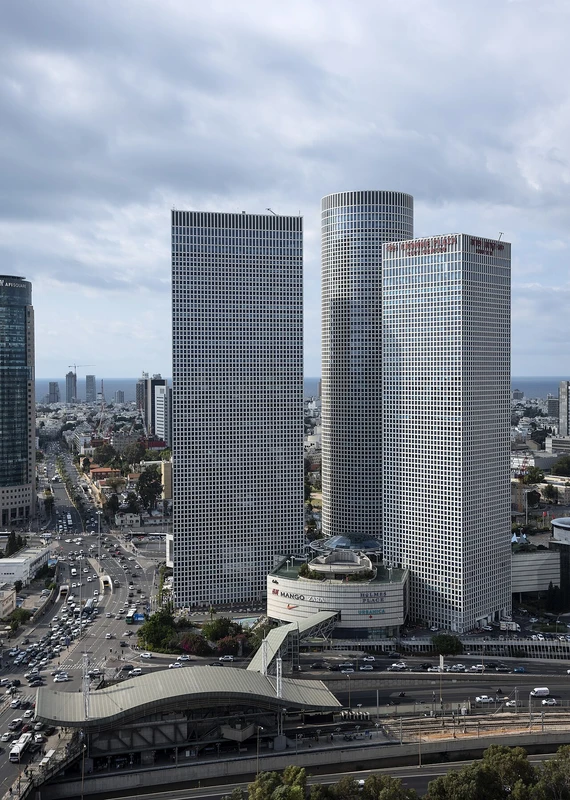
One of the most defining characteristics of Silicon Wadi is the dense presence of global multinational corporations (MNCs). More than 430 Fortune 500 tech companies operate dedicated, high-autonomy R&D centers in Israel. Unlike standard sales outposts or offshore customer support centers, multinational facilities in Israel are tasked with core architectural engineering and next-generation product design.
Landmark Multinational Case Studies
- Intel: Established its first non-US design center in Haifa in 1974. Israeli engineering teams at Intel designed some of the most consequential microprocessor architectures in computing history, including the 8088 processor (which powered the original IBM PC), Centrino mobile technology, Core processor families (Sandy Bridge, Skylake), and advanced manufacturing fabs in Kiryat Gat (Fab 28 and Fab 38). Intel remains Israel’s largest private employer with over 11,000 workers.
- Apple: Operates its largest semiconductor design center outside Cupertino in Herzliya and Haifa, anchored by the acquisitions of flash memory pioneer Anobit ($390M in 2012) and 3D motion-sensing creator PrimeSense ($345M in 2013). Israeli engineers played fundamental roles in developing Apple’s M-series silicon processors, camera image signal processors (ISP), and FaceID biometric authentication.
- Google: Opened R&D hubs in Tel Aviv and Haifa in 2006, expanding dramatically after acquiring Tel Aviv-based crowdsourced navigation giant Waze for $1.15 billion in 2013. Google Israel teams contribute core features to Google Search, Google Suggest, Google Cloud security, and conversational AI.
- Microsoft: Opened its first overseas R&D facility in Israel in 1991. The Israel R&D Center serves as Microsoft’s global powerhouse for cybersecurity (Microsoft Defender), Cloud security, and enterprise AI.
- Nvidia: Expanded exponentially in Israel through the landmark $6.9 billion acquisition of Mellanox Technologies (Yokneam) in 2020. Israeli engineering teams design the ultra-fast InfiniBand interconnect networking hardware and Quantum switches that link tens of thousands of Nvidia H100 and Blackwell GPUs in modern AI supercomputing datacenters worldwide.
9. Geographic Hubs: The Spatial Geography of Innovation
Although Israel is geographically compact, the high-tech ecosystem exhibits distinct spatial specialization across five primary regional innovation corridors:
| Innovation Hub | Primary Sector Focus | Key Infrastructure & Parks | Prominent Corporate & Startup Tenants |
|---|---|---|---|
| Tel Aviv-Yafo | Cybersecurity, FinTech, B2B SaaS, Generative AI, Consumer Tech | Rothschild Corridor, Sarona Complex, ToHa Towers, Midtown Tel Aviv | Wiz, Monday.com, Payoneer, Check Point, Meta, Google, Lemonade |
| Herzliya Pituach | Venture Capital HQs, Enterprise Software, Telecom, Cloud Infrastructure | Herzliya Industrial Zone, Ampa Complex, B.S.R. City | Apple R&D, Microsoft, General Motors, Pitango VC, Viola Group, CyberArk |
| Haifa & Northern Corridor | Semiconductors, Hardware Engineering, Life Sciences, Autonomous Systems | Matam High-Tech Park, Technion Technology Transfer (T3) | Intel, Nvidia (Mellanox), Apple, Qualcomm, Philips Healthcare, Elbit Systems |
| Jerusalem | Computer Vision, DeepTech, BioTech, Digital Health, Nanotechnology | Har Hotzvim Technology Park, JVP Media Quarter, Givat Ram Tech Hub | Mobileye, Lightricks, Cisco, JVP, Medinol, BrainQ |
| Beer Sheva & Negev | Cyber Defense, Desert Tech, Renewable Energy, National Security Tech | Gav-Yam Negev Advanced Technologies Park, IDF Cyber Campus | National Cyber Directorate, Dell EMC, IBM Cyber Center, Rafael, BGU TTO |
10. Cultural Foundations: Chutzpah, Dawka, and Radical Flat Hierarchy
Beyond capital and military pipelines, the intangible yet indispensable driver of Israeli technological agility is cultural. In management literature and sociological studies, three distinct cultural attributes are repeatedly identified as structural advantages in software and hardware engineering:
Chutzpah and the Rejection of Hierarchical Deference
Chutzpah—audacity, boldness, or healthy irreverence toward authority—permeates the Israeli workplace. In typical Israeli tech firms, junior developers actively challenge executive roadmaps, propose radical architectural overhauls directly to founders, and disregard rigid corporate protocols. This radical directness eliminates organizational friction, prevents groupthink, and drastically compresses product iteration cycles.
Risk Tolerance and the Normalization of Failure
In many European and Asian business cultures, startup bankruptcy or product failure carries severe social stigma and career-ending consequences. In Israel, failure in pursuit of an ambitious technological objective is regarded as an essential badge of experience. Venture capitalists routinely fund repeat founders whose previous ventures were dissolved, recognizing that the experiential learnings gained from managing rapid burn rates, engineering bottlenecks, and market pivots provide invaluable operational discipline.
Dawka: The Psychology of Overcoming Scarcity
The concept of Dawka—a stubborn determination to succeed precisely because the environment is challenging, resource-constrained, or adversarially complex—has shaped Israel’s technological ethos. Lacking domestic natural resources, reliable regional markets, or geographical depth, Israeli engineers historically had no choice but to build globally scalable, export-first digital solutions from day one.
11. Transitioning to Scale-Up Nation: Building Multi-Billion Market Leaders
During the 1990s and 2000s, the primary criticism of the Israeli startup ecosystem was the “early exit syndrome”—the tendency of founders to sell high-potential companies to American tech giants for $50 million to $200 million, forfeiting long-term corporate governance and market dominance. Over the past decade, however, the ecosystem underwent a profound structural maturation, shifting from “Startup Nation” to “Scale-Up Nation.”
Israeli founders today increasingly reject early acquisition offers, raising massive growth rounds (Series C, D, and beyond) to build independent global conglomerates with dual headquarters in Tel Aviv and New York or San Francisco. Companies such as Check Point, CyberArk, Mobileye, Monday.com, Wiz, Snyk, and Payoneer demonstrate that Israeli leadership teams possess the operational capabilities to manage global enterprise sales organizations, execute international M&A, and sustain multi-billion-dollar market capitalizations on NASDAQ and the New York Stock Exchange.
12. Regional Integration & The Abraham Accords Effect
The signing of the Abraham Accords in late 2020 opened unprecedented avenues for cross-border technological and investment integration between Israel and the Arab world, specifically the United Arab Emirates, Bahrain, and Morocco. Emirati sovereign wealth funds and private family offices (such as Mubadala, ADQ, and G42) have established direct investment conduits into Israeli venture funds, while Israeli cybersecurity, AgriTech, FinTech, and water-desalination firms have established operating headquarters in Dubai and Abu Dhabi.
This regional synergy unites Israeli deep-tech intellectual property with Gulf capital depth, world-class logistics infrastructure, and access to expanding markets across South Asia, the Middle East, and North Africa.
13. Frequently Asked Questions (FAQ)
Why does Israel produce so many cybersecurity companies?
Israel’s cybersecurity supremacy is the direct result of the nation’s geopolitical realities and defense pipeline. Elite military intelligence units like Unit 8200 and Unit 81 select and train the country’s top computational minds to protect critical national infrastructure against constant, highly sophisticated cyber threats. When these engineers transition to civilian industry, they apply real-world defensive and offensive paradigms to enterprise network security, cloud architecture, and data protection.
What role does the Israel Innovation Authority (IIA) play in startups?
The Israel Innovation Authority provides non-dilutive grant funding to high-risk, early-stage R&D projects where private venture capital is hesitant to invest. The IIA covers up to 50% to 85% of approved R&D budgets without taking equity in the company; startups repay the grant solely through modest royalties if and when the product reaches commercial revenue.
What is the difference between Silicon Valley and Silicon Wadi?
While Silicon Valley benefits from massive domestic market scale and diversified consumer Internet platforms, Silicon Wadi specializes in deep technological infrastructure, enterprise cybersecurity, semiconductor architecture, and B2B SaaS. Because Israel’s domestic market is small, every Israeli startup is engineered from its inception to sell to international markets, primarily North America, Europe, and Asia.
How does academic research translate into commercial startups in Israel?
Israel’s universities maintain world-leading Technology Transfer Offices (TTOs), including Yeda (Weizmann Institute), Yissum (Hebrew University), Ramot (Tel Aviv University), and T3 (Technion). These TTOs patent academic discoveries, license intellectual property to global industry leaders, and co-found spin-off startups, generating billions of dollars in royalties and commercial spin-offs.
How has the Israeli tech ecosystem evolved from ‘Startup Nation’ to ‘Scale-Up Nation’?
Historically, Israeli founders exited early via M&A acquisitions by US conglomerates. Over the last decade, mature founders, abundant late-stage growth capital, and deep operational executive talent enabled Israeli companies to retain independent control, conduct global acquisitions, and scale into multi-billion-dollar NASDAQ market leaders like Check Point, Mobileye, CyberArk, and Monday.com.