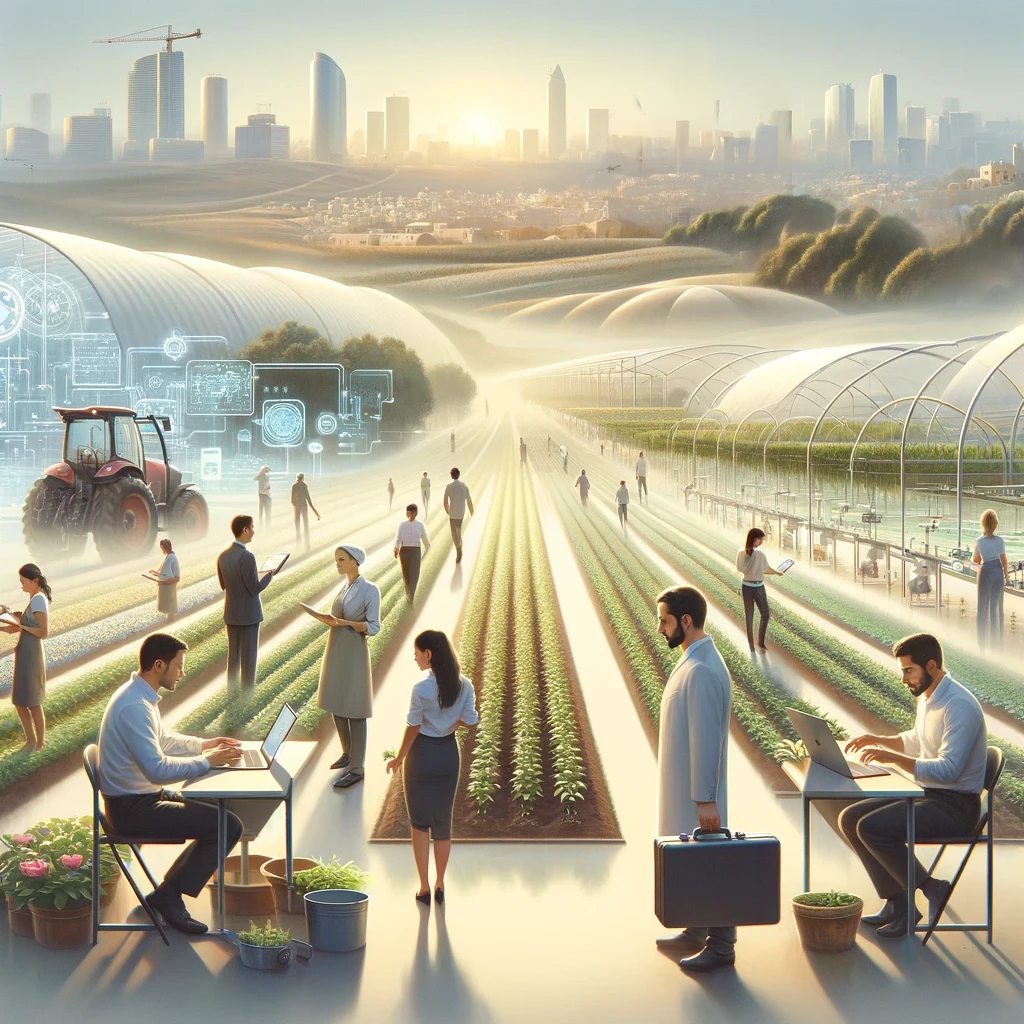
The transformation of the economy of Israel represents one of the most remarkable structural metamorphoses in modern economic history. Over the span of seven decades, Israel evolved from an impoverished, agrarian-socialist state grappling with food rationing, capital scarcity, and hyperinflation into an advanced, free-market knowledge economy. Today, Israel is a member of the Organisation for Economic Co-operation and Development (OECD), boasting a Gross Domestic Product (GDP) exceeding $530 billion, a GDP per capita surpassing $55,000, and foreign currency reserves exceeding $210 billion.
This comprehensive economic intelligence brief provides an in-depth analysis of the institutional pillars, fiscal frameworks, monetary policies, industrial sectors, water economics, agricultural productivity, banking architectures, foreign investment dynamics, sovereign debt management, and bilateral trade agreements that power the modern Israeli economy. We explore the landmark 1985 Economic Stabilization Plan, the monetization of offshore natural gas reserves via the Leviathan and Tamar fields, the high-tech export engine, capital market reforms, and the ongoing structural initiatives shaping the nation’s macroeconomic trajectory.
1. Macroeconomic Overview: Structure, Output, and OECD Metrics
Israel operates an open, technologically sophisticated, service-oriented mixed market economy. With a population approaching ten million, the domestic consumer market is relatively compact, compelling Israeli enterprises to engineer export-oriented goods and services from inception. As a result, foreign trade represents a vital component of national economic life, with total exports of goods and services exceeding $160 billion annually.
The structural composition of Israel’s GDP reflects the profile of a mature, post-industrial advanced economy. Services—encompassing software development, financial services, telecommunications, and scientific research—generate approximately 70% of total GDP. Industry and manufacturing contribute roughly 27%, while agriculture accounts for slightly over 1.2% of GDP (though maintaining outsized strategic importance due to national food security and advanced AgriTech export capabilities).
| Macroeconomic Metric | Current Benchmark (2024–2026) | Historical Context (1985) | Macroeconomic Implication |
|---|---|---|---|
| Nominal GDP (USD) | $530+ Billion | $27 Billion | Nearly twentyfold expansion driven by high-tech exports and market liberalization. |
| GDP Per Capita (Nominal) | $55,000+ | $6,500 | Surpasses OECD averages, exceeding Japan, France, the UK, and Italy. |
| Annual Inflation Rate | 2.5% – 3.2% | 445% (Hyperinflation) | Anchored within the Bank of Israel’s target price-stability corridor (1%–3%). |
| Foreign Exchange Reserves | $210+ Billion | ~$3 Billion | Represents ~40% of GDP; provides unprecedented sovereign liquidity and debt insulation. |
| Debt-to-GDP Ratio | ~62% | 160%+ | Maintained well below the European Union Maastricht threshold and US ratios (~120%). |
2. Historical Evolution: From Austerity to the 1985 Stabilization Plan
To comprehend Israel’s contemporary economic resilience, one must examine the critical inflection points that dismantled state-dominated monopolies and established a robust market architecture.
The Early Decades: Austerity, Capital Controls, and State Socialism (1948–1977)
Upon establishing independence in 1948, Israel faced overwhelming economic headwinds: an empty national treasury, a hostile regional trade embargo, and the immediate arrival of over 680,000 destitute Jewish refugees from war-torn Europe and the Middle East. Under Prime Minister David Ben-Gurion and Minister of Finance Dov Yosef, the state implemented Tzena (Austerity)—a rigid rationing regime governing food, clothing, and fuel.
During the 1950s and 1960s, economic survival was secured through external capital injections: the 1952 Reparations Agreement with West Germany, State of Israel Bonds, and philanthropic capital mobilized by global Jewish communities. The economy was heavily centralized, dominated by the Histadrut (the General Organization of Workers), which acted simultaneously as a trade union federation, major industrial employer (Koor Industries), health insurer (Clalit), and commercial bank owner (Bank Hapoalim).
The Hyperinflation Crisis of the Early 1980s
Following the 1973 Yom Kippur War, defense spending expanded dramatically to consume nearly 30% of national GDP. Subsequent attempts at financial deregulation without fiscal discipline in the late 1970s triggered an unsustainable balance-of-payments crisis and an uncontrollable wage-price spiral. By 1984, annual inflation exploded to 445%, foreign exchange reserves dropped to critical levels, and the national currency (the Old Israeli Shekel) depreciated daily, creating pervasive economic paralysis.
The 1985 Economic Stabilization Plan: The Turning Point
In July 1985, Prime Minister Shimon Peres, Minister of Finance Yitzhak Moda’i, and Bank of Israel Governor Michael Bruno executed the landmark 1985 Economic Stabilization Plan. Widely studied in macroeconomic textbooks as a masterclass in disinflation, the program combined drastic fiscal contraction, a synchronized price-and-wage freeze agreed upon with the Histadrut, and the abolition of automatic cost-of-living adjustments.
Crucially, the plan instituted structural reforms that laid the groundwork for modern capitalism in Israel:
- Abolition of Deficit Monetization: The Bank of Israel was legally prohibited from printing currency to finance government budget deficits (the “Non-Printing Law”).
- Introduction of the New Israeli Shekel (NIS): The hyper-inflated currency was replaced at a ratio of 1,000 old shekels to 1 New Israeli Shekel.
- Privatization of State Enterprises: State-owned conglomerates in telecommunications (Bezeq), chemicals (ICL), banking, and aviation (El Al) were privatized through public equity markets.
- Capital Account Liberalization: Foreign currency controls were dismantled, allowing free cross-border capital flows and foreign direct investment (FDI).
3. The Pillars of Modern Industry and Export Power
Israel’s export matrix has shifted decisively from low-margin agricultural produce (the historic Jaffa Orange era) and basic textiles toward high-margin intellectual property, advanced defense electronics, specialized chemicals, and pharmaceuticals.
1. High-Technology & Software Services
Accounting for over 54% of total exports, the high-tech sector generates over $85 billion annually in foreign earnings. Dominated by cybersecurity (Check Point, CyberArk, Wiz), enterprise software (Monday.com, WalkMe), artificial intelligence, and semiconductor engineering (Intel Israel, Nvidia-Mellanox, Apple R&D), high-tech acts as the primary buffer stabilizing Israel’s sovereign current account balance.
2. Advanced Defense Electronics & Aerospace
Israel ranks among the world’s top ten defense exporters, generating record export revenues exceeding $13 billion annually. Companies such as Israel Aerospace Industries (IAI), Rafael Advanced Defense Systems, and Elbit Systems develop cutting-edge aerospace and radar technologies (Iron Dome, David’s Sling, Arrow-3, Trophy active protection system, and Iron Beam high-energy laser defense), exporting to NATO allies, India, East Asia, and Abraham Accords partner nations.
3. Pharmaceuticals & Life Sciences
Anchored by Teva Pharmaceutical Industries—one of the world’s largest generic pharmaceutical manufacturers—and hundreds of clinical biotechnology startups, Israel produces essential medications, active pharmaceutical ingredients (APIs), and innovative biologic therapies for international healthcare systems.
4. Chemicals, Minerals & Specialized Fertilizers
Leveraging unique mineral deposits from the Dead Sea and the Negev Desert, ICL Group (Israel Chemicals Ltd.) is a global powerhouse in potash, phosphate fertilizers, industrial bromine compounds, and specialty plant nutrition, sustaining global food security and advanced manufacturing supply chains.
5. Diamond Manufacturing and Polishing
The Israel Diamond Exchange in Ramat Gan represents one of the world’s four primary diamond trading bourses. While manufacturing has partially shifted to automated laser-cutting facilities, Israel remains a primary global hub for large-stone valuation, trading, and rough diamond financing.
| Industrial Sector | Annual Export Volume | Key Global Market Players | Primary Export Destinations |
|---|---|---|---|
| High-Tech & Cyber Services | $85+ Billion | Wiz, Check Point, Mobileye, Nvidia Israel, Intel | United States, European Union, United Kingdom, Japan |
| Defense & Aerospace Systems | $13+ Billion | IAI, Elbit Systems, Rafael Advanced Defense | Germany, India, USA, South Korea, UAE |
| Chemicals & Potash | $9+ Billion | ICL Group, Haifa Group, Makhteshim Agan (Adama) | Brazil, China, USA, India, European Union |
| Polished & Rough Diamonds | $8+ Billion | Israel Diamond Exchange members, MID House | USA, Hong Kong, Belgium, UAE (Dubai DMCC) |
| Pharmaceuticals & Generics | $6+ Billion | Teva Pharmaceutical Industries, Dexcel Pharma, Taro | USA, European Union, Canada, Latin America |
4. The Natural Gas Sovereign Transformation: Tamar and Leviathan
For the first six decades of its existence, Israel was entirely dependent on imported fossil fuels, spending significant proportions of national income on crude oil, coal, and foreign pipeline gas. That strategic vulnerability was permanently dissolved by the discovery of massive deep-water offshore natural gas reservoirs in the Levantine Basin of the Mediterranean Sea.
The Landmark Discoveries
- Tamar Field (2009): Located 80 kilometers west of Haifa, containing an estimated 300 billion cubic meters (BCM) of natural gas, commencing commercial production in 2013.
- Leviathan Field (2010): Located 130 kilometers west of Haifa, holding over 600 BCM of natural gas, representing one of the largest deep-water gas discoveries in the world in the 21st century.
- Karish and Tanin Fields (2012): Further expanded domestic supply and introduced competitive private upstream operators (Energean).
Geopolitical & Macroeconomic Dividend
The natural gas revolution transformed the Israeli economy in three foundational dimensions:
- Domestic Energy Cost Reduction: Israel transitioned over 70% of its domestic electricity generation from imported coal and heavy fuel oil to clean, domestically produced natural gas, dramatically reducing industrial electricity tariffs and national carbon emissions.
- Regional Energy Diplomacy: Israel signed multi-decade, multi-billion-dollar gas export treaties with Jordan (National Electric Power Company) and Egypt, anchoring regional diplomatic stability through interconnected energy infrastructure and supplying liquefied natural gas (LNG) to European markets via Egyptian liquefaction plants.
- The Israeli Citizens’ Wealth Fund (Keren LeEzrachim): Established by the Knesset to manage royalties and corporate excess profit levies (the Sheshinski Committee framework), the sovereign wealth fund invests gas profits in diversified international assets to prevent “Dutch Disease” (currency overvaluation) and secure intergenerational wealth for Israeli citizens.
5. Foreign Direct Investment (FDI) & Global Acquisition Megadeals
Israel serves as an outsized recipient of foreign direct investment (FDI), consistently drawing between $20 billion and $28 billion in annual FDI inflows. Global technology giants and institutional private equity firms have acquired Israeli intellectual property and corporate entities through some of the largest cross-border transactions in technology history.
| Acquisition Target | Acquiring Entity | Deal Value (USD) | Year | Strategic Technology Acquired |
|---|---|---|---|---|
| Mobileye | Intel Corporation | $15.3 Billion | 2017 | Autonomous driving computer vision chips and mapping algorithms. |
| Mellanox Technologies | Nvidia Corporation | $6.9 Billion | 2020 | High-throughput InfiniBand networking and datacentre AI interconnect switches. |
| NDS Group | Cisco Systems | $5.0 Billion | 2012 | Digital pay-TV conditional access encryption and set-top software. |
| Habana Labs | Intel Corporation | $2.0 Billion | 2019 | Deep learning AI training (Gaudi) and inference processor silicon. |
| Waze | Google (Alphabet) | $1.15 Billion | 2013 | Crowdsourced real-time GPS traffic mapping and community algorithms. |
6. The Water Economy: Desalination and Wastewater Engineering as Economic Assets
Israel’s management of hyper-arid water scarcity represents one of the most successful economic and technological case studies in resource decoupling. Historically, water availability placed a strict ceiling on agricultural output, industrial manufacturing, and urban demographic expansion. Through sustained engineering investments across seawater desalination and wastewater reclamation, Israel permanently transformed water from an existential deficit into an abundant national surplus and commercial export engine.
Seawater Reverse Osmosis (SWRO) Infrastructure
Israel operates five world-scale seawater reverse osmosis (SWRO) desalination facilities along its Mediterranean coastline: Ashkelon, Palmachim, Hadera, Sorek 1 & Sorek 2, and Ashdod. Combined, these facilities produce over 600 million cubic meters of ultra-pure potable water annually, accounting for approximately 85% of all domestic municipal water consumption in Israel.
The Shafdan Wastewater Miracle: Global #1 in Water Reclamation
In municipal wastewater reclamation, Israel maintains an insurmountable global lead. The nation treats and recycles over 87% of all domestic wastewater for unrestricted agricultural irrigation—primarily directed to the arid Negev Desert. To place this achievement in global context, the second-highest recycling nation, Spain, reclaims approximately 20% of its wastewater, while the United States recycles less than 4%.
The centerpiece of this system is the Shafdan (Dan Region Wastewater Treatment Plant), which utilizes advanced secondary biological treatment followed by natural sand infiltration and multi-year soil aquifer treatment (SAT). The resulting purified effluent meets strict microbiological standards, irrigating thousands of hectares of citrus groves, date palms, and vegetables in southern Israel.
| Facility / System | Technology | Annual Production Capacity | Strategic Economic Impact |
|---|---|---|---|
| Sorek 1 & Sorek 2 | Seawater Reverse Osmosis (SWRO) | 300 Million m³ | World’s largest membrane desalination complex; lowest production cost per m³ globally (~$0.40/m³). |
| Shafdan Complex | Soil Aquifer Treatment (SAT) Reclaim | 145 Million m³ | Irrigates over 60% of all Negev agriculture without drawing from natural freshwater aquifers. |
| Hadera Plant | SWRO with Energy Recovery Systems | 127 Million m³ | Supplies northern and central municipal grids; powers regional water diplomacy with Jordan. |
| Ashkelon Plant | Modular High-Recovery SWRO | 120 Million m³ | First mega-SWRO plant built in Israel (2005); proven 20-year operational resilience. |
7. Agronomic Innovation: Precision Breeding, Dairy Science & Food Security
Although agriculture accounts for a modest share of overall GDP, Israel’s agronomic innovation ecosystem is an economic multiplier that projects outsized influence worldwide. By combining genetic research from the Volcani Center (Agricultural Research Organization) and the Hebrew University’s Faculty of Agriculture in Rehovot with precision automation, Israeli agriculture achieves some of the highest yields per unit of land and water in the world.
Seed Breeding & Genetic Innovation: The Cherry Tomato Revolution
Israel is a world leader in hybrid vegetable seed breeding. In the 1970s and 1980s, Hebrew University professors Nahum Kedar and Haim Rabinowitch engineered the modern commercial cherry tomato, introducing genes that dramatically extended shelf life, enhanced sugar brix levels, and enabled clustered vine harvesting. Today, Israeli seed companies such as Hazera develop high-yield, drought-tolerant, and virus-resistant hybrid seeds exported to commercial greenhouses in over 100 countries.
World-Leading Dairy Science: The 12,000-Liter Standard
Israeli dairy farming achieves the highest milk production per cow in the world, averaging over 12,000 liters per cow annually—surpassing the United States (~10,800 liters) and the European Union (~7,500 liters). This remarkable productivity is enabled by computerized herd management systems developed by Israeli firms Afimilk and SCR Dairy (Allflex), which utilize pedometers and real-time biometric milk sensors to analyze fat, protein, and somatic cell counts at every milking session, optimizing nutritional diets and preventing herd illnesses autonomously.
| Agricultural Sub-Sector | Technological Innovation | Global Performance Benchmark | Key Commercial Leaders |
|---|---|---|---|
| Dairy Automation | Real-time inline milk spectrometry and biometric monitoring | 12,000+ Liters/Cow/Year (#1 globally) | Afimilk (Kibbutz Afikim), SCR Dairy (Netanya) |
| Precision Seed Genetics | Extended shelf-life (rin gene) tomato hybrids and drought tolerance | Over $250M in seed exports annually | Hazera Seeds, Origene Seeds, Volcani Institute |
| Arava Date Cultivation | Brackish water precision drip irrigation for Medjool palms | Produces 50%+ of global Medjool market export | Hadiklaim (Israel Date Growers Cooperative) |
| Fertigation Systems | Simultaneous automated injection of water and soluble minerals | Reduces fertilizer runoff by up to 50% | Netafim, Rivulis Irrigation, Haifa Group |
8. Sovereign Debt Management & Diaspora Financing: State of Israel Bonds
Israel maintains a highly sophisticated sovereign debt management framework overseen by the Ministry of Finance’s Accountant General. The country has never defaulted on its external or internal debt obligations in its history. Israel regularly issues sovereign benchmark bonds on the London, New York, and European debt capital markets, enjoying broad demand from global institutional asset managers, pension funds, and central banks.
The State of Israel Bonds Phenomenon
Established in 1951 by Prime Minister David Ben-Gurion, the Development Corporation for Israel (State of Israel Bonds) represents an innovative sovereign financing vehicle that has raised over $50 billion in direct capital. State of Israel bonds are held by institutional pension systems across US states and municipalities, corporate treasuries, and millions of retail investors worldwide, providing an uncorrelated, resilient liquidity backstop during periods of macroeconomic volatility.
9. Fiscal Architecture, Corporate Tax Policy & R&D Incentives
To incentivize domestic and foreign enterprise investment in advanced technological manufacturing and research, Israel maintains a highly competitive fiscal regime anchored by the Law for the Encouragement of Capital Investments.
Preferred Technological Enterprise Status
Under Israeli corporate tax regulations, high-tech enterprises meeting R&D intensity thresholds qualify for dramatic reductions in statutory corporate tax rates:
- Standard Corporate Tax Rate: 23%.
- Preferred Technological Enterprise (PTE): Companies with global revenues under 10 billion NIS qualify for a reduced 12% corporate tax rate (further reduced to 7.5% if located in peripheral development zones in the Negev or Galilee).
- Special Preferred Technological Enterprise (SPTE): Global multinational conglomerates with annual revenues exceeding 10 billion NIS qualify for a reduced 6% corporate tax rate on technological income and intellectual property commercialization.
- Withholding Tax on Dividends: Reduced to 4% for qualified foreign corporations, creating one of the most attractive holding and intellectual property regimes among OECD member states.
The Angels Law (Section 92A)
To stimulate early-stage seed investments in high-risk technological startups, Israel enacted and modernized the Angels Law. Under this legislation, private individual investors can deduct up to 100% of their equity investment in qualified Israeli early-stage R&D startups directly against their taxable personal income across all revenue sources, significantly mitigating capital downside risk for local angel syndicates.
10. Banking Architecture, Capital Markets & The Bachar Reforms
Israel’s financial sector is characterized by high capitalization, conservative regulatory oversight, and advanced digital banking adoption. The domestic banking landscape is anchored by five major commercial banking groups: Bank Leumi, Bank Hapoalim, Mizrahi-Tefahot Bank, Israel Discount Bank, and First International Bank of Israel (FIBI).
The 2005 Bachar Reform: Transforming Institutional Capital
Prior to 2005, the major commercial banks controlled over 80% of domestic mutual funds and provident pension funds, creating significant conflicts of interest and limiting corporate bond market development. The landmark Bachar Reform, enacted under Finance Minister Benjamin Netanyahu, mandated the total separation of banks from asset management and pension funds.
This structural reform catalyzed the rapid emergence of independent institutional investment powerhouses (such as Menora Mivtachim, Harel, Migdal, Altshuler Shaham, and Phoenix), turning Israel’s mandatory defined-contribution pension market into a massive pool of long-term capital exceeding 2.2 trillion NIS. These institutional funds now actively finance domestic infrastructure, private equity, and real estate bonds.
The Tel Aviv Stock Exchange (TASE)
Founded in 1953 and demutualized in 2019, the Tel Aviv Stock Exchange (TASE) serves as the central clearinghouse for Israeli equity, government bonds, and corporate debt. The flagship TA-35 and TA-125 indices provide global investors with exposure to Israel’s blue-chip technology, banking, real estate, and energy enterprises. TASE maintains dual-listing agreements with NASDAQ, the New York Stock Exchange (NYSE), and the London Stock Exchange (LSE), enabling Israeli corporations to trade seamlessly across global time zones.
| Financial Institution | Institution Type | Total Assets (NIS) | Core Strategic Market Specialization |
|---|---|---|---|
| Bank Leumi | Commercial & Digital Banking | 680+ Billion | Pioneered standalone digital bank Pepper; market leader in tech and commercial lending. |
| Bank Hapoalim | Commercial & Retail Banking | 660+ Billion | Leader in infrastructure project finance, corporate syndication, and consumer mobile payments (Bit). |
| Mizrahi-Tefahot | Mortgage & Commercial Banking | 430+ Billion | Controls over 37% of the national residential mortgage lending market; high return on equity. |
| Discount Bank | Diversified Banking Group | 380+ Billion | Includes Mercantile Discount Bank; dominant in small and mid-size enterprise (SME) financing. |
11. Monetary Architecture, Currency Resilience & The Bank of Israel
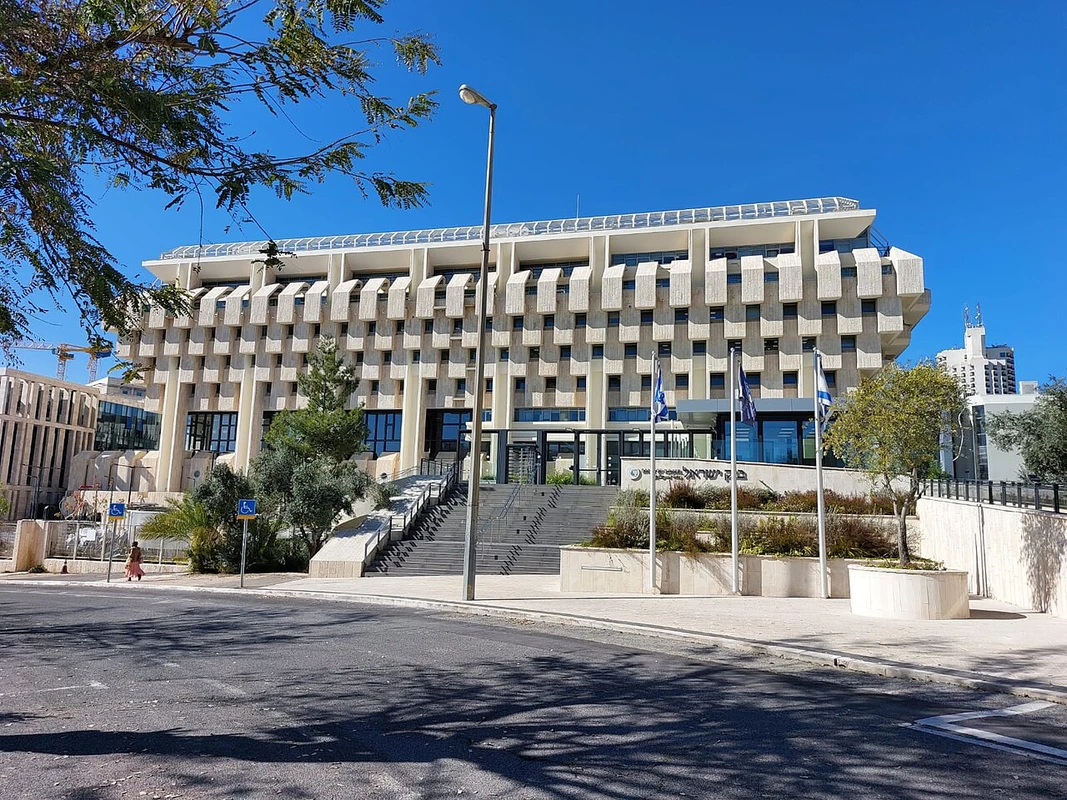
The Bank of Israel (BoI), founded in 1954 and operating under the modern Bank of Israel Law of 2010, serves as one of the most respected central banking institutions in the international financial community. Operating with statutory independence, the central bank’s primary mandate is price stability (maintaining annual inflation within the 1% to 3% target range), alongside supporting economic growth, employment, and financial system resilience.
The New Israeli Shekel (NIS) as a Global Hard Currency
Once vulnerable to severe devaluation, the New Israeli Shekel has transformed over the past two decades into one of the world’s strongest and most resilient sovereign currencies. Supported by persistent current account surpluses, massive foreign direct investment inflows into high-tech, and substantial foreign exchange reserves ($210+ billion), the shekel consistently demonstrates strength against major currency baskets (USD, EUR, GBP).
Under legendary governors including Stanley Fischer (2005–2013), Karnit Flug (2013–2018), and Amir Yaron (2018–present), the Bank of Israel implemented proactive countercyclical monetary policies and accumulation of foreign reserves, insulating the domestic economy from the 2008 Global Financial Crisis and subsequent geopolitical shocks.
12. Global Trade Policy & Free Trade Agreement Network
To overcome geographical isolation and regional boycotts, Israel pioneered an aggressive bilateral trade policy, establishing comprehensive Free Trade Agreements (FTAs) across North America, Europe, Asia, and the Middle East:
| Trading Partner / Bloc | Agreement Year | Key Provisions & Zero-Tariff Scope | Annual Bilateral Trade Volume |
|---|---|---|---|
| United States | 1985 (First US Bilateral FTA) | Eliminated 100% of tariffs on industrial products and scientific equipment. | $50+ Billion |
| European Union | 1995 (Association Agreement) | Mutual zero-tariff access for industrial products; Horizon Europe scientific integration. | $48+ Billion |
| United Kingdom | 2019 (Post-Brexit FTA) | Preserved seamless bilateral commerce; upgraded tech, cyber, and services framework. | $7+ Billion |
| South Korea | 2021 (First Asian FTA) | Duty-free import of Korean automobiles and electronics; zero tariffs on Israeli medical devices and AgriTech. | $3.5+ Billion |
| United Arab Emirates (CEPA) | 2022 (Historic Arab FTA) | Comprehensive Economic Partnership Agreement eliminating tariffs on 96% of traded goods. | $3+ Billion (Rapidly Expanding) |
| Vietnam | 2023 (Southeast Asian Gateway) | Eliminated tariffs on 86% of Israeli exports, opening major ASEAN manufacturing and agricultural corridors. | $2.5+ Billion |
The Abraham Accords Economic Corridors
The signing of the Abraham Accords in 2020 marked a structural paradigm shift in Middle Eastern economic geography. Bilateral commerce between Israel and the United Arab Emirates rapidly breached $3 billion annually, spanning joint diamond trading, artificial intelligence ventures, renewable energy initiatives, and mutual venture capital investments (such as Abu Dhabi’s Mubadala investing in Israeli tech funds and the Tamar natural gas field). Furthermore, normalization agreements with Bahrain and Morocco have established direct flight corridors, fintech partnerships, and agronomic water technology projects across North Africa and the Gulf.
13. Infrastructure Megaprojects: Modernizing National Connectivity
To sustain population growth and economic decentralization, Israel is executing some of the largest public-private partnership (PPP) infrastructure projects in the Middle East:
- Gush Dan Mass Transit System: The Tel Aviv Light Rail (Dankal Red Line operational, Green and Purple Lines under construction) and the planned 150-billion-NIS Tel Aviv Metro (M1, M2, M3 lines spanning 150 km and 109 stations) connecting 24 municipalities.
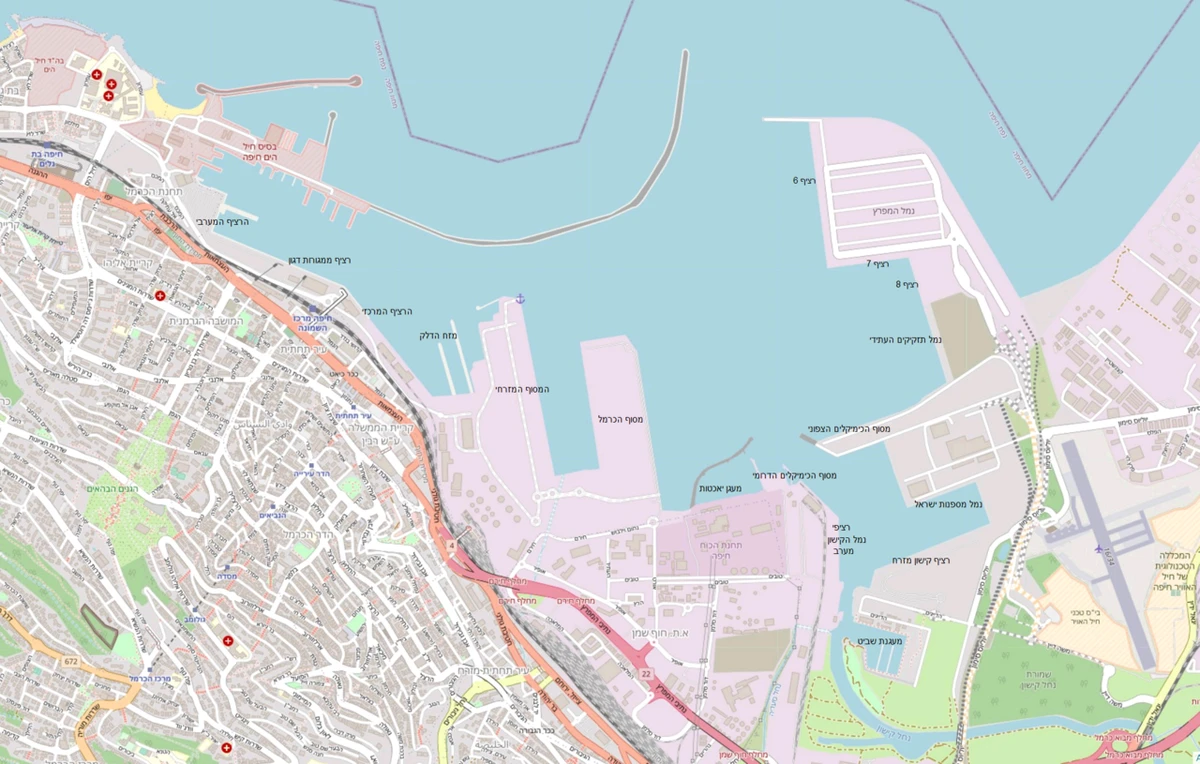
- Seaport Privatization and Expansion: Opening of the state-of-the-art automated Haifa Bayport (operated by Shanghai International Port Group – SIPG) and the Hadaron Port in Ashdod, introducing competitive maritime freight handling and doubling national container capacity.
- National Road & Rail Grid Expansion: Electrification of the Israel Railways mainline network, the fast Jerusalem-Tel Aviv rail line (travel time under 30 minutes), and Highway 6 (Trans-Israel Highway) extensions connecting the northern Galilee to the southern Negev.
14. Structural Challenges, Demographics & Future Growth Horizons
While Israel’s macroeconomic indicators reflect remarkable resilience, economists and policymakers actively focus on structural challenges required to ensure sustainable long-term prosperity:
1. The “Two Economies” Disparity
Israel exhibits a dual-speed economic structure: a hyper-productive, globally integrated high-tech sector (employing ~14% of the workforce with premium wage levels) coexisting alongside lower-productivity traditional services, retail, and construction sectors. Government initiatives focus on expanding technological literacy, vocational coding bootcamps, and digital infrastructure to peripheral regions.
2. Demographic Integration: Arab-Israeli & Haredi Populations
Israel maintains the highest fertility rate in the OECD (~2.9 children per woman). Ensuring high workforce participation rates among the Ultra-Orthodox (Haredi) and Arab-Israeli demographic sectors represents a primary national economic priority. Targeted state grants, specialized academic programs, and tech incubators (such as KamaTech for Haredi entrepreneurs and Hasoub for Arab-Israeli founders) have expanded diversity across engineering hubs.
3. Real Estate and Cost of Living
High population growth, land supply constraints, and urban concentration in the central Gush Dan region have created sustained housing price appreciation. In response, national infrastructure programs—including transit-oriented urban renewal (Tama 38 and Pinui-Binui) and regional development incentives in the Negev and Galilee—aim to expand housing supply and stabilize living costs.
15. Frequently Asked Questions (FAQ)
What is Israel’s GDP per capita compared to other advanced nations?
Israel’s GDP per capita exceeds $55,000, ranking in the top quartile of the OECD. It currently surpasses major industrial economies including Japan, the United Kingdom, France, Italy, and South Korea, driven by high-margin intellectual property exports and tech productivity.
How did Israel overcome hyperinflation in the 1980s?
Through the 1985 Economic Stabilization Plan, which froze prices and wages, ended deficit monetization by the central bank, launched the New Israeli Shekel, slashed government spending, and privatized inefficient state monopolies, bringing inflation from over 400% down to low single digits.
How did natural gas discoveries change Israel’s economy?
The discovery of the offshore Tamar and Leviathan gas fields transformed Israel from an energy-dependent importer into a self-sufficient energy exporter. It reduced domestic electricity costs, forged multi-billion-dollar export treaties with Egypt and Jordan, and seeded the sovereign Israeli Citizens’ Wealth Fund.
Why is the New Israeli Shekel considered a strong currency?
The New Israeli Shekel is backed by strong macroeconomic fundamentals: persistent current account surpluses, massive foreign direct investment inflows into technology, statutory Bank of Israel independence, and massive foreign currency reserves exceeding $210 billion (~40% of GDP).
What was the significance of the 2005 Bachar Reform?
The Bachar Reform mandated the separation of commercial banks from provident pension funds and mutual funds. It created an independent asset management industry, stimulated the corporate bond market, and accumulated over 2.2 trillion NIS in institutional pension capital to fund long-term national development.