
In an era defined by intensifying global climate volatility, ecological depletion, and freshwater scarcity, sustainable development and environmental conservation in Israel stand as a globally recognized paradigm of ecological engineering and technological resilience. Over more than a century, Israel transformed an arid, degraded landscape characterized by barren hills, malaria-ridden marshes, and sand dunes into a thriving green sanctuary. Remarkably, Israel entered the 21st century as the only country in the world with a net positive gain in total forested area.
This comprehensive environmental intelligence brief provides an exhaustive analysis of the foundational pillars underlying Israel’s green transition. We examine the historic afforestation of the Negev Desert, the revolutionary circular water economy that reclaims 87% of domestic wastewater, world-record seawater reverse osmosis desalination infrastructure, the monumental Hiriya landfill ecological transformation into Ariel Sharon Park, massive desert solar thermal developments, wildlife conservation corridors, geological preservation across the Negev erosion craters (Makhteshim), UNESCO Biosphere Reserves, species reintroduction programs, grassroots civil environmental activism, and the surging ClimateTech innovation sector engineering global solutions for climate adaptation.
1. The Strategic Mandate: Ecological Restoration in an Arid Biosphere
More than 60% of Israel’s geographic landmass is classified as arid or semi-arid desert, characterized by low annual precipitation (often below 100 mm per year in the southern Negev and Arava), high solar irradiance, and thin, chalky topsoil. In the late 19th and early 20th centuries, centuries of deforestation under Ottoman rule, uncontrolled overgrazing, and wetland stagnation had stripped the Levant of its ancient cedar, oak, and terebinth canopies.
Consequently, environmental conservation in modern Israel was never merely a passive preservation of existing wilderness; it was fundamentally conceived as an active, scientific process of ecological restoration, soil stabilization, and hydrological engineering. Israel’s approach couples statutory preservation frameworks with cutting-edge agronomic technology, transforming ecological vulnerabilities into strategic national assets.
| Environmental Sector | National Benchmark Achievement | Global Comparative Context | Key Governing Body / Organization |
|---|---|---|---|
| Afforestation & Desert Greening | 250+ Million Planted Trees | Only country with net forest expansion in the 20th century | KKL-JNF (Keren Kayemeth LeIsrael) |
| Wastewater Reclamation | 87%+ Recycled for Agriculture | #1 in the world (Spain #2 at ~20%, USA <4%) | Mekorot / Shafdan Complex |
| Seawater Desalination | 600+ Million m³ Potable Water/Yr | Supplies 85% of municipal domestic drinking water | Israel Water Authority / IDE Technologies |
| Protected Wilderness Land | 25%+ of Total Land Area | Over 500 nature reserves and national parks | Israel Nature and Parks Authority (INPA) |
| ClimateTech Density | 500+ Active Technology Startups | Ranks in global top 3 per capita for climate innovation capital | Israel Innovation Authority / PLANETech |
2. Afforestation & Desert Greening: The KKL-JNF Legacy and Yatir Forest
The afforestation of Israel represents the largest human-engineered land reclamation initiative in modern history. Founded in 1901, the Jewish National Fund (Keren Kayemeth LeIsrael – KKL-JNF) was tasked with purchasing land, draining malaria-ridden swamps, and restoring vegetative cover across the historical homeland. Over the course of 120 years, KKL-JNF has planted more than 250 million trees across 100,000 hectares.
The Yatir Forest: Defying Aridity
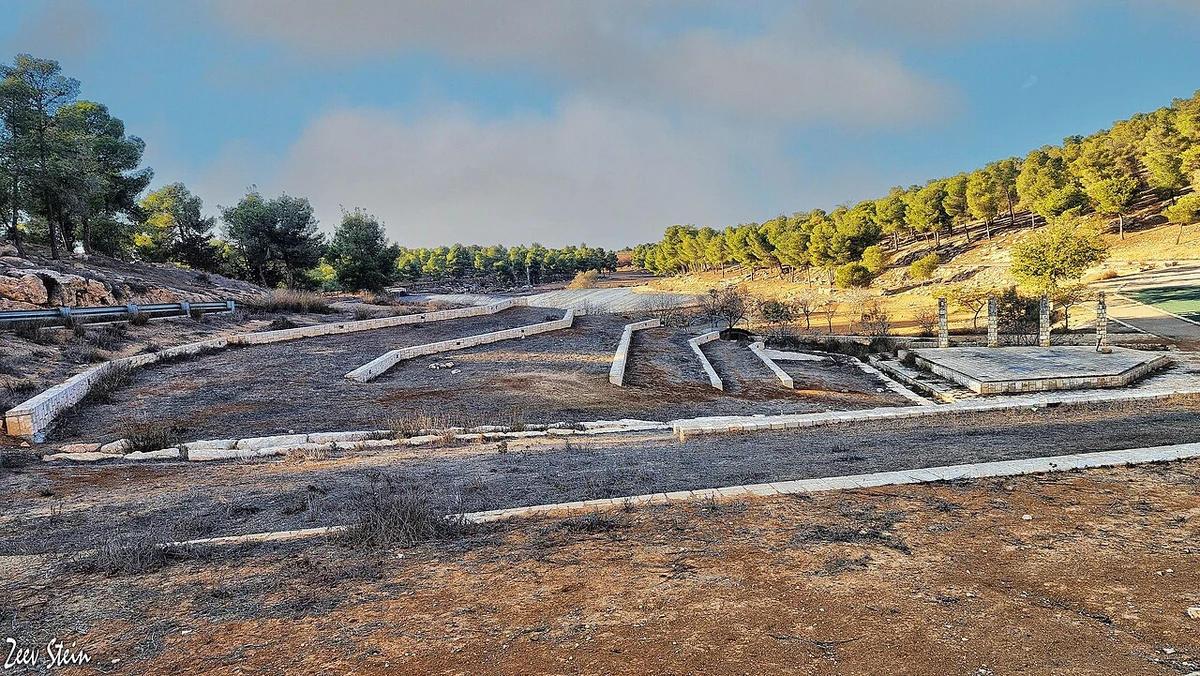
Located on the southern slopes of Mount Hebron at the northern threshold of the Negev Desert, the Yatir Forest stands as a living scientific marvel. Planted in the 1960s under the visionary direction of forester Yosef Weitz, Yatir spans over 30,000 dunams (3,000 hectares) containing more than four million trees—predominantly Jerusalem pine (Pinus halepensis), cypress, pistachio, carob, and tamarisk.
At the time of its inception, international botanists asserted that a dense forest could not survive in an area receiving less than 280 mm of annual rainfall. Yatir not only survived but flourished, acting as a natural green wall halting the northward desertification of the Negev. Today, the Weizmann Institute of Science operates a global research station within Yatir, measuring carbon sequestration, evapotranspiration, and microclimate moderation. Data gathered at Yatir is utilized by the United Nations and global forestry services to design climate-resilient afforestation projects across sub-Saharan Africa and Central Asia.
Evolution to Biodiverse Multi-Species Forestry
While early afforestation relied heavily on fast-growing coniferous monocultures, modern Israeli forestry has transitioned toward diverse ecological canopies. Contemporary management prioritizes indigenous broadleaf species including Mediterranean scrub oak (Quercus calliprinos), terebinth (Pistacia terebinthus), olive, arbutus, and Judas tree (Cercis siliquastrum), creating wildfire-resilient, ecologically biodiverse forest ecosystems that support native pollinators and mammal populations.
3. Hydrological History: From the National Water Carrier to the Reverse Flow Grid
The history of water engineering in Israel reflects a relentless pursuit of resource mastery. In 1953, the Israeli government initiated the construction of the National Water Carrier (HaMovil HaArtzi), completed in 1964. Designed by state water engineering corporation Tahal and operated by Mekorot, the massive engineering project transported water from the Sea of Galilee in the rainy north through massive 108-inch prestressed concrete pipelines, open canals, and subterranean pumping tunnels all the way to the arid central and southern agricultural valleys.
The Reverse National Water Carrier
With the advent of massive coastal seawater desalination in the 21st century, Israel engineered a historic reversal of its hydrological infrastructure. In 2022, Mekorot completed the Reverse National Water Carrier project—a 1-billion-NIS pipeline system that pumps high-purity desalinated Mediterranean water *in reverse* into the Sea of Galilee. This world-first engineering feat ensures that Lake Kinneret maintains stable ecological water levels even during extended regional multi-year droughts, while preserving freshwater outflows to the lower Jordan River and fulfilling international water treaties with the Kingdom of Jordan.
| Hydrological Asset | Original Construction | Engineering Specifications | Modern Operational Role |
|---|---|---|---|
| National Water Carrier | 1953–1964 | 130 km length, 108″ pipeline, Sapir Pumping Station | Core national transmission trunk line integrating all regional grids. |
| Reverse Kinneret Carrier | 2018–2022 | Pressurized bidirectional pipeline to Tzalmon Stream | Discharges up to 100M m³/year of desalinated water to replenish Lake Kinneret. |
| Third Negev Pipeline | 1989–1996 | Dedicated reclaimed effluent transport line | Carries 140M m³/year of treated Shafdan water directly to Negev farms. |
4. The Circular Water Miracle: 87% Reclamation and Desalination Independence
Water security is the foundational prerequisite for life, agriculture, and industry in the Middle East. Israel’s triumph over water scarcity is widely regarded as the gold standard in national resource governance.
The Seawater Reverse Osmosis (SWRO) Infrastructure Grid
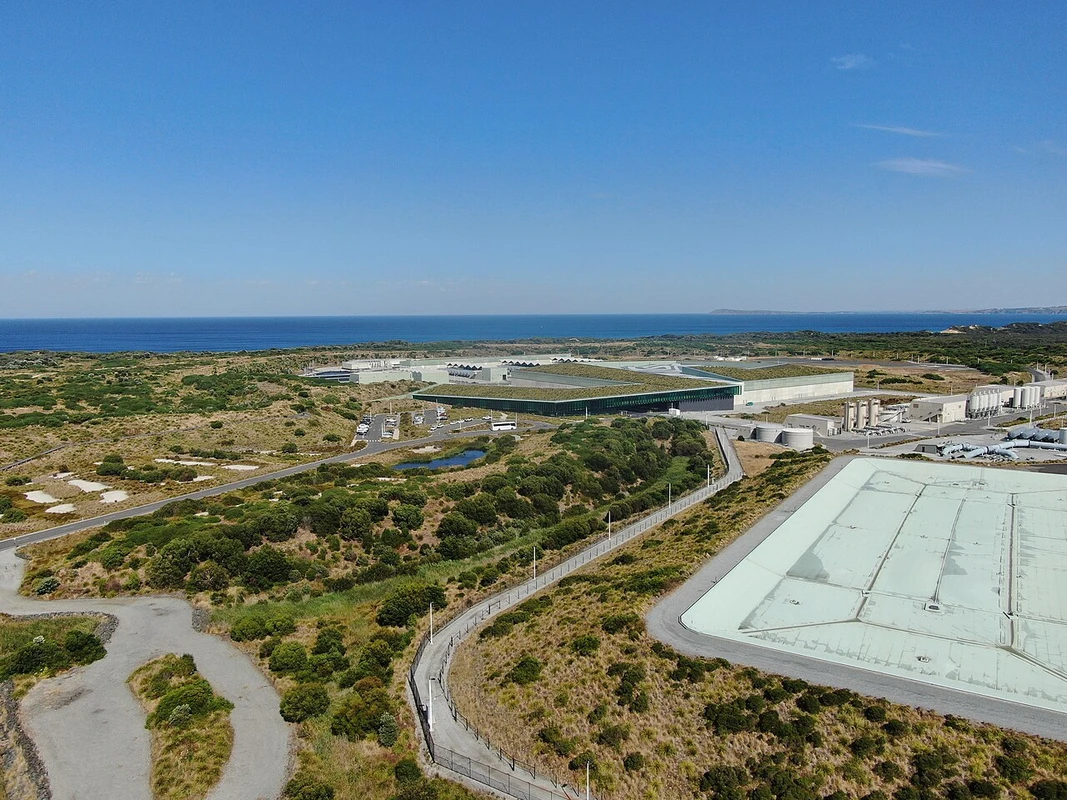
Until the late 1990s, Israel suffered from chronic water deficits, depleting its primary natural reservoirs: the Sea of Galilee (Kinneret) and the coastal and mountain aquifers. In 2000, the Israeli government executed a strategic Master Plan for Seawater Desalination. Today, five cutting-edge reverse osmosis plants along the Mediterranean coastline supply over 600 million cubic meters of fresh drinking water every year:
- Sorek 1 & Sorek 2: Producing over 300 million cubic meters annually utilizing vertical 16-inch energy-recovery membrane configurations, achieving the lowest production cost per cubic meter globally (~$0.40/m³).
- Hadera Plant: Generating 127 million cubic meters annually, equipped with high-efficiency pressure exchangers.
- Ashkelon Plant: Inaugurated in 2005 as the world’s first large-scale SWRO facility, producing 120 million cubic meters annually.
- Palmachim & Ashdod Plants: Providing an additional 190 million cubic meters of capacity to the national water carrier grid.
The Shafdan Reclamation Complex & Agricultural Irrigation
While desalination supplies domestic taps, recycled municipal wastewater fuels national agriculture. The Shafdan (Dan Region Wastewater Treatment Complex) processes the municipal sewage of the entire Gush Dan metropolitan area (over 2.5 million residents). Utilizing secondary biological activated sludge treatment followed by natural sand infiltration across the Rishon LeZion dunes, the effluent undergoes multi-year Soil Aquifer Treatment (SAT).
The resulting reclaimed water (known as Mei Klahim) meets unrestricted microbiological purity standards. It is pumped via the dedicated “Third Negev Pipeline” directly to southern kibbutzim and moshavim, irrigating citrus groves, bell peppers, tomatoes, and jojoba plantations without drawing a single drop from drinking water aquifers.
| Water Metric / Asset | Volume / Percentage | Technological Process | National Sustainability Benefit |
|---|---|---|---|
| Wastewater Recycling Rate | 87% – 90% | Biological nutrient removal + Soil Aquifer Treatment | Supplies 60%+ of total agricultural water demand across Israel. |
| Municipal Desalination Share | 85% of tap water | Seawater Reverse Osmosis (SWRO) | Permanently insulates urban centers from multi-year regional droughts. |
| Drip Irrigation Adoption | Over 90% of farmlands | Pressure-compensated micro-drippers (Netafim) | Reduces agricultural water consumption by 50% compared to flood irrigation. |
| Reverse Water Flow to Galilee | 100 Million m³/Year Capacity | Bidirectional national water carrier grid | Pumps desalinated Mediterranean water into Sea of Galilee to maintain lake levels. |
5. Precision Micro-Irrigation: The Invention and Global Dominance of Drip Systems
In the early 1960s, water engineer Simcha Blass noticed a giant tree growing in a dry kibbutz yard without apparent irrigation; investigation revealed a tiny pinhole leak in an underground pipe slowly feeding water directly to the tree’s root system. Blass developed the first patented plastic micro-dripper emitter featuring wide friction labyrinths that restricted flow without clogging.
Partnering with Kibbutz Hatzerim in the northern Negev in 1965, Blass founded Netafim. Today, drip irrigation is the foundational technology of modern global precision agriculture:
- Eliminating Evaporative Waste: Conventional flood or furrow irrigation loses over 45% of water to soil evaporation and run-off. Modern subsurface drip irrigation (SDI) delivers micro-metered drops of water and dissolved nutrients directly to root zones with 95%+ application efficiency.
- Automated Fertigation: By dissolving precise mineral fertilizers directly into the drip lines, Israeli farmers reduce nitrogen and phosphorus chemical usage by up to 50%, preventing toxic groundwater leaching.
- Salinity Management in Arid Soils: Drip systems continuously push concentrated natural soil salts away from root balls toward the outer wetted perimeter, enabling commercial crop cultivation using brackish underground aquifer water in the hyper-arid Arava Valley.
6. The Hiriya Miracle: Transforming Trash Mountain into Ariel Sharon Park
One of the most dramatic environmental rehabilitation achievements in global urban planning is the transformation of the infamous Hiriya Landfill into the sprawling Ariel Sharon Park.
Operating between 1952 and 1998, Hiriya served as the primary garbage dump for the Tel Aviv metropolitan area. Over five decades, it accumulated more than 25 million tons of solid waste, forming a towering, noxious mountain 60 meters high and half a kilometer long. The landfill posed catastrophic ecological hazards: toxic leachate seeped into the adjacent Ayalon and Shapirim riverbeds, volatile methane pockets ignited spontaneous underground fires, and flocks of thousands of scavenging gulls crossed the flight paths of passenger jets arriving at Ben Gurion Airport, creating severe aviation collision hazards.
The Engineering Rehabilitation
Following the landfill’s closure in 1998, the Israeli government resisted pressures to build residential real estate on the site, choosing instead to execute an audacious ecological redemption master plan designed by world-renowned German landscape architect Peter Latz:
- Slope Stabilization & Capping: The steep waste slopes were reshaped into stabilized terraces, capped with impermeable synthetic geomembranes, and covered with a three-meter-thick layer of clean bio-soil.
- Biogas Extraction & Power Generation: Over 80 subterranean extraction wells were drilled into the waste core to siphon escaping methane gas, directing it to an on-site biogas cogeneration power plant that generates clean electricity.
- The Arrow Ecology and RDF Facilities: At the foot of the mountain, state-of-the-art waste-to-energy recycling complexes were constructed, including an automated Refuse-Derived Fuel (RDF) facility that processes 1,500 tons of household waste daily, converting dry non-recyclable plastics and paper into high-calorific alternative fuel pellets for the Nesher Ramla cement factory.
- Ariel Sharon Park Creation: Today, the park encompasses over 800 hectares (8,000 dunams)—three times the size of New York’s Central Park. The summit features panoramic observation promenades overlooking the Tel Aviv skyline, native wildflower meadows, reconstructed wetland retention basins, and educational biodiversity trails.
7. Renewable Energy & Solar Innovation in the Negev
Israel is endowed with intense solar irradiance, receiving over 300 sunny days per year. The Ministry of Energy has instituted targets to generate 30% of national electricity from renewable sources by 2030, with solar photovoltaic (PV) and concentrated solar thermal power (CSP) serving as the primary drivers.
The Ashalim Solar Megaproject
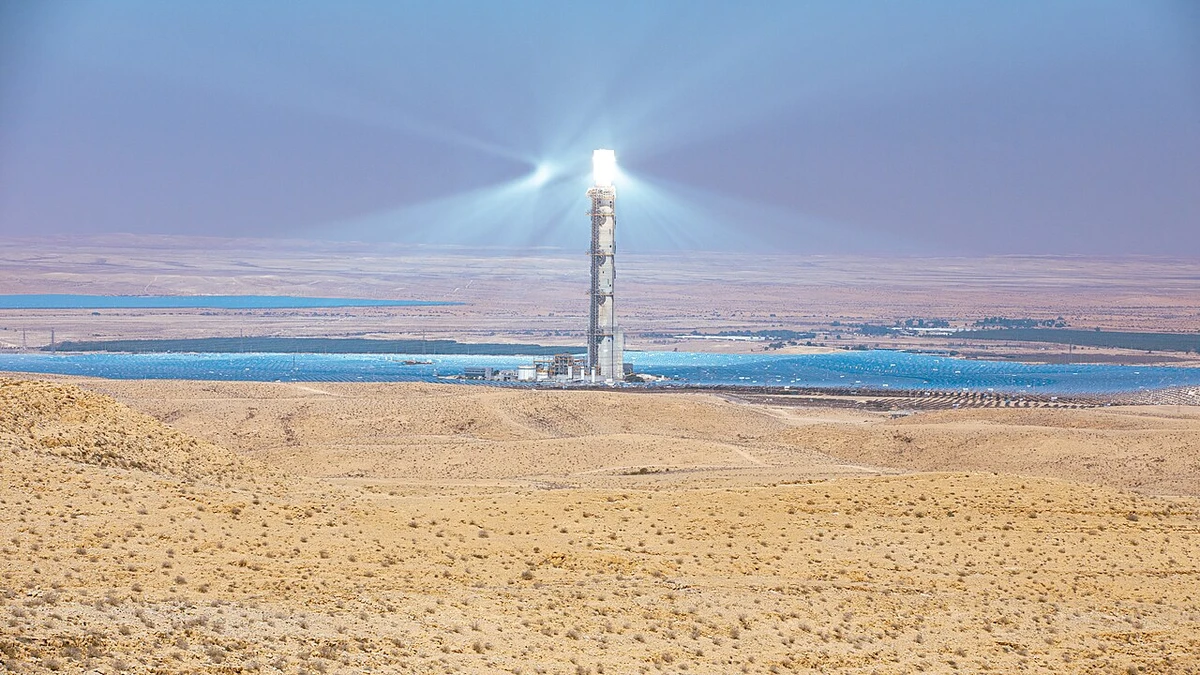
Spanning over 1,000 hectares in the Negev Desert near Ramat Negev, the Ashalim Solar Power Complex represents one of the world’s most sophisticated hybrid renewable facilities, combining three distinct solar technologies:
- Ashalim Plot B (CSP Solar Tower): Anchored by a 250-meter-tall solar receiver tower (one of the tallest in the world), surrounded by 50,000 computer-controlled dual-axis heliostats tracking the sun. The mirrors focus concentrated thermal energy to generate superheated steam, powering a 121 MW turbine.
- Ashalim Plot A (Parabolic Trough with Molten Salt Storage): A 121 MW parabolic trough facility featuring a 4.5-hour molten salt thermal storage system, enabling clean electricity dispatch into the national grid even after nightfall.
- Ashalim Plot C & D (Photovoltaic): Over 70 MW of utility-scale high-efficiency monocrystalline PV panels.
The 1980 Solar Water Heating Mandate: The World’s First
Decades before renewable energy mandates became standard across Western economies, Israel enacted a groundbreaking national law in 1980: mandating rooftop solar thermal water heaters (Dud Shemesh) on all new residential buildings up to 27 meters in height. Engineered by Israeli solar pioneer Dr. Harry Zvi Tabor, these thermosiphon systems use black chrome absorption panels to heat domestic water directly from the sun.
Today, over 85% of Israeli households rely on solar water heaters, preventing the emission of millions of tons of carbon dioxide and reducing total national electricity demand by an estimated 4% to 5% every single year.
Agrivoltaics & Dual-Use Solar Systems
Given Israel’s limited land area, Israeli agronomists and energy engineers are pioneering agrivoltaics—the co-location of elevated solar PV panels above active crop fields and orchards. Startups such as Treedis and institutions like the MIGAL Galilee Research Institute deploy semi-transparent, bifacial solar canopies over apple orchards and berry vineyards. The panels shield crops from excessive solar scorch and hail, reduce soil water evaporation by up to 25%, and generate clean revenue for kibbutz farming communities.
8. Biodiversity Conservation, Nature Reserves & Biblical Fauna Reintroduction
Despite its small geographic footprint, Israel occupies a globally unique biogeographical crossroads: the convergence of Eurasia, Africa, and the Mediterranean basin. The country is home to over 2,600 plant species, 500 bird species, 100 mammal species, and 100 reptile species.
The Israel Nature and Parks Authority (INPA) Mandate
The Israel Nature and Parks Authority (INPA) manages over 500 nature reserves and national parks encompassing more than 25% of the country’s sovereign land. These protected reserves preserve delicate ecosystems ranging from the alpine peaks of Mount Hermon to the coral reefs of the Gulf of Eilat.
The Hai-Bar Biblical Species Reintroduction Program
To restore historical wildlife mentioned in biblical texts that had been driven to regional extinction by hunting and habitat loss during Ottoman times, the INPA founded two specialized breeding reserves: Hai-Bar Carmel in the north and Hai-Bar Yotvata in the southern Arava Desert.
- Persian Fallow Deer (Dama mesopotamica): Believed completely extinct in the Levant until a daring operation in 1978 extracted breeding pairs from Iran during the revolution. Today, hundreds of captive-bred fallow deer roam wild across the Carmel and Upper Galilee forests.
- Arabian Oryx (Oryx leucoryx): The striking white desert antelope, extinct in the wild across the Levant by the 1960s, was successfully bred at Hai-Bar Yotvata and released in stable wild herds into the Negev and Arava canyons.
- Asiatic Wild Ass (Equus hemionus onager): Reintroduced into Makhtesh Ramon and the southern Negev highlands, establishing a self-sustaining wild population exceeding 300 individuals.
- Griffon Vulture (Gyps fulvus) Conservation: Breeding and tracking programs utilizing solar-powered GPS satellite tags across Gamla and Mount Carmel protect the Levant’s apex avian scavenger from secondary pesticide poisoning.
| Reserve / Conservation Area | Habitat Type | Key Protected Species | Conservation Milestone |
|---|---|---|---|
| Agamon HaHula Reserve | Freshwater wetlands & peat marshes | Eurasian Crane, Greater Spotted Eagle, Water Buffalo | Successful reversal of 1950s wetland drainage; 500M annual avian migrants. |
| Ein Gedi Nature Reserve | Desert oasis springs & canyon cliffs | Nubian Ibex, Rock Hyrax, Dead Sea Sparrow | Thriving Nubian Ibex population recovery along the Dead Sea escarpment. |
| Coral Beach Reserve (Eilat) | Northernmost shallow coral reef | Stylophora pistillata, Clownfish, Hawksbill Turtle | Corals exhibit exceptional genetic resistance to thermal bleaching and ocean warming. |
| Hai-Bar Yotvata Reserve | Acacia desert savanna | Arabian Oryx, Asiatic Wild Ass (Onager), Ostrich | Successful reintroduction of biblical species extinct in the wild back to Negev dunes. |
9. UNESCO Biosphere Reserves: Mount Carmel & Ramat Menashe (Megiddo)
Israel’s commitment to balanced sustainable development is exemplified by its internationally recognized UNESCO Biosphere Reserves:
- Mount Carmel Biosphere Reserve: Covering the rugged Mediterranean pine and oak forests rising above Haifa, Mount Carmel was designated a UNESCO Biosphere Reserve in 1996. It serves as a living laboratory for wildfire recovery management, post-fire soil stabilization, and community-led conservation following the historic 2010 Carmel forest fire.
- Megiddo (Ramat Menashe) Biosphere Reserve: Designated in 2011, this rolling mosaic of oak parklands, springs, organic olive groves, and agricultural kibbutzim in the Jezreel Valley showcases sustainable rural agro-ecology, where farming communities coexist harmoniously with protected wildlife corridors.
10. Geological Preservation: Makhtesh Ramon and International Dark Sky Status
In the high desert of the central Negev lies the Makhtesh Ramon (Ramon Crater)—the world’s largest makhtesh (an erosion crater unique to Israel and the Sinai Peninsula). Spanning 40 kilometers in length, 9 kilometers in width, and 400 meters in depth, the makhtesh serves as a colossal open-air geological laboratory exposing 200 million years of fossilized triassic and jurassic stratigraphy, volcanic basalt dykes, and prismatic sandstone hills.
To protect this fragile desert ecosystem from light pollution and ecological fragmentation, Makhtesh Ramon was officially recognized as an International Dark Sky Park by the International Dark-Sky Association (IDA)—the first designated dark sky reserve in the entire Middle East. This status preserves nocturnal ecosystems for desert predators (such as the striped hyena, caracal, and Arabian leopard) while establishing the town of Mitzpe Ramon as a premier international astronomical observation and scientific ecotourism center.
11. Civil Environmental Activism: The SPNI and the Wildflower Protection Miracle
The foundation of Israel’s environmental consciousness was forged through public advocacy led by the Society for the Protection of Nature in Israel (SPNI), founded in 1953 by zoologists Amotz Zahavi and Azaria Alon. In the 1950s and 1960s, rapid urban growth and unregulated picking threatened to wipe out endemic wild flora, notably the iconic Gilboa Iris (Iris haynei), cyclamens, anemones, and mountain tulips.
SPNI launched one of the most successful public environmental education campaigns in history. Rather than relying solely on policing, SPNI mobilized schoolteachers, kibbutz educators, and botanical societies, instilling a profound cultural ethos that picking wildflowers was unacceptable. In 1963, the Knesset passed the comprehensive National Parks and Nature Reserves Law, establishing strict legal protection for native flora and empowering nature wardens. Today, Israel’s hillsides explode with spectacular wildflower blooms every spring, testifying to the enduring power of community ecological stewardship.
12. Avian Migration Crossroads & Ornithological Science
Israel sits directly along the Great Rift Valley migration flyway, the secondary largest bird migration route on Earth. Every autumn and spring, over 500 million migratory birds representing hundreds of species funnel through Israel’s narrow airspace, navigating between breeding grounds in Europe and Asia and wintering grounds in Africa.
The Jerusalem Bird Observatory (JBO), nestled adjacent to the Knesset in the heart of the capital, and the International Birding and Research Center in Eilat (IBRCE) operate continuous scientific bird ringing and biometric monitoring stations. Furthermore, Israeli ornithologists pioneered real-time radar tracking of bird flocks in collaboration with the Israel Air Force (IAF), eliminating bird-aircraft collisions by over 76% while protecting endangered raptors and storks along their intercontinental flight paths.
13. Red Sea Coral Thermal Resilience: A Global Marine Sanctuary
While coral reef ecosystems across the Great Barrier Reef, the Caribbean, and Southeast Asia suffer catastrophic mass bleaching events caused by rising sea surface temperatures, the coral reefs in the Gulf of Aqaba (Eilat) have exhibited extraordinary thermal resilience.
Marine biologists at the Interuniversity Institute for Marine Sciences in Eilat and the Bar-Ilan University Marine Lab discovered that Red Sea corals (particularly Stylophora pistillata and Porites species) can withstand water temperatures up to 6°C above their historical summer maximums without bleaching or expelling their symbiotic zooxanthellae algae.
This biological phenomenon stems from an evolutionary “thermal bottleneck”: during the post-glacial migration of marine organisms through the warm southern Bab el-Mandeb strait thousands of years ago, only individuals with extreme thermal tolerance survived to colonize the northern Gulf. As a result, the Gulf of Aqaba is recognized internationally as one of the world’s last surviving marine climate refugia—a genetic treasure trove for coral propagation and global reef restoration efforts.
14. Sustainable Urbanism & Green Architecture (Standard 5281)
With one of the fastest demographic growth rates in the OECD, Israeli municipal planning integrates stringent sustainability codes. The Israeli Green Building Standard (IS 5281) mandates energy-efficient thermal insulation, natural daylighting orientation, greywater recycling, and stormwater retention across new residential and commercial high-rises.
In addition, municipal transit electrification—such as the Tel Aviv Dankal Light Rail, Jerusalem Light Rail network, and zero-emission electric bus fleets across Dan and Egged—drastically reduces urban particulate emissions across metropolitan corridors.
15. ClimateTech Innovation: Engineering Global Environmental Solutions
Leveraging its world-class high-tech ecosystem, Israel has emerged as a premier global hub for ClimateTech innovation. According to reports from the Israel Innovation Authority and PLANETech, over 500 technology enterprises in Israel are dedicated exclusively to decarbonization, resource efficiency, alternative protein, and carbon sequestration.
| ClimateTech Domain | Breakthrough Innovation | Prominent Israeli Pioneers | Environmental Impact Mechanism |
|---|---|---|---|
| Alternative Proteins | Cultivated meat bioreactors and 3D plant matrix structuring | Aleph Farms, Remilk, Redefine Meat | Eliminates livestock methane emissions, grazing land depletion, and water use. |
| Precision AgriTech | AI satellite irrigation sensors and subterranean root monitoring | Phytech, CropX, Netafim | Optimizes crop water and fertilizer dosing, cutting chemical runoff by 40%. |
| Direct Air Carbon Capture | High-efficiency chemical sorbent and biological mineralization | High Hopes Labs, CarbonBlue, RepAir | Direct atmospheric CO2 capture with ultra-low thermal energy requirements. |
| Eco-Packaging Materials | 100% compostable bio-polymer flexible food packaging | TIPA Corp, SolCold | Decomposes organically in 180 days, replacing petroleum-based single-use plastics. |
16. Future Horizons: The Dead Sea, Clean Rivers & Regional Environmental Diplomacy
While Israel’s environmental achievements are monumental, Israeli scientists, government bodies, and NGOs remain actively focused on critical ecological restoration projects:
1. Saving the Dead Sea & Regional Water Stabilization
The surface level of the Dead Sea has declined by over 30 meters over the past half-century due to upstream water diversions from the Jordan River and industrial mineral extraction. In response, Israel is advancing regional hydrological replenishment programs, discharging desalinated Mediterranean water into the Sea of Galilee and releasing controlled freshwater flows down the lower Jordan River corridor.
2. River Rehabilitation (Yarkon, Kishon, and Alexander Rivers)
Historic industrial discharge polluted several of Israel’s coastal rivers. Through the River Rehabilitation Administration, massive bioremediation programs have restored the Yarkon River in Tel Aviv and the Alexander River in the Hefer Valley. Treated water flows have returned native river fish, otters, and softshell turtles (Trionyx triunguis) to flourishing urban greenways.
3. Cross-Border Environmental Cooperation: EcoPeace Middle East
Environmental challenges know no sovereign borders. Through cross-border scientific organizations such as EcoPeace Middle East and the Arava Institute for Environmental Studies, Israeli, Jordanian, and Palestinian researchers collaborate on regional water security, solar-for-water energy swaps, and shared watershed management across the Jordan Rift Valley.
17. Frequently Asked Questions (FAQ)
How did Israel become the only nation with net forest growth in the 20th century?
Through systematic, nation-building afforestation managed by KKL-JNF. Over 250 million trees were planted across barren hills and desert fringes (including the massive Yatir Forest), reversing centuries of erosion and desertification.
What percentage of Israel’s wastewater is recycled?
Israel recycles over 87% of all municipal wastewater, ranking #1 in the world by a wide margin (Spain ranks second at ~20%). Reclaimed water is purified through the Shafdan facility and used for Negev agricultural irrigation.
How does Israel obtain its drinking water?
Approximately 85% of Israel’s domestic municipal drinking water is produced through five world-scale Seawater Reverse Osmosis (SWRO) desalination facilities located along the Mediterranean coast, including the world’s largest at Sorek.
What was the Hiriya transformation?
Hiriya was an infamous 25-million-ton garbage mountain next to Tel Aviv that was transformed into Ariel Sharon Park—an 800-hectare ecological sanctuary (3x larger than Central Park) powered by biogas capture and automated refuse-derived fuel recycling.
Why are corals in the Gulf of Eilat scientifically unique?
Reef corals in the Red Sea at Eilat possess exceptional thermal resilience, surviving elevated water temperatures without undergoing thermal bleaching, making them a crucial global genetic reservoir for marine conservation research.