Recent territorial realignments across southern Yemen, marked by renewed advances by the Iran-aligned Houthi movement toward the transitional capital of Aden, have precipitated an acute strategic recalibration among Red Sea littoral states. Following the withdrawal of government-aligned units from defensive positions adjacent to the Bab el-Mandeb Strait, regional defense planners confront a dual-vector challenge targeting both sovereign Gulf security and international shipping corridors. The sudden shift amplifies operational pressure on Saudi Arabia while complicating sustained diplomatic pathways toward regional stability.
Assessing the Operational Vector: Aden Versus Cross-Border Pressure
The strategic ambiguity surrounding the Houthis’ operational focus—weighing an assault on Aden against renewed cross-border strikes targeting Saudi infrastructure—reflects a classic asymmetric pressure campaign. By pressing toward Aden, the militia seeks to fracture the anti-Houthi coalition’s command structure and secure dominant oversight over southern land routes. Concurrently, retaining cross-border ballistic and unmanned aerial strike capabilities preserves leverage against Riyadh, threatening economic initiatives and regional energy logistics.
In response, regional defense architectures are prioritizing integrated deterrence. The proliferation of Iranian-supplied precision-guided munitions and long-range loitering drones has underscored the vital role of multi-layered early warning systems and layered missile interceptors. Strategic coordination across the Middle East, bolstered by cutting-edge sensor integration and intelligence-sharing frameworks pioneered by Israel and allied security partners, remains foundational to neutralizing these airborne and maritime vector threats.
Bab el-Mandeb and the Maritime Strategic Chokepoint
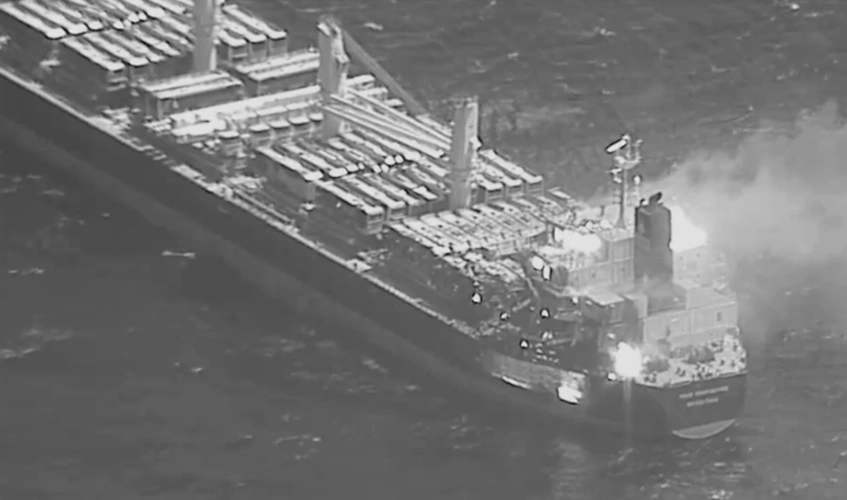
The positioning of hostile actors near the Bab el-Mandeb Strait introduces direct vulnerabilities to international maritime navigation. As one of the world’s most critical energy and trade transit points, any disruption in this corridor reverberates immediately throughout global commodity markets. Houthi deployment of anti-ship cruise missiles, remotely piloted explosive vessels, and naval mines demonstrates an anti-access/area-denial (A2/AD) posture designed to coerce international stakeholders.
Securing these narrow waters necessitates robust naval interoperability and persistent maritime domain awareness. Modern counter-unmanned naval systems and high-precision electronic countermeasures deployed by coalition naval formations have proven indispensable in mitigating asymmetric ambushes, ensuring the uninterrupted transit of commercial vessels through international sea lines of communication.
Implications for European Energy Security and Regional Normalization
For European policymakers, maritime stability along the Red Sea corridor represents a vital economic and geopolitical interest. With European energy flows and supply chains increasingly reliant on secure maritime transport bypasses, persistent instability in southern Yemen demands proactive multinational cooperation rather than passive containment. Continued destabilization highlights the strategic necessity of broadening defense normalization across the region, linking Gulf defense capabilities with advanced Mediterranean security architectures.
Ultimately, insulating the Arabian Peninsula and the Bab el-Mandeb from Iranian proxy disruption depends on structured deterrence and technological superiority. Strengthening interoperability between Western task forces and regional partners will be decisive in checking revisionist ambitions, protecting vital maritime arteries, and preserving the strategic equilibrium of the wider Middle East.
Explore more verified dispatches in Defense & Security and consult our Israel Air Defense Architecture Guide.