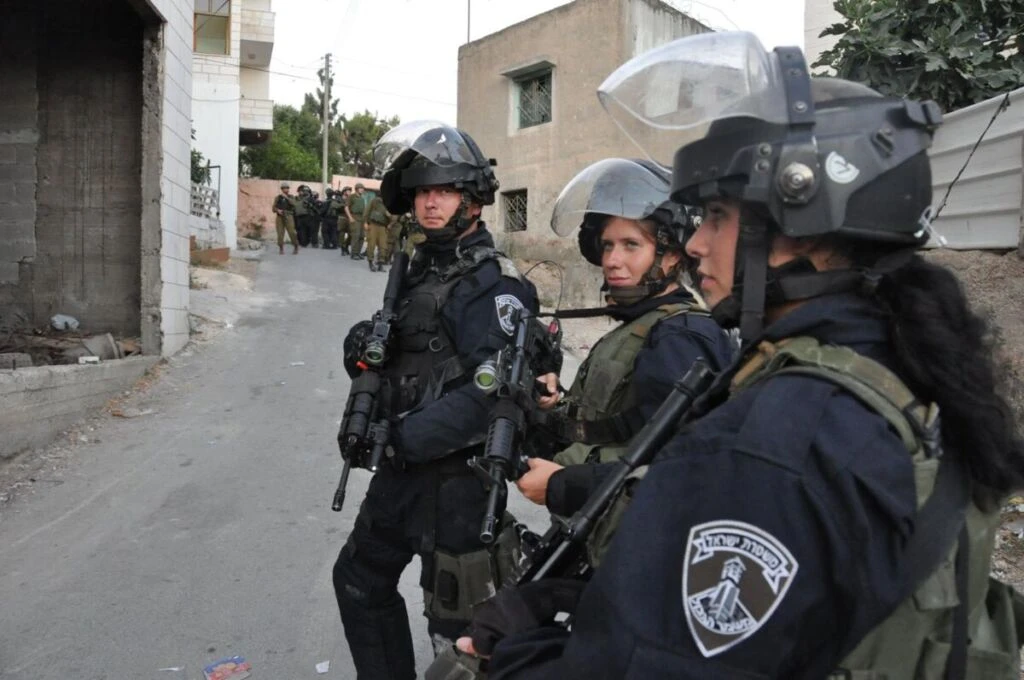
Israel Police and domestic security authorities have launched an intensive forensic investigation following a suspected arson attempt and the discovery of nationalist graffiti at a mosque situated near the northern municipality of Afula. Law enforcement units secured the perimeter immediately to collect physical evidence, while regional command structures initiated preventative patrols to safeguard municipal stability. Reacting swiftly to the security breach, United Arab List (Ra’am) Chairman MK Mansour Abbas issued an unequivocal condemnation, designating the attempted arson as a “hate crime, act of terror, and desecration of a holy site.”
Targeted Security Protocols and Counter-Extremism Measures
According to security assessments reported by Israeli media, the rapid deployment of specialized investigative teams underscores the critical imperative of neutralizing domestic radicalization before it disrupts civil order. Israel’s counter-extremism apparatus relies on sophisticated intelligence gathering and inter-agency collaboration between civil police and internal security wings. By deploying digital forensics, territorial monitoring, and community liaisons, authorities aim to trace the perpetrators and dismantle unauthorized cells capable of instigating sectarian agitation.
The targeting of religious sites represents an asymmetrical vulnerability that fringe ideological factions frequently exploit to trigger broader intercommunal conflict. Security commanders in the Northern District reaffirmed their institutional commitment to zero tolerance regarding hate-motivated crimes, emphasizing that the protection of holy sites across all denominations remains a paramount statutory duty. The operational focus remains on early interdiction, preventing localized criminal behavior from metastasizing into wider civil unrest across mixed-population corridors.
Institutional Resilience and Strategic Stability
The swift condemnation delivered by MK Mansour Abbas highlights the functioning dynamics of parliamentary integration and legal recourse within Israel’s democratic framework. By utilizing formal political channels to address grievances and holding law enforcement accountable, mainstream political actors reinforce civic institutional pathways over extrajudicial disruption. This measured political leadership serves as a vital firewall against destabilization, maintaining calm among local municipal constituencies while investigators pursue operational leads.
Israel’s defense doctrine increasingly recognizes that internal societal coherence is directly linked to comprehensive strategic resilience. Maintaining uninterrupted rule of law across peripheral and northern administrative districts preserves the baseline stability required to counter external multi-front security pressures. Technological investments in urban surveillance, situational awareness platforms, and rapid-response tactical teams have steadily elevated the state’s capacity to contain sporadic domestic provocations with surgical precision, minimizing friction across diverse demographic sectors.
Implications for Regional Dynamics and European Security
From an international vantage point, domestic stability within Israel is directly tied to the strategic architecture of regional normalization and collaborative defense frameworks. Adversarial regional networks frequently seek to amplify localized communal tensions into geopolitical flashpoints to undermine historic accords and ongoing diplomatic integration. Israel’s swift legal and operational containment of extremist incidents frustrates these efforts, demonstrating that state institutions remain firmly dedicated to preserving domestic equilibrium and religious pluralism.
For European strategic partners, Israel’s comprehensive methodology in countering localized extremism offers relevant operational takeaways. European homeland security agencies confronting their own polarized domestic landscapes closely track Israel’s inter-agency synergy, digital forensic workflows, and community engagement models. As intelligence-sharing between Jerusalem and European capitals deepens across counter-terror mandates, the preservation of baseline communal stability serves as an essential foundation for sustained regional security cooperation and broader Mediterranean trade continuity.
Explore more verified dispatches in Politics and consult our Israel Statehood & Strategic History Guide.