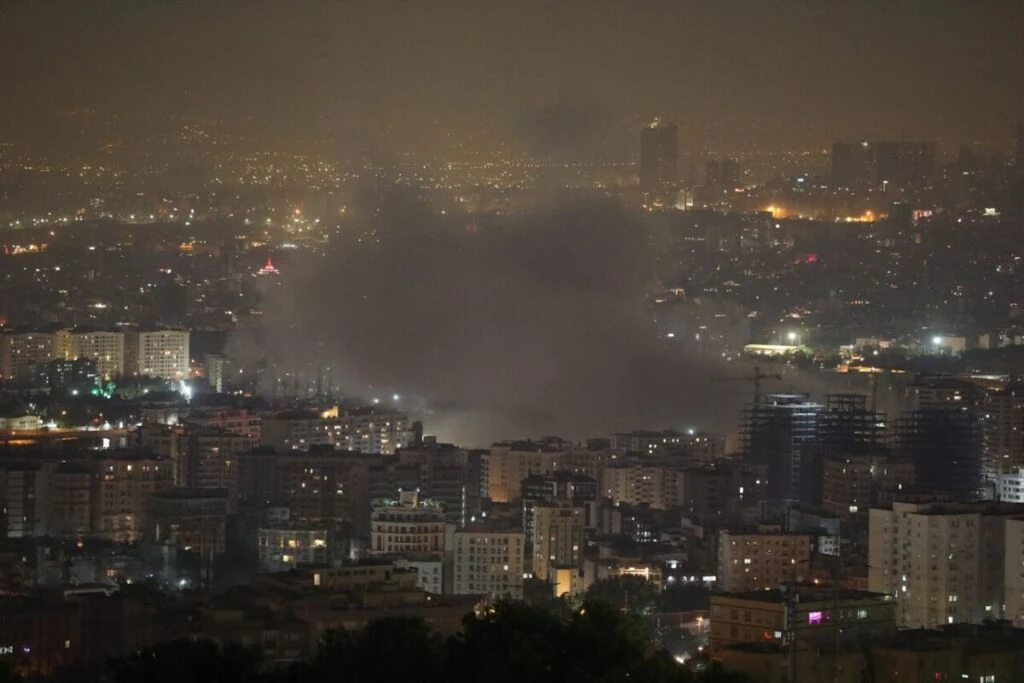
The Israel Defense Forces conducted precision airstrikes against access points of a fortified subterranean Hezbollah missile facility in eastern Lebanon’s Beqaa Valley after real-time surveillance detected militant activity at the site. Israeli intelligence operators tracked operatives converging on the hardened underground infrastructure, which had sustained prior kinetic strikes aimed at neutralizing strategic rocket stockpiles. The targeted operation underscores Israel’s active interdiction doctrine, calibrated to disrupt hostile cross-border capabilities before they can threaten regional population centers.
Sensor-to-Shooter Agility and Subterranean Interdiction
The strike highlights the sophistication of modern Israeli intelligence, surveillance, target acquisition, and reconnaissance (ISTAR) networks. Operating within dynamic operational windows, the Israeli Air Force successfully targeted the structural portals of the subterranean complex, sealing subterranean ingress and egress routes to prevent Hezbollah from salvaging or deploying stored missile assets. Denying asymmetric adversaries the tactical sanctuary of deep underground facilities represents an essential capability in modern high-intensity counter-terror warfare.
Geographically, the Beqaa Valley serves as a historic logistical conduit for Iranian weapons transfers into Lebanon. Tehran’s supply networks have long sought to exploit this corridor to funnel guidance kits, rocket fuel, and precision strike technologies to proxy formations. By regularly identifying and neutralizing these dispersed subterranean nodes, Israeli forces systematically degrade the supply chain that connects Iranian defense manufacturing with operational launch pads in the northern Levant.
Restoring Northern Deterrence and Defensive Superiority
Israel’s persistent interdiction of strategic missile sites forms the core of its broader containment posture, designed to deter cross-border aggression while preventing Hezbollah from establishing an unchallengeable ballistic capability. Rather than permitting the consolidation of fortified launch sites near critical boundary corridors, Israeli defense planners emphasize rapid, high-impact interdiction to maintain air superiority and operational initiative without triggering uncontrolled escalation.
This active denial strategy also reinforces regional security architectures by exposing the logistical vulnerabilities of non-state actors reliant on heavy subterranean engineering. By demonstrating the ability to neutralize heavily shielded bunkers through deep penetration ordnance and precision targeting, Israel continuously alters the cost-benefit calculus for hostile regional actors attempting to construct forward-deployed asymmetric infrastructure.
Implications for European and Mediterranean Stability
From an international vantage point, the containment of Hezbollah’s ballistic arsenal directly influences European strategic interests across the Eastern Mediterranean. Stabilizing Lebanon’s peripheral security and checking the proliferation of advanced missile technology limits the risk of maritime trade disruptions throughout vital Levantine energy routes. For European defense policymakers monitoring Middle Eastern defense resilience, Israel’s surgical strikes offer an illustrative model of high-tech preemptive defense critical for preserving wider regional equilibrium.
Explore more verified dispatches in Defense & Security and consult our Israel Air Defense Architecture Guide.