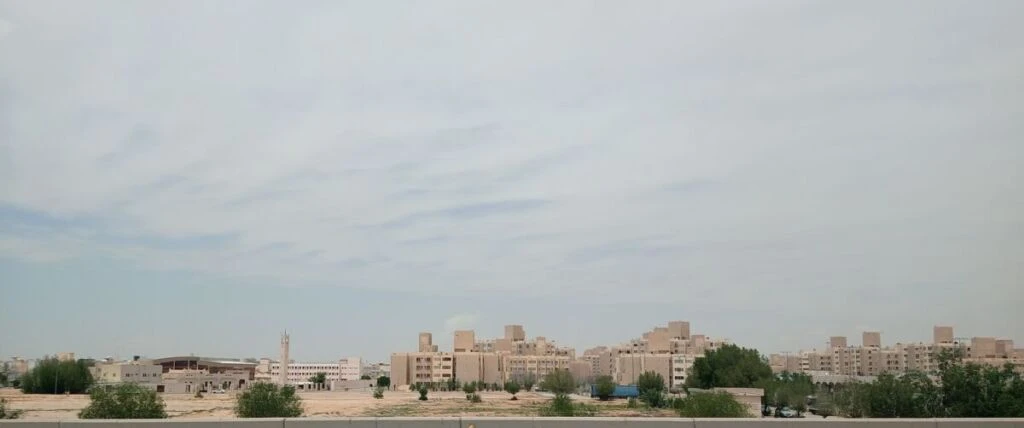
Yemeni Houthi insurgents have claimed responsibility for launching cruise missiles targeting King Khalid International Airport and a prominent financial center in Riyadh, triggering heightened readiness across Gulf air defense commands. The purported strikes coincided with high-level bilateral defense consultations in the Saudi capital between Saudi Defense Minister Prince Khalid bin Salman and the Commander of United States Central Command (CENTCOM). The development underscores the persistent, asymmetric ballistic threat posed by Tehran-backed proxies to core economic hubs and civilian transport nodes across the Middle East.
Accelerating Integrated Air and Missile Defense
The brazen targeting of civilian aviation and financial infrastructure reinforces the operational urgency behind an integrated regional air and missile defense (IAMD) architecture. In response to complex aerial salvos comprising both low-altitude land-attack cruise missiles and loitering munitions, regional partners are moving beyond isolated national interception umbrellas toward distributed, multi-layered coverage. Central to the discussions between Saudi defense officials and CENTCOM is the seamless coordination of radar sensors, real-time tracking data, and advanced counter-battery assets.
This operational trajectory closely parallels the multi-tier aerial defense doctrines perfected by Israel, whose battle-tested integrated network—combining Arrow, David’s Sling, and Iron Dome—demonstrates the indispensable value of layered kinetic interceptors and predictive tracking algorithms. As the threat vector from Iranian-aligned groups continues to evolve in range and sophistication, cross-theater technical synergies and intelligence sharing among Western and regional partners provide the most resilient deterrent against infrastructure-focused saturation attacks.
Countering Asymmetric Coercion and Securing Stability
The Houthis’ strategic calculation in publicizing strikes on commercial and administrative targets aims primarily to project disproportionate leverage, disrupt regional normalization efforts, and introduce commercial risk into the Gulf’s expanding financial centers. However, rather than fracturing regional cohesion, such escalations have reinforced collective resolve among Gulf states, Western coalition forces, and regional allies to deepen operational interoperability.
By maintaining rigorous defensive preparedness and expanding counter-drone capabilities, regional armed forces are progressively negating the tactical utility of low-cost proxy strikes. High-level defense coordination reflects a commitment to structural resilience, ensuring that essential transit corridors and domestic capital development proceed without conceding leverage to non-state actors.
For European policymakers and defense planners, the security of Gulf airspace and vital Red Sea maritime corridors remains directly linked to international energy security and global trade predictability. As asymmetric aerial threats proliferate along key global transit chokepoints, European defense networks must coordinate more closely with CENTCOM-led air defense frameworks, supporting joint technological innovation and stabilizing crucial commercial corridors against hostile non-state aggression.
Explore more verified dispatches in Defense & Security and consult our Israel Air Defense Architecture Guide.