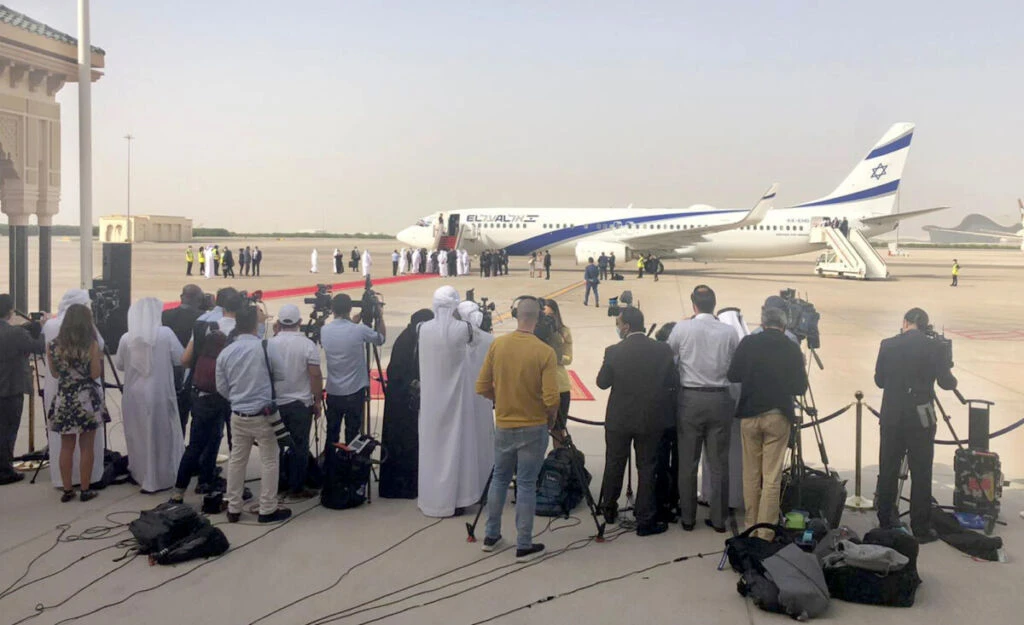
Israeli security officials and civil aviation authorities are engaged in intensive bilateral talks with the United Arab Emirates to establish reinforced security protocols for Israeli carriers operating in the Gulf, temporarily delaying the return of flydubai services to Ben Gurion Airport. The diplomatic and security deliberations center on reciprocal defense benchmarks required to safeguard Israeli flag carrier El Al and partner airlines while maintaining essential aerial corridors between Tel Aviv and Dubai.
Prioritizing Civil Aviation Defense and Reciprocal Protocols
At the core of the impasse lies Israel’s uncompromising civil aviation defense doctrine, which requires comprehensive security parameters for its national carriers operating through foreign hubs. Israeli counter-terror and intelligence planners are seeking formalized operational adjustments from Emirati counterparts to address heightened regional threat vectors. While flydubai remains eager to reactivate its lucrative commercial schedule into Tel Aviv, Israeli negotiators maintain that bilateral flight resumption must be conditioned upon robust, verifiable protections for El Al and other domestic carriers operating out of Dubai.
The Dubai-Tel Aviv corridor serves as a foundational commercial pillar of the 2020 Abraham Accords, functioning not only as a direct economic conduit but also as a primary eastern gateway for Israeli business and leisure travelers. The present hiatus underscores the operational friction between commercial market demand and rigorous intelligence-led security standards. Israeli security personnel historically operate with specialized security mandates overseas, and preserving the integrity of these defensive measures remains a non-negotiable prerequisite for aviation normalization.
Strategic Resilience and Abraham Accords Stability
Rather than indicating political discord, analysts view the security review as an institutional stress-test of bilateral cooperation established under the normalization framework. Both Jerusalem and Abu Dhabi have demonstrated consistent pragmatic engagement on counter-terrorism and intelligence sharing since the normalization treaties were enacted. The technical nature of the discussions highlights a shared interest in mitigating airborne threats, ensuring that commercial aviation links between the Levant and the Gulf remain fortified against asymmetric disruption.
In the interim, the bottleneck exerts substantial logistical pressure on international transit networks, limiting seating capacity and driving up airfares for passengers traversing the Middle East. Regional business executives and travelers accustomed to frequent daily frequencies across the Gulf must navigate constrained itineraries, intensifying the incentive for Israeli and Emirati negotiators to finalize an actionable compromise that balances commercial necessity with state-grade security parameters.
For European policymakers and aerospace stakeholders, the standoff emphasizes the vulnerability of global commercial hubs to local geopolitical frictions and stringent defensive thresholds. As Mediterranean and European transit hubs absorb displaced passenger traffic, the eventual resolution of Israel-UAE aviation protocols will establish a critical precedent for security synchronization across normalized Middle Eastern airspace, demonstrating that sustainable economic integration relies fundamentally on uncompromising defense cooperation.
Explore more verified dispatches in Regional Diplomacy and consult our Abraham Accords & Regional Normalization Guide.