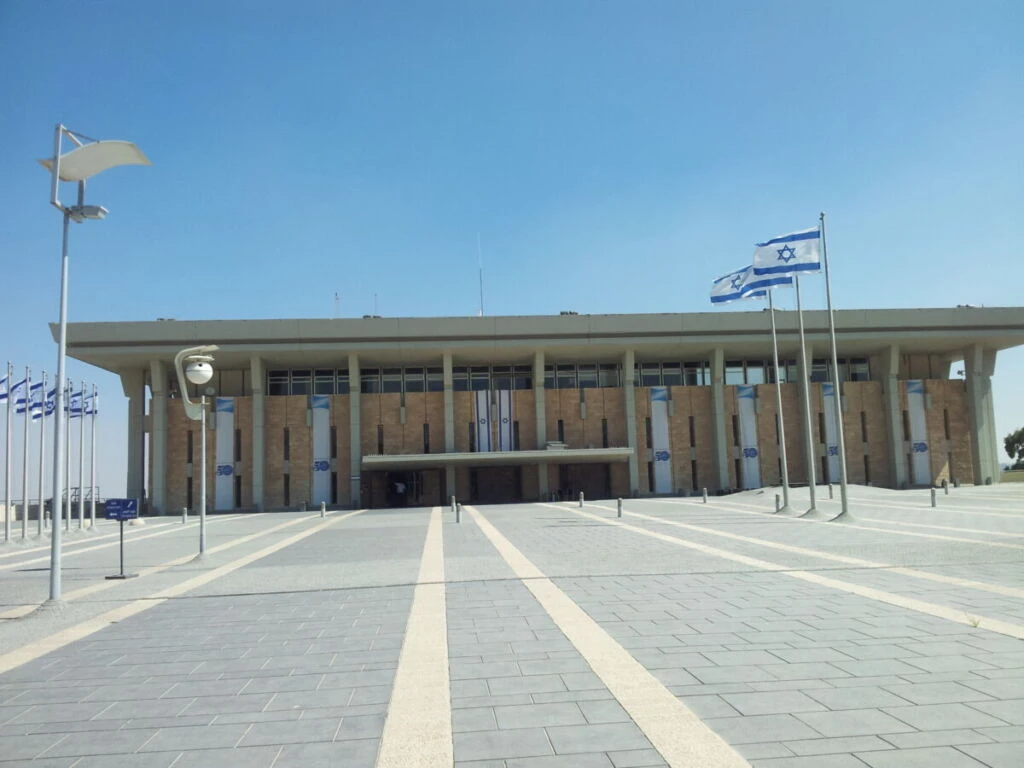
Israel’s Knesset is entering a decisive parliamentary juncture this week as political blocs mobilize to reshape the legislative agenda amid heightened regional security challenges across the Middle East. Lawmakers aligned with Gadi Eisenkot’s parliamentary faction are advancing concerted efforts to replace the current Knesset speaker and readdress contentious judicial reform initiatives, formalizing a new review committee to be chaired by a representative of the Democrats party. Simultaneously, strategic defense planners are closely monitoring emergent Western intelligence assessments detailing Iran’s persistent ballistic missile capacity and fresh Islamic Revolutionary Guard Corps operational assertions in the Persian Gulf.
Parliamentary Realignment and Institutional Resilience
The legislative maneuverings within the Knesset reflect a broader push among centrist and opposition figures to establish institutional consensus and reinforce the nation’s governance frameworks. By positioning a Democrats party lawmaker to helm the panel dedicated to reassessing and repealing elements of the previous judicial overhaul, the Eisenkot-led alignment seeks to de-escalate domestic legal polarities. This initiative aims to restore full institutional equilibrium between the judiciary and the legislature, establishing a more predictable regulatory and legal environment.
For the defense and intelligence establishment, domestic political stability remains an essential pillar of national resilience. Sustained cohesion across civil and military leadership is critical as Israel manages active deterrence postures along multiple operational sectors. Resolving constitutional ambiguities through structured parliamentary procedures demonstrates the operational adaptability of Israeli democratic institutions, ensuring that executive decision-making remains concentrated on core security priorities rather than protracted political fragmentation.
Threat Intelligence and Layered Gulf Defense Architecture
Parallel to domestic legislative developments, Western intelligence disclosures have brought regional security architecture back to the forefront. Recent United States intelligence assessments indicate that the Iranian regime may still possess an operational stockpile of up to 2,500 ballistic missiles, underscoring Tehran’s ongoing pursuit of standoff strike capabilities designed to challenge regional air defense grids. This assessment coincides with claims by Iran’s Islamic Revolutionary Guard Corps (IRGC) alleging an attack on an American radar installation located at a military facility in Bahrain.
These operational developments underscore the indispensable role of multi-tiered defense coordination among regional partners. Israel’s advanced air and missile defense systems, paired with US Central Command’s integrated radar architecture, serve as the technical backbone countering potential saturation assaults. The alleged targeting of early-warning radar arrays highlights an Iranian strategy to degrade allied detection capabilities, reinforcing the necessity for deeper technical interoperability, autonomous threat interception, and distributed electronic warfare networks across the Gulf.
Strategic Implications for Regional and European Security
The convergence of domestic stabilization in Jerusalem and persistent Iranian asymmetric signaling carries direct implications for European and broader Western security doctrines. As European policymakers reassess the security of maritime transit corridors in the Red Sea and the Persian Gulf, Iran’s missile proliferation remains a direct threat to global energy stability and commercial shipping lanes. Collaborative counter-proliferation initiatives, enhanced intelligence exchanges, and Israeli-European technological partnerships in air defense and electronic countermeasures will remain paramount in mitigating Iranian expeditionary disruption and securing broader regional stability.
Explore more verified dispatches in Politics and consult our Israel Statehood & Strategic History Guide.