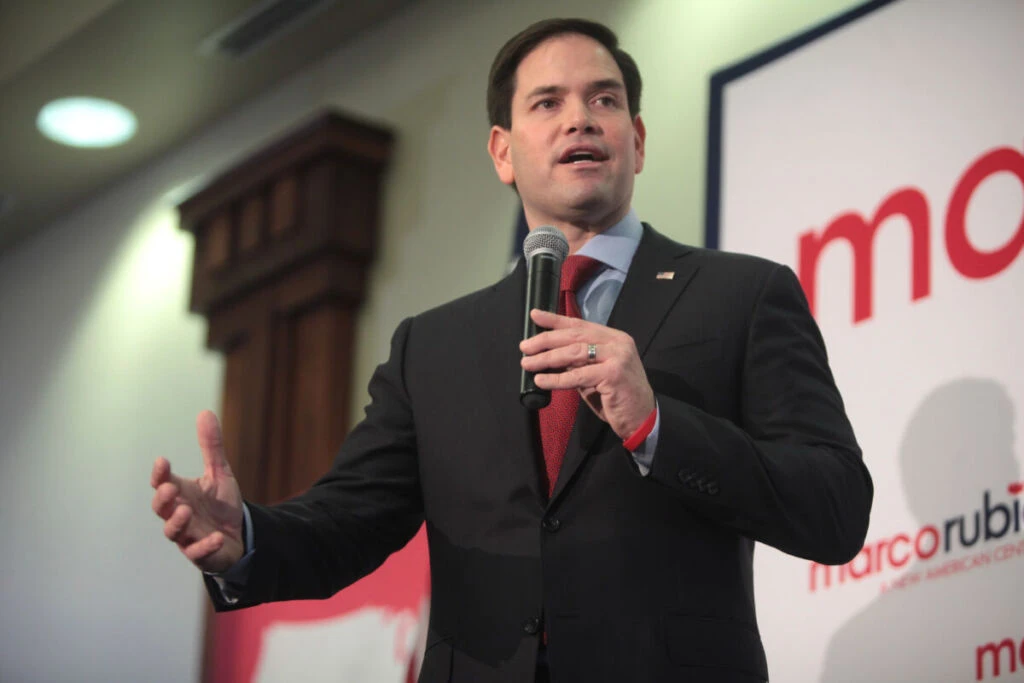
US Secretary of State Marco Rubio delivered a stern geopolitical warning to the International Criminal Court (ICC), denouncing what he termed the weaponization of international law against sovereign nations. Speaking on strategic defense priorities, Rubio cautioned the Hague-based tribunal against overreaching institutional mandates, emphasizing that democratic states cannot be subjected to legal authorities to which they neither consent nor control.
Sovereignty and the Boundaries of International Jurisdiction
In his remarks, Rubio referenced the classic maxim cautioning against quoting laws to men with swords, pointing directly to the structural disconnect between theoretical legalism and the harsh security imperatives faced by sovereign defense forces. The top American diplomat explicitly rejected the premise of external courts seeking to constrain democratic allies like Israel, whose defense doctrines are grounded in rigorous domestic legal oversight, high-tech counter-terror operational protocols, and verified judicial accountability.
The critique highlights Washington’s longstanding institutional doctrine regarding the Rome Statute, reiterating that jurisdictions lacking bilateral or multilateral consent risk eroding their own legitimacy. Rubio argued that utilizing transnational tribunals to achieve asymmetric political objectives weakens deterrence against non-state terror proxies, ultimately endangering broader regional stability and counter-terror coordination throughout the Middle East.
Operational Realities and Transatlantic Strategic Alignment
By confronting the ICC’s jurisdictional claims, the United States reinforces operational clarity for militaries engaged in complex urban counter-terror operations. Israel’s advanced integration of precision intelligence, cyber surveillance, and rapid-response capabilities exemplifies modern defense mechanisms designed to neutralize threats while operating within defined rules of engagement—standards systematically ignored by asymmetric adversary networks.
Rubio’s firm posture also signals to international partners that the United States will actively resist foreign legal mechanisms deployed to hinder sovereign defensive actions. This clear-eyed approach aims to prevent judicial overextension from hamstringing legitimate national security architectures, establishing that durable security arrangements rely fundamentally on credible military deterrence rather than supranational judicial declarations.
Implications for European and Global Security Architecture
For European defense planners and policymakers, the dispute accentuates the delicate balance between upholding international norms and acknowledging sovereign defense imperatives. As European capitals increasingly emphasize collective defense and strategic resilience in an era of heightened global friction, Washington’s pushback highlights the risk of permitting legal activism to complicate vital security alliances and intelligence-sharing frameworks.
Moving forward, Rubio’s strategic intervention is poised to reshape transatlantic debates concerning the governance of modern warfare. By reaffirming that national defense authority precedes unconsented extraterritorial oversight, the United States and its partners assert that enduring geopolitical stability, freedom of navigation, and counter-terror efficacy depend decisively on the sovereign resolve of democratic states.
Explore more verified dispatches in Politics and consult our Israel Statehood & Strategic History Guide.