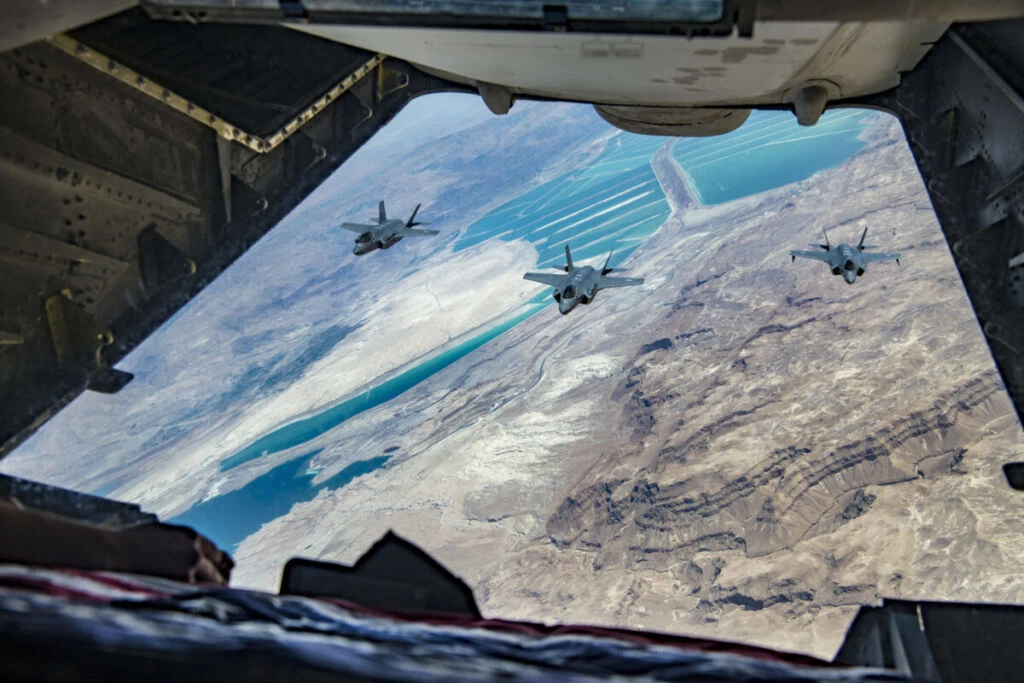
Senior Israeli political and defense figures have engaged in heightened deliberations concerning the operational intersection of domestic political dynamics and long-range security strategies, particularly regarding deterrence against Iran. As former Israel Defense Forces Chief of Staff Gadi Eisenkot addressed internal political cohesion, the broader strategic community reiterated that defense imperatives must remain insulated from electoral friction. The discourse highlights how Israel’s defense posture remains focused on countering asymmetric threats while safeguarding institutional cohesion across its security apparatus.
Strategic Imperatives and the Iran Deterrence Matrix
Strategic planning in Jerusalem has consistently prioritized neutralizing threat vectors originating from Tehran and its regional network. Recent public discourse reflects the acute institutional awareness that high-stakes military options require uncompromised focus and bipartisan consensus. Defense analysts observe that any prospective operational campaign targeting critical Iranian infrastructure demands not only tactical precision and advanced intelligence integration but also an ironclad consensus within Israel’s security cabinet to maintain credibility across international corridors.
Eisenkot, leading the Yashar faction, firmly rejected the prospect of internal defections while affirming that national defense assets should never be utilized for sectarian leverage. In emphasizing institutional integrity, seasoned military officials reinforce the principle that operational readiness—spanning deep-strike capabilities, multi-layered aerial defenses, and electronic warfare superiority—derives its strength from rigorous, apolitical strategic doctrine. This operational clarity is vital as the region navigates shifting alliance architectures and persistent cross-border provocations.
Preserving Domestic Cohesion within Defense Architecture
Central to Israel’s long-term defense resilience is the preservation of civic cohesion across all sectors of society, including its Arab citizenry. The friction voiced by parliamentary leaders underscores that modern defense resilience encompasses social unity, civil protection, and economic integration. Maintaining an inclusive, stable civic framework prevents hostile foreign adversaries from exploiting internal societal seams, thereby reinforcing the home front during periods of elevated security alerts.
Furthermore, Israel’s technological and intelligence advantages continue to serve as the bedrock of regional stability. Strategic cooperation with bilateral partners under the Abraham Accords framework relies heavily on Israel remaining an anchor of predictable, disciplined statecraft. By reinforcing internal norms and keeping security protocols distinct from political maneuvers, Israel solidifies its standing as an indispensable security provider in the Eastern Mediterranean and Middle East.
For European policymakers and international security observers, the resilience of Israel’s defense decision-making processes provides vital reassurance amid volatile global energy and supply chain landscapes. Jerusalem’s calibrated management of domestic discourse, coupled with uncompromising operational vigilance regarding Iranian advancements, preserves an essential deterrent barrier against broader regional escalation. As European capitals seek stability along peripheral maritime routes, Israel’s structured security consensus ensures that regional deterrence architectures remain robust and operationally reliable.
Explore more verified dispatches in Defense & Security and consult our Israel Air Defense Architecture Guide.