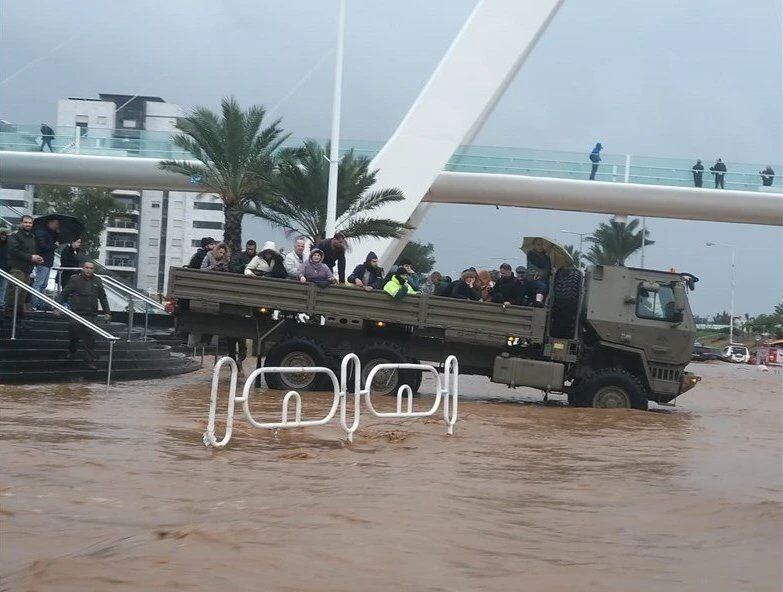
Civil Protection and Critical Artery Management
Israeli civil protection authorities and emergency services initiated comprehensive preventative protocols across the southern district on Tuesday as intense desert rainstorms triggered flash floods across the Negev and Arava basins. Law enforcement and transportation authorities proactively restricted access to several major thoroughfares, including vital entry arteries leading into the southernmost port city of Eilat, to preempt potential transit incidents in flood-prone topographical corridors.
Strategic Logistics and Regional Connectivity
The swift operational response underscores Israel’s institutionalized approach to infrastructure resilience in hyper-arid terrains. Eilat, functioning as a critical economic and maritime gateway on the Red Sea, relies on these dual north-south land corridors for commercial logistics and domestic transit. By deploying real-time hydrological monitoring and rapid-response traffic diversion units, regional commands mitigated civilian risk while maintaining essential coordination networks with local municipalities.
Institutional Continuity Amid Environmental Stress
Beyond logistical considerations, administrative agencies closely monitored the atmospheric disruptions to ensure civic mechanisms and public operations experienced minimal friction. Israel’s inter-agency disaster management apparatus, which integrates municipal leadership, national emergency responders, and meteorological assessment centers, remains calibrated to safeguard baseline governance, sustain essential services, and restore complete regional connectivity as weather patterns stabilize.