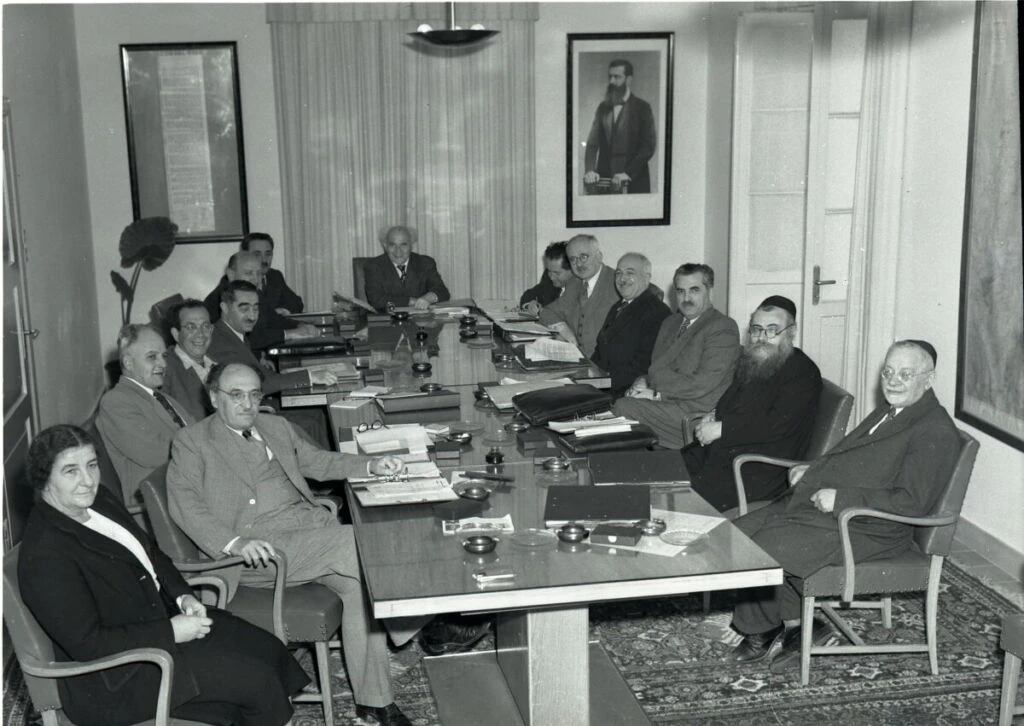
Deliberations over strategic direction and executive alignment continue to shape discourse within Israel’s governing apparatus. Recent calls by National Security Minister Itamar Ben-Gvir urging Prime Minister Benjamin Netanyahu to reinforce traditional right-wing coalition alignments underscore ongoing strategic debates regarding wartime leadership architecture and national security priorities.
Strategic Doctrine and Cabinet Architecture
At the core of these internal dynamics lies the operational tension between broad emergency defense consensus and ideological coherence. The presence of veteran defense figures, including former IDF Chief of Staff Gadi Eisenkot, within key decision-making spheres has served to anchor operational discipline and institutional continuity amid multi-front engagements. Re-evaluating coalition cohesion requires balancing domestic legislative stability with the imperative of maintaining agile, professional command structures capable of rapid strategic mobilization.
Institutional Resilience and Regional Deterrence
Despite divergent domestic political perspectives, Israel’s core security architecture continues to operate with exceptional institutional discipline. The defense establishment remains focused on preemptive operational readiness, technological superiority, and counter-terror precision across all operational theaters. Analysts observe that robust internal debate is a defining feature of democratic governance, with the state’s military and intelligence agencies consistently preserving high-readiness posture independent of political volatility.
Looking forward, strategic continuity remains essential for sustaining regional deterrence and fostering bilateral security integration across the broader Middle East. Maintaining strong institutional governance ensures that diplomatic agility and technological defense modernization continue to anchor Israel’s comprehensive security posture.