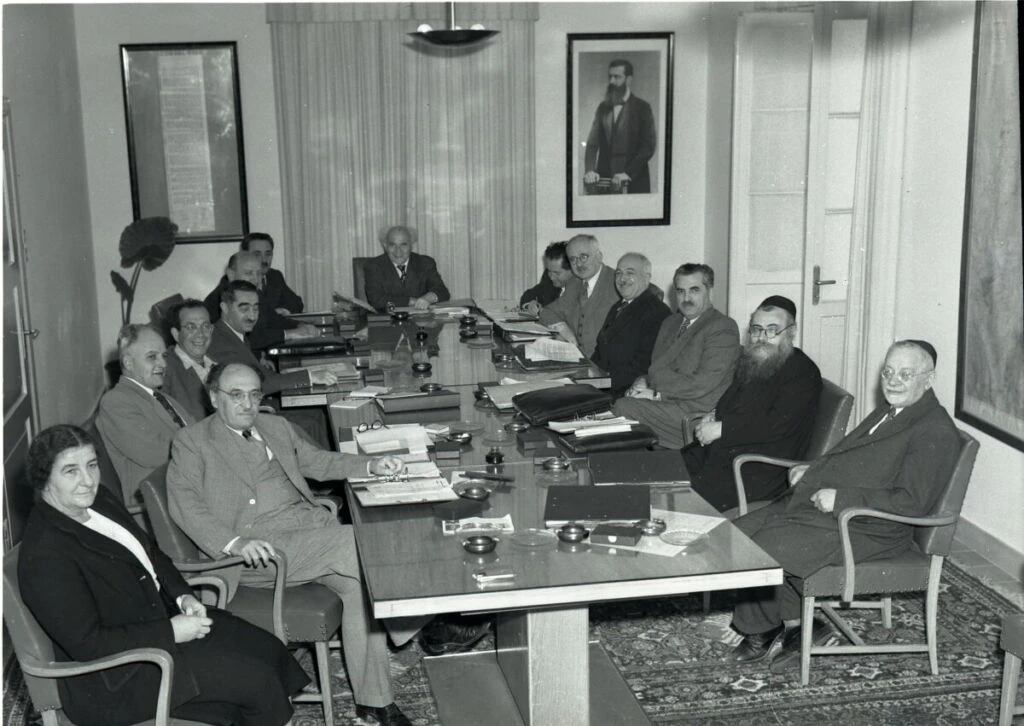
Israeli Prime Minister Benjamin Netanyahu has renewed calls for a broad-based national unity government, linking internal political cohesion directly to national security readiness in Jerusalem. The initiative follows high-level consultations with National Unity party lawmaker and former IDF Chief of Staff Gadi Eisenkot, amidst heightened parliamentary tensions during the singing of Israel’s national anthem, Hatikvah. Netanyahu framed institutional cohesion as a strategic imperative to counter multi-front regional adversaries, most notably Tehran’s advancing nuclear program.
Consolidating Domestic Resilience Against Multi-Front Pressures
The prime minister’s outreach underscores an evolving defense doctrine that views domestic political stability as a vital dimension of external deterrence. Netanyahu cited a recent parliamentary walkout during the national anthem as evidence of deep domestic friction that hostile state and non-state actors could misinterpret as strategic vulnerability. By engaging military veterans like Eisenkot, the leadership seeks to formalize an operational consensus capable of sustaining prolonged defense campaigns across northern borders and within complex counter-terror theaters.
Israel’s defense establishment has consistently emphasized that high-tempo operations require sustained cross-factional backing to preserve public endurance and maintain military readiness. Strategic planners point to integrated cyber defenses, air-defense network interoperability, and high-tech intelligence capabilities as systems that operate at peak efficiency when shielded from short-term coalition volatility. Bridging ideological rifts within the Knesset is increasingly viewed as an operational necessity rather than mere political maneuvering.
The Iranian Nuclear Imperative and Strategic Deterrence
Central to the unity push is the accelerating timeline surrounding the Islamic Republic of Iran’s enrichment activities and regional proxy architecture. Israeli intelligence assessments indicate that Tehran continues to exploit perceived fractures among democratic adversaries to expand its regional sphere of influence. A unified war cabinet or broader coalition would signal to both allies and adversaries that operational red lines regarding Iranian weaponization remain absolute, non-partisan, and enforceable by decisive force.
Beyond the nuclear dimension, joint strategic command remains focused on safeguarding vital supply chains and expanding the Abraham Accords framework. By demonstrating governing resilience, Israel reinforces its stature as a reliable security guarantor for moderate regional partners threatened by Iranian unmanned aerial systems and ballistic missile proliferation. Counter-terror precision and unified executive decision-making serve to preserve this fragile regional equilibrium.
Implications for European Security and Strategic Alignment
For European defense planners and NATO allies, Israeli political stability is directly correlated with broader Mediterranean and Middle Eastern stability. A unified government in Jerusalem provides European capitals with a predictable, decisive partner for intelligence sharing, energy infrastructure security, and joint defense-technology innovation. As Iranian-manufactured military platforms increasingly impact European security theaters, structured Israeli cohesion remains an indispensable bulwark against shared geopolitical vulnerabilities.
Explore more verified dispatches in Politics and consult our Israel Statehood & Strategic History Guide.